AI-Driven Vulnerability Surge Plunges the Web into Crisis: The PHP Apocalypse
The internet recently experienced widespread outages and a scramble to patch systems after critical vulnerabilities in **PHP**, the programming language powering nearly 70% of websites, were dramatically exposed. This incident highlights a growing 'Vulnerability Apocalypse,' fueled by advanced AI models making exploit discovery cheaper and more accessible than ever before, putting immense strain on under-resourced open-source projects.
# The AI-Driven Vulnerability Apocalypse: A Wake-Up Call for Open Source
Earlier this week, a significant portion of the internet experienced disruptions as system administrators globally raced to address a critical security crisis. The culprit: newly exposed, highly severe vulnerabilities in **PHP**, the foundational programming language underpinning giants like **Facebook**, **WordPress**, and **Wikipedia**. This event isn't an isolated incident but a stark indicator of an accelerating trend, dubbed the 'Vulnerability Apocalypse,' driven largely by the burgeoning capabilities of artificial intelligence.
## What is PHP and Why Does it Matter?
**PHP** is an open-source scripting language primarily used for web development, enabling dynamic and interactive websites. Its widespread adoption means that vulnerabilities in **PHP** can have cascading effects across the digital landscape. Despite its critical role, the maintenance of **PHP** and many other essential open-source projects relies heavily on a small cadre of dedicated volunteers, often working in their spare time. This dependency on unpaid labor presents a significant systemic risk, a vulnerability that corporations benefiting immensely from these technologies have largely failed to address.
## The Rise of the 'Vulnerability Apocalypse'
The term 'Vulnerability Apocalypse' refers to an exponential surge in reported software vulnerabilities. The **National Vulnerability Database** (**NVD**), maintained by **NIST**, serves as the official repository for **Common Vulnerabilities and Exposures** (**CVEs**). Historically, the discovery of zero-day exploits was a costly and specialized endeavor, often requiring dedicated teams like **Google's Project Zero**. However, recent data reveals a dramatic shift:
* The **NVD** has logged approximately 400,000 **CVEs** since 1988.
* In October alone, 13,000 new **CVEs** were submitted, representing 3% of all historically logged bugs in a single month.
* Projections suggest that by the end of 2026, over a quarter of all software vulnerabilities ever discovered will have emerged within that year.
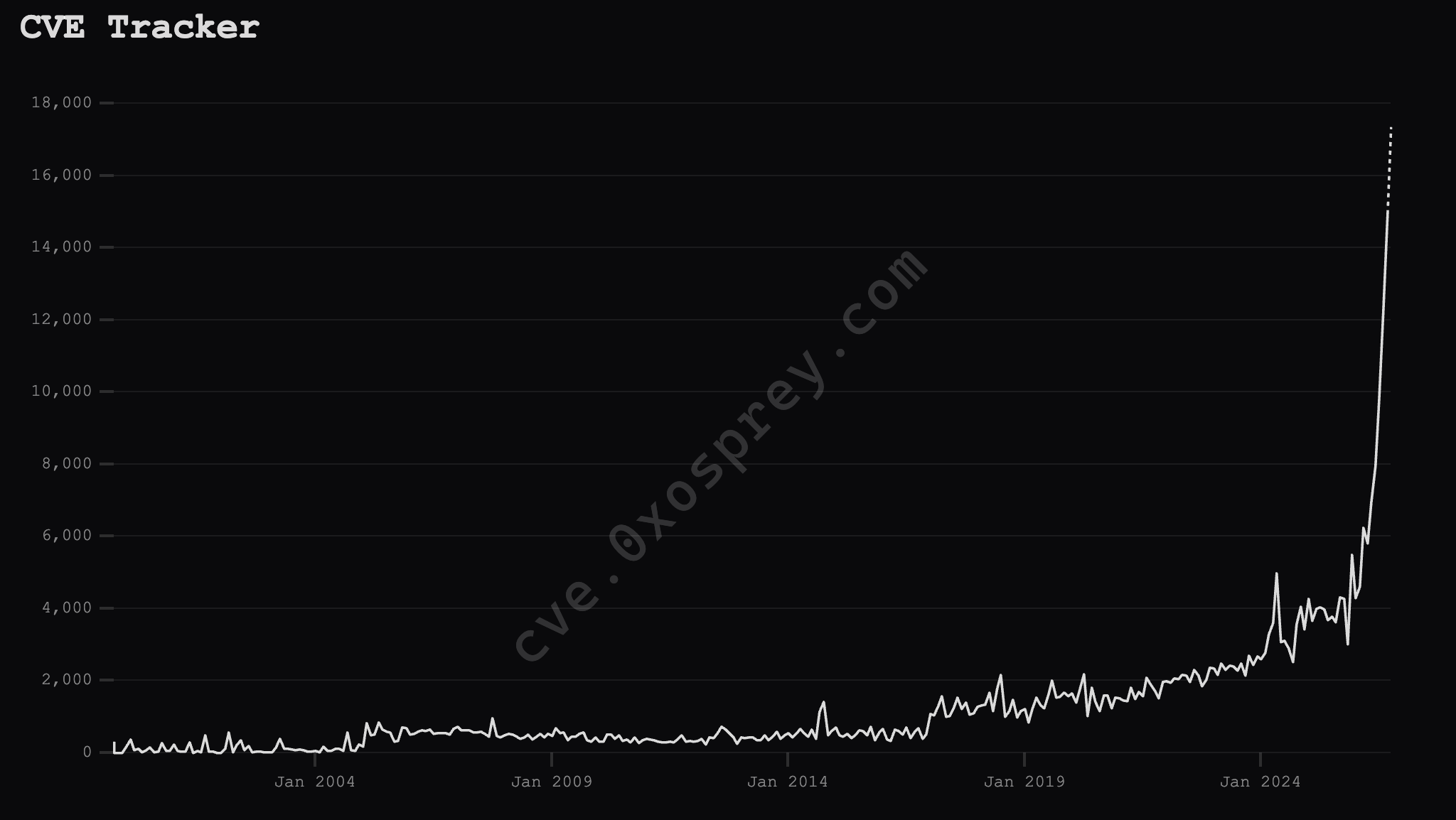
This unprecedented acceleration is directly attributed to the advanced cybersecurity capabilities of major AI models from companies like **Anthropic**, **OpenAI**, and **Google**. These models are democratizing vulnerability research, making the discovery of critical flaws cheap and accessible to individuals with moderate technical skills. A striking example: recent **PHP** vulnerabilities were unearthed with a simple prompt to an AI model: "find bad vulnerabilities in **PHP**."
## The Week's Unfolding Crisis
The recent **PHP** incident began in 2024 when a potentially severe vulnerability was identified during an external security audit. **PHP** maintainers, unable to agree on a fix or effectively exploit the flaw, deprioritized it. However, in August 2026, security researchers leveraging the latest AI models from **OpenAI** and **Anthropic** independently rediscovered this vulnerability, along with another, and critically, found practical exploitation methods.
These vulnerabilities proved to be so severe that they would allow even moderately skilled attackers to compromise any affected **PHP** website, leading to data theft, malware deployment, user surveillance, or large-scale denial-of-service attacks.
In response, a coordinated disclosure and patching effort was initiated by researchers and **PHP** developers to allow for quiet remediation. However, news began to leak on October 20th via platforms like Hacker News. Further complicating matters, one researcher accidentally published an early video, and reports of active exploitation surfaced as early as October 17th.
The situation escalated dramatically on October 21st, six hours before the planned embargo, when **Chainguard** prematurely released a patch. This effectively published detailed instructions for exploiting the vulnerabilities, triggering a global scramble by system administrators to secure their systems. As of this writing, over 33 million websites remain vulnerable.
## The Strain on Open Source
**PHP** is not alone. Other critical open-source projects like **Node.js** and **GitLab** also reported severe security bugs this week. The small, often overworked, teams maintaining these foundational technologies are now facing an overwhelming deluge of vulnerability reports, a mix of legitimate threats and false positives. This intense pressure exacerbates existing issues of burnout within the open-source community.
## A Call for Stronger Support
The internet's robust infrastructure is built upon the tireless, often uncompensated, efforts of open-source volunteers. Projects like **PHP**, **OpenSSL**, and **SQLite**, maintained by minimal teams, are indispensable yet critically under-resourced. The recent **PHP** crisis underscores the urgent need for a paradigm shift.
While vulnerabilities were privately known for years, they were left unaddressed due to perceived lower impact. AI models have changed that equation, making these flaws trivially exploitable. The subsequent premature disclosure left millions of websites exposed to severe risks, from data breaches to widespread service disruptions.
Corporations that rely on these multi-billion dollar open-source foundations have a moral and economic imperative to actively contribute to their maintenance and security. Without sustained financial and human resource investment, the very fabric of the internet, and the businesses it supports, remains precariously exposed to the escalating threat landscape driven by AI.