Android 17 to Bolster Security with Enhanced Scam Protection, Theft Deterrents, and Privacy Features
**Google's** upcoming **Android 17** release is set to bring a suite of security and privacy enhancements, focusing on combating banking scams, improving device theft protection, and strengthening user privacy. The update includes features like real-time scam call detection, biometric locks for lost devices, and expanded threat detection capabilities.


**Android 17**, expected to roll out next month, will introduce several security and privacy features focused on device theft, threat detection, and banking scam calls.
### Enhanced Scam Call Protection
**Google** will be expanding protections against scammers spoofing caller IDs to impersonate financial institutions and trick users into transferring money or revealing account-related information.
Android will work with banking apps to detect spoofed calls and automatically terminate the connection when a scam is identified.
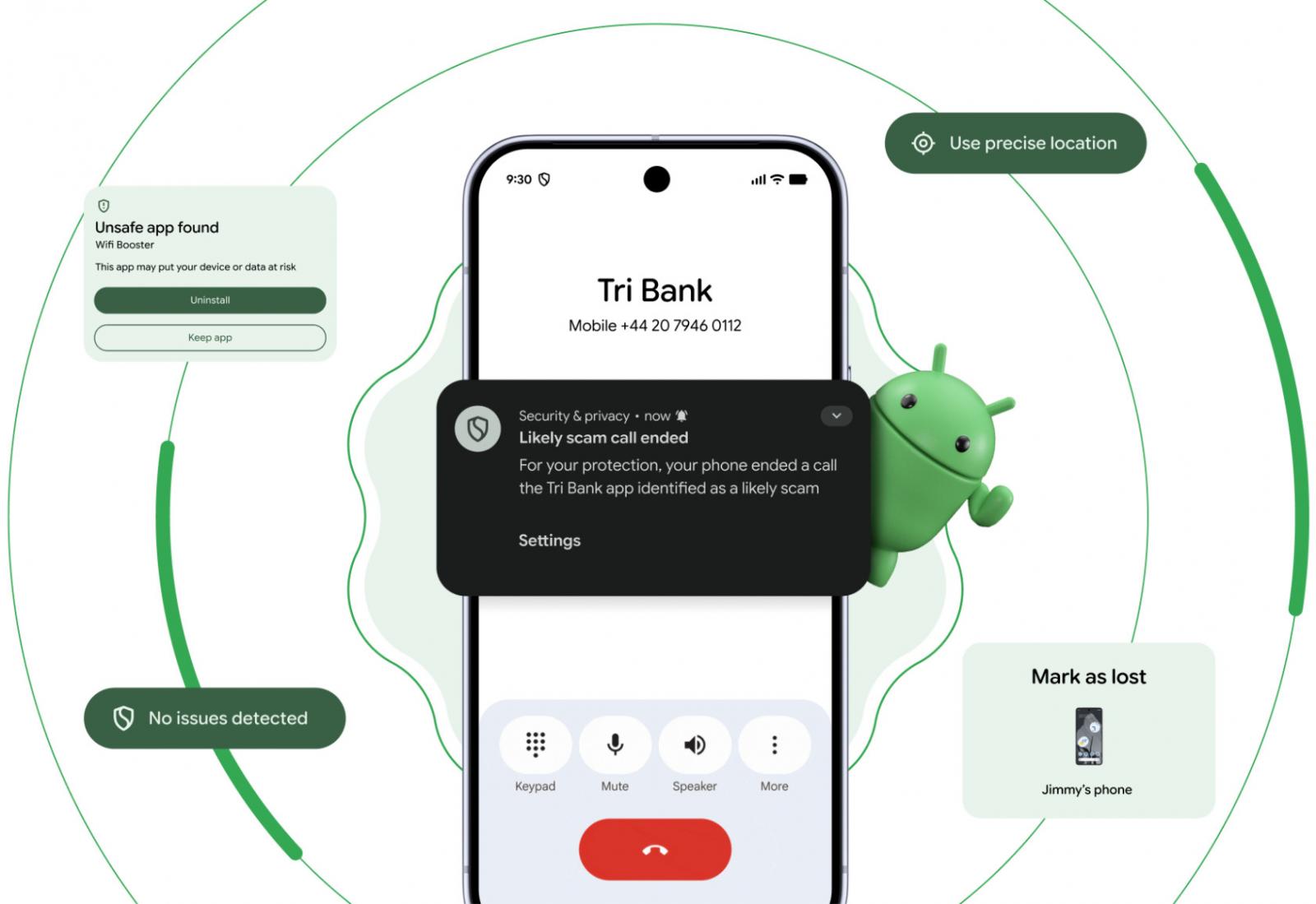
The call's authenticity verification occurs via app-level queries and by comparing the calling number to an internal set provided by the banks, and is not used for customer communication.
The initial rollout will cover the massively popular digital banking and payments app **Revolut**, the large Brazilian retail and commercial bank **Itaú Unibanco**, and the Latin American digital bank **Nubank**.
Although the feature will be introduced in **Android 17**, **Google** promises to make it available on **Android 11** and later.
### Expanded Threat Detection
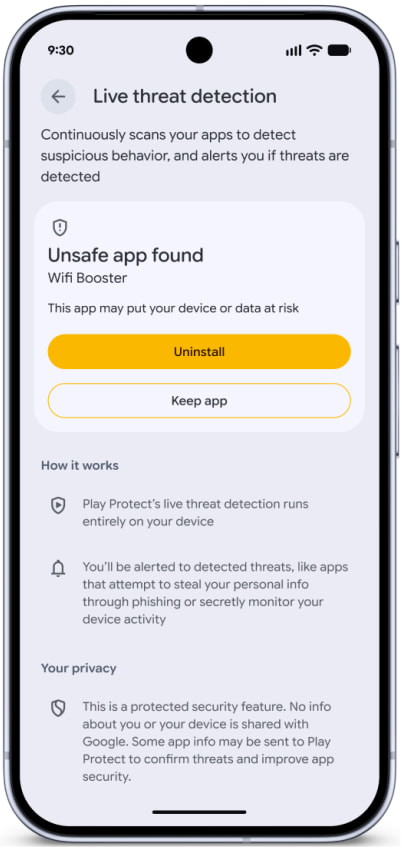
Android’s **Live Threat Detection** - an anti-stalkerware capability that leverages **Play Protect** to analyze app behavior and assess potential risk - is being expanded to detect additional abuse techniques, including SMS forwarding misuse, concealed accessibility overlays, apps that hide or alter their icons, and malicious background launches.
The **Advanced Protection** device-level security, available since **Android 16**, will also be expanded, now restricting accessibility service access to apps explicitly labeled as accessibility tools, disabling device-to-device unlocking, disabling **Chrome** WebGPU support, and adding scam detection for chat notifications.
### Device Theft Protection
To increase protection against device theft, **Google's** "Mark as lost" feature in **Android 17** will allow locking a phone with biometric authentication, as an extra option to device passcode or a PIN.
As such, thieves will not be able to disable device tracking or access it again if you mark it as lost, even if they have the passcode/PIN to unlock it.
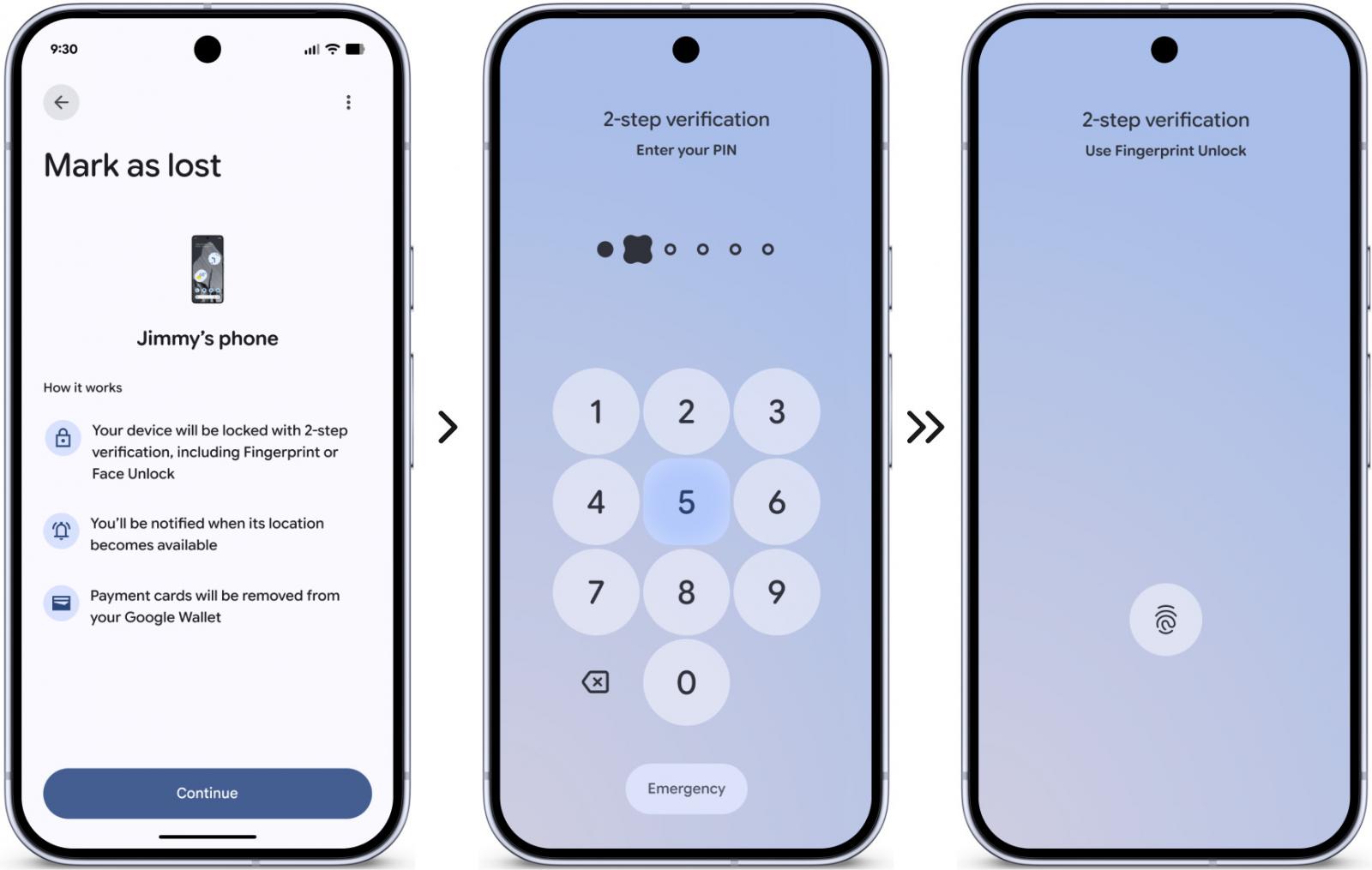
Once the device is marked as lost, the Quick Settings menu will become unavailable, and WiFi and Bluetooth connections will be disabled.
**Google** says that in select markets, including Argentina, Chile, Colombia, Mexico, and the United Kingdom, the device theft protection feature will be available on smartphones running **Android 10** or later.
### Additional Security and Privacy Improvements
Notable improvements related to privacy and security include:
* **Chrome** for **Android** will scan downloaded APKs for known malware before installation.
* “Mark as lost” will require biometrics to unlock devices, hide Quick Settings, and block new Wi-Fi and Bluetooth connections. Remote Lock and Theft Detection Lock will also become enabled by default on **Android 17** devices and some **Android 10+** devices in select markets.
* **Android 17** will reduce PIN/password-guessing attempts and increase the delay between failed unlock attempts.
* **Android 12+** devices will allow viewing the lock-screen IMEI for ownership verification and recovery.
* **Android 17** adds temporary precise-location sharing, improved location access indicators/history, and a new contact picker for temporary access to specific contacts only.
* **Android 17** introduces **AISeal** with **pKVM** for hardware-backed isolation of AI-related data processing.
* **Pixel** devices will initially gain verification for official **Android** builds, backed by a public ledger for authentic **Google** apps and **GMS APIs**.
* **Android** will hide SMS one-time passwords from most apps for three hours to block OTP theft.
* Carriers will be able to ship devices with 2G disabled by default in regions where legacy networks are retired.
* **Android** is adding post-quantum cryptography protections for future-proof security.
Some of these features, like OS verification, are launching on **Pixel** devices first or are limited to newer models, while others might be open to OEM adoption, so rollout timelines may vary widely across the **Android** ecosystem.
