Anthropic's 'Mythos' AI Model Nears Public Release After Uncovering 10,000 Vulnerabilities
**Anthropic** is seemingly preparing to release its advanced AI model, 'Mythos,' after initially restricting it due to significant security risks. The model, designed for advanced computer security tasks, has demonstrated the ability to develop sophisticated cyberattacks, prompting **Anthropic** to develop robust safeguards before public deployment.

**Anthropic** announced the early preview of **Mythos** on April 7th, highlighting its strikingly advanced capabilities in computer security tasks. The company positioned it as a new frontier model, far surpassing its current flagship model, Opus 4.7, in code reasoning and autonomy.
### Mythos: A Double-Edged Sword
While coding improvements are a common trend in AI models, **Mythos** stands out due to its ability to autonomously develop functional cyberattacks at a highly professional level. **Anthropic** acknowledged the model's potential to pose a severe risk to global digital infrastructure.
"The advantage will belong to the side that can get the most out of these tools," **Anthropic** warned in their initial announcement. The company emphasized the importance of careful release strategies to prevent exploitation by malicious actors, while also highlighting the long-term potential for defenders to leverage such models for proactive bug fixing.
### Guardrails and Rollout
To mitigate the risk of attackers exploiting unpatched vulnerabilities in popular applications like **Firefox**, **Anthropic** initially decided against a public rollout. The company focused on developing a robust guardrail system. Recent developments suggest that these guardrails may be nearing completion, as references to **Mythos** have appeared in **Claude Code** and **Claude Security**.
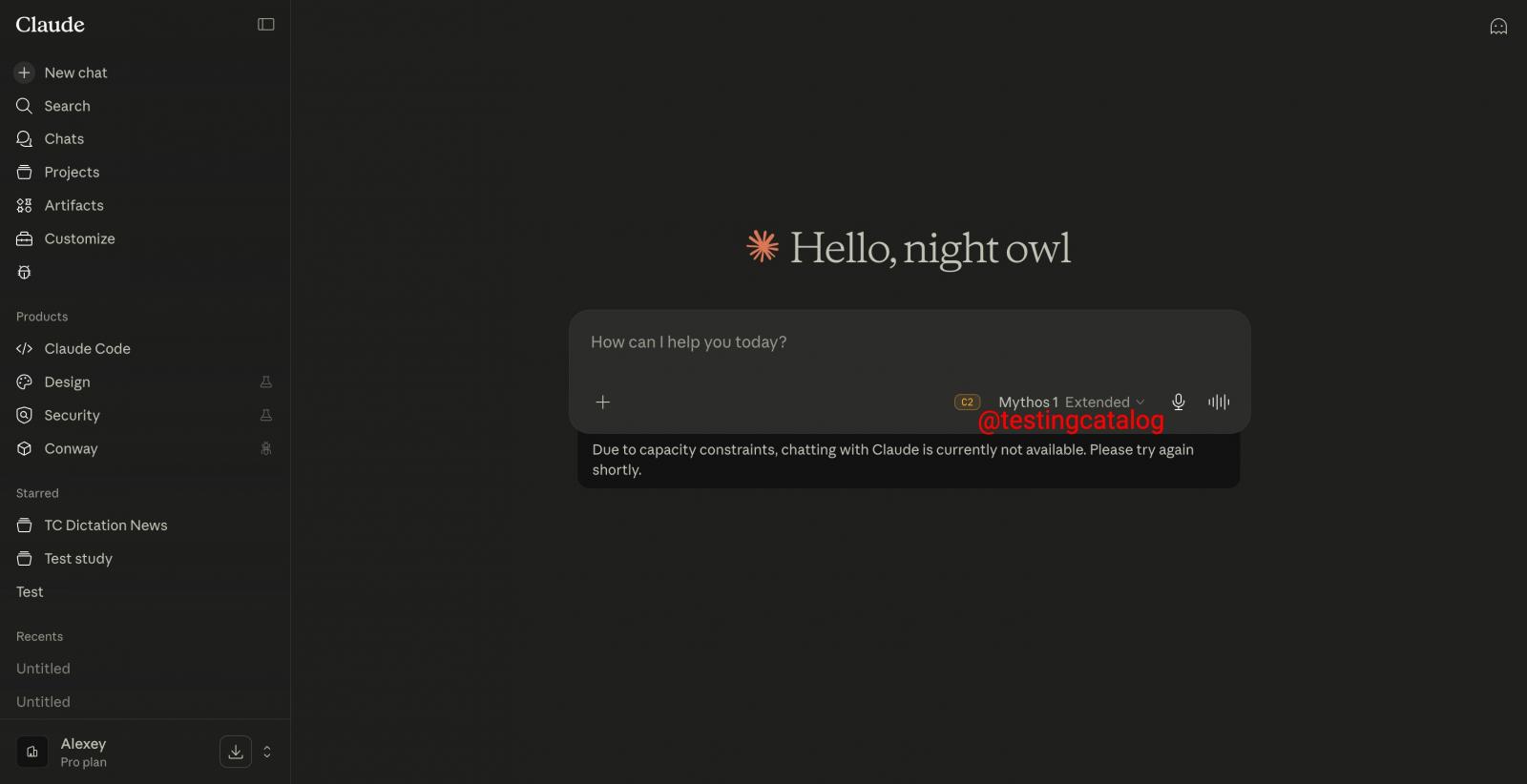
Users briefly observed a toggle to enable **Mythos** within **Claude Code** before it was taken offline. The model, identified as `claude-mythos-1-preview`, also made a fleeting appearance in the public version of **Claude Security**, further indicating an imminent public release. Availability across different subscription tiers remains unclear.
### Project Glasswing: AI-Driven Exploit Prevention
**Anthropic** is actively collaborating with other companies through a project called "Glasswing" to secure critical software from potential AI-driven exploits. This initiative leverages the unreleased **Claude Mythos Preview** and has already engaged with approximately 50 organizational partners.
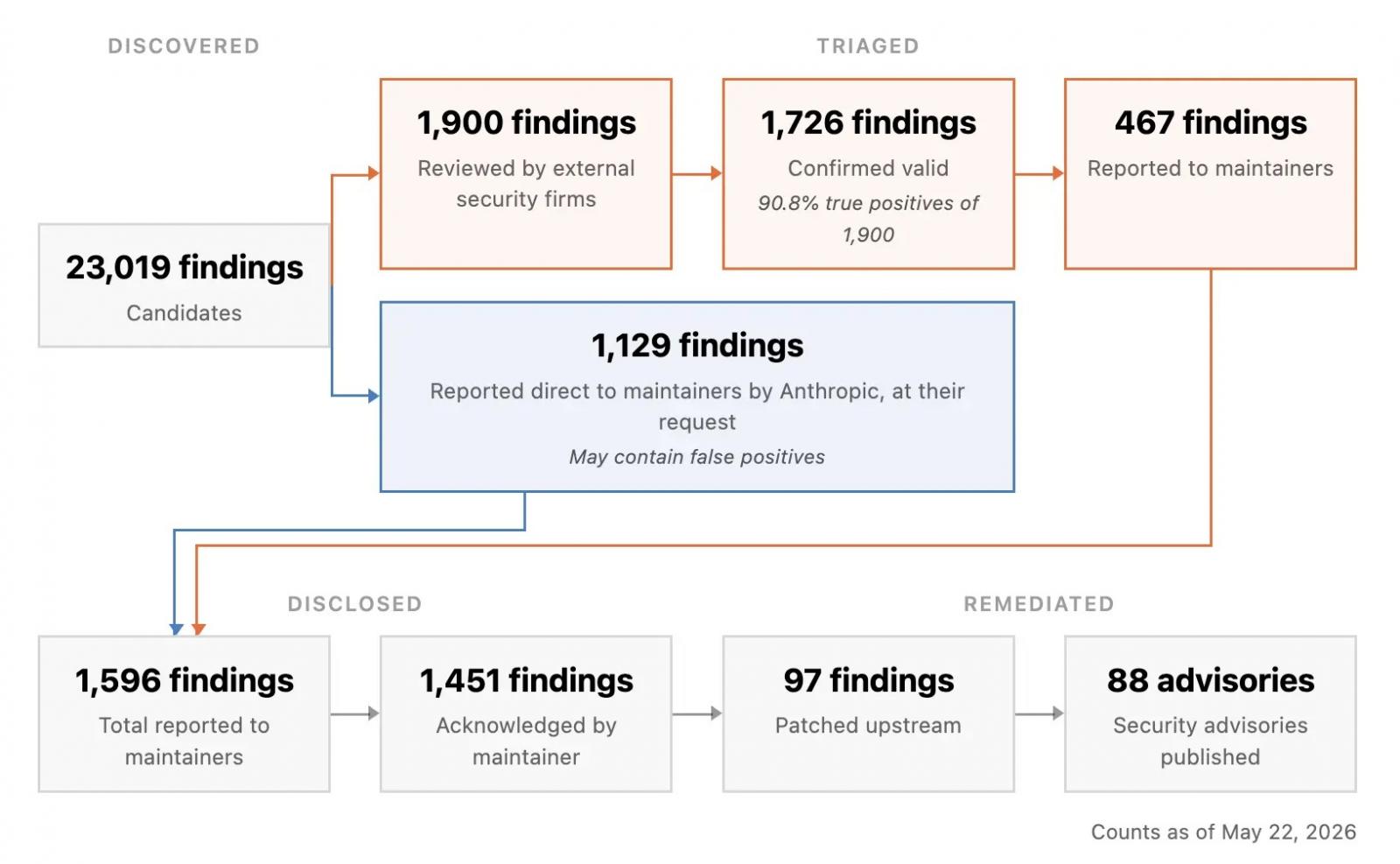
<figcaption><strong>Anthropic showed off a dashboard containing open-source vulnerabilities. This has vulnerabilities of all severities found by Mythos Preview.</strong></figcaption>
In its first month, **Mythos** uncovered 10,000 high- or critical-severity vulnerabilities, justifying **Anthropic**'s cautious approach to its public release. **Anthropic** currently offers **Claude Opus 4.7**, **Opus 4.6**, **Opus 4.5**, **Sonnet 4.6**, and **Haiku 5.5**.
<a rel="noopener nofollow" href="https://hubs.li/Q048zztN0"><img src="https://www.bleepstatic.com/c/p/validation-gap.jpg" data-src="https://www.bleepstatic.com/c/p/validation-gap.jpg" alt="article image"></a>
### The Validation Gap: Automated Pentesting
Automated pentesting tools deliver real value, but they were built to answer one question: can an attacker move through the network? They were not built to test whether your controls block threats, your detection rules fire, or your cloud configs hold.
This guide covers the 6 surfaces you actually need to validate.
<a rel="noopener nofollow" href="https://hubs.li/Q048zztN0">Download Now</a>