Beyond the Breach: What Happens After Attackers Get In?
A recent incident investigated by **Huntress** sheds light on the sophisticated post-compromise tactics threat actors employ. Far from a smash-and-grab, attackers are meticulously establishing persistence, disabling defenses, and repurposing compromised systems for their own gain. This analysis offers crucial insights for IT security professionals on anticipating and mitigating these stealthy maneuvers.

Most IT professionals focus on preventing initial access, but a detailed incident analyzed by **Huntress** reveals the critical importance of understanding attacker behavior *after* a breach.
Once inside, threat actors rarely rush. Instead, they dwell, establish backdoors, cover their tracks, and neutralize security tools – a deliberate process that significantly complicates remediation.
This article dissects a real incident from June, showcasing an attacker's unusually thorough approach to modifying an environment post-initial access, and what it means for effective post-breach cleanup.
## The Initial Vector: SQL Injection
**Huntress's** security team first detected suspicious activity linked to a **Microsoft SQL Server** process. Their investigation revealed the database itself wasn't directly targeted.
Instead, the attacker exploited a classic **SQL injection** vulnerability on a co-located webpage, which failed to properly validate user input. This flaw provided a direct path to the underlying Windows machine.
It's worth noting that **SQL injection** remains a prevalent and preventable web application vulnerability, stemming from inadequate input validation when passing user data to a database.
## Reconnaissance and Foothold Establishment
Upon gaining access, the attacker didn't act impulsively. They executed a standard Windows command to list running services – a common reconnaissance step to identify valuable targets or processes to masquerade malicious activity.
The results of this scan were exfiltrated to an attacker-controlled server, likely for further analysis or integration into automated tooling.
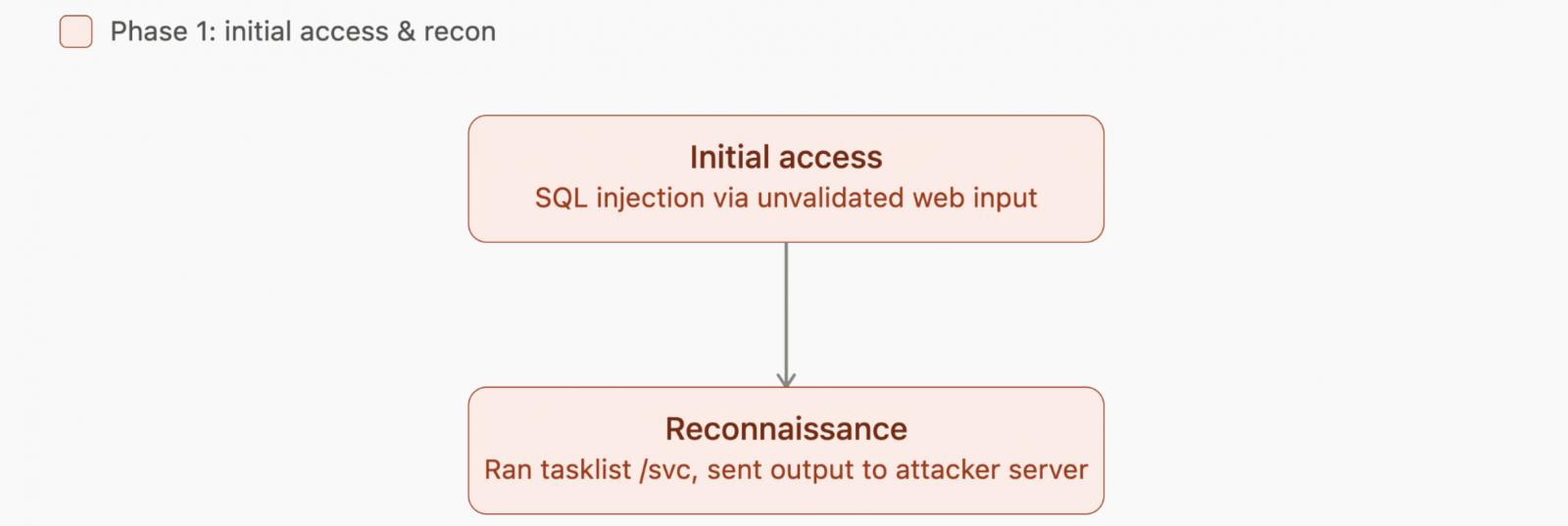
From there, the attacker systematically began to assert control over the environment:
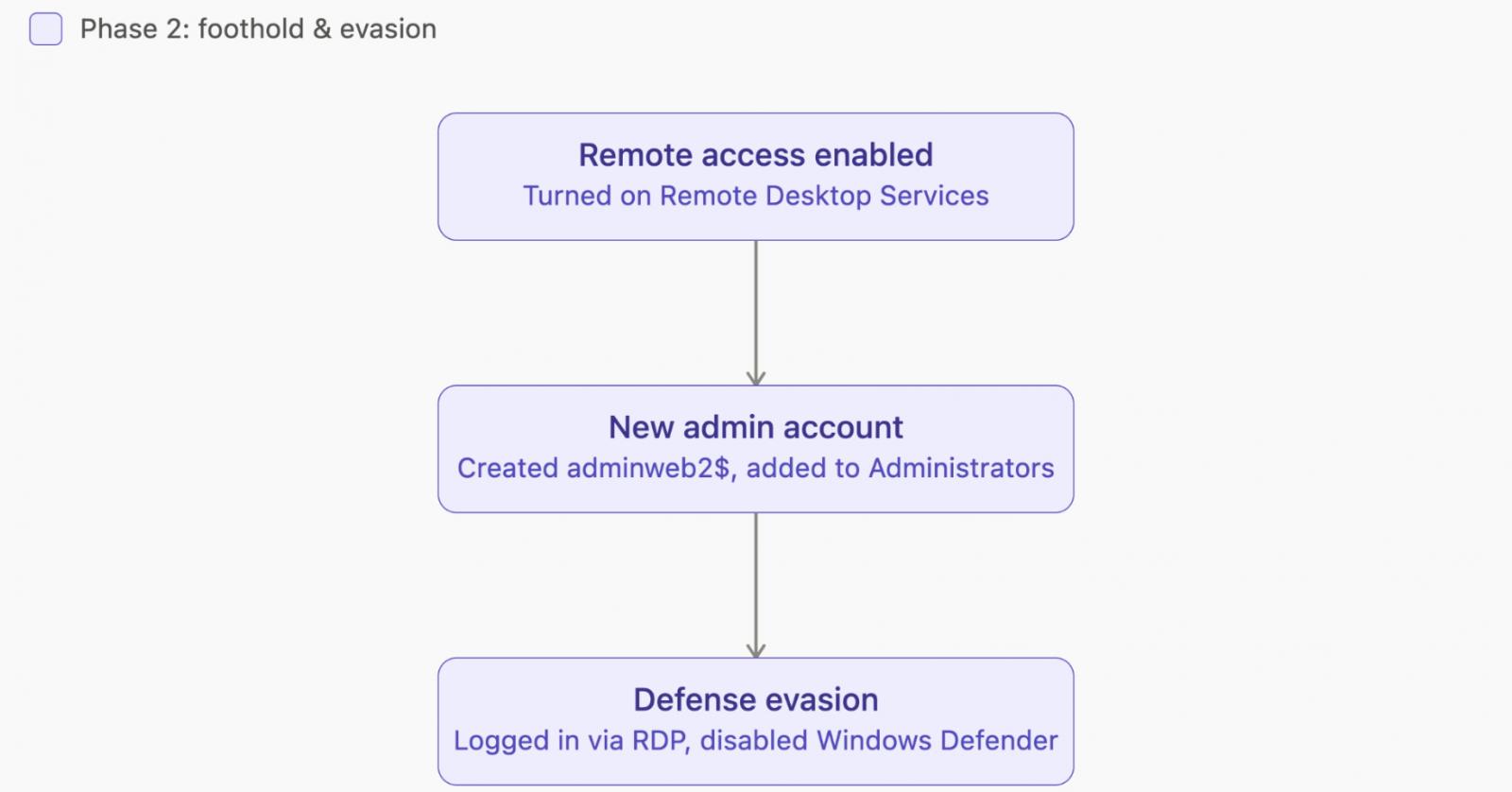
* **Remote Desktop** access, previously disabled, was activated.
* A new user account was created and added to the local Administrators group, ensuring persistent, high-level access even after reboots or basic cleanup attempts.
* The attacker logged in via **Remote Desktop** using this newly created account.
* **Windows Defender**, **Microsoft's** built-in antivirus, was disabled. Interestingly, other security monitoring tools like EDR were left untouched, suggesting either oversight or an inability to disable them.
## Weaponizing the Web Server with BadIIS
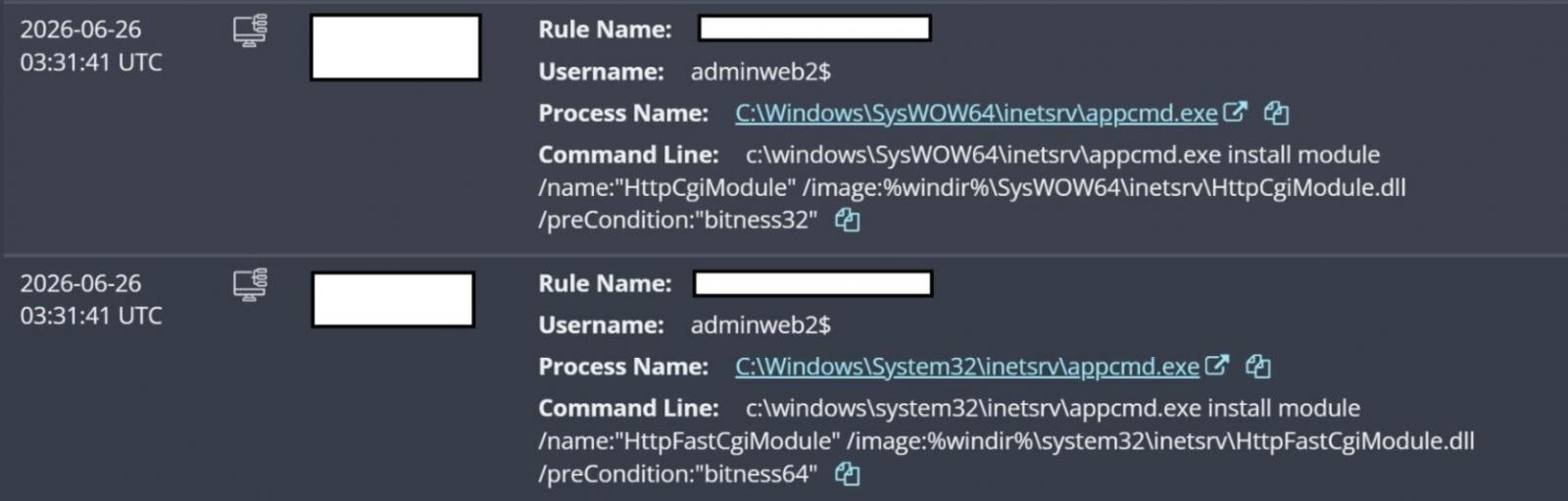
The attacker then installed malicious add-ons for the **Internet Information Services (IIS)** web server software running on the machine. These add-ons belong to the known malware family, **BadIIS**.
**BadIIS** is typically used for search-engine fraud, hijacking legitimate website traffic to redirect visitors, inject hidden links, or serve manipulated content, effectively turning the victim's web server into a tool for manipulating search rankings and ad traffic without the owner's knowledge.
## Covert Cryptocurrency Mining
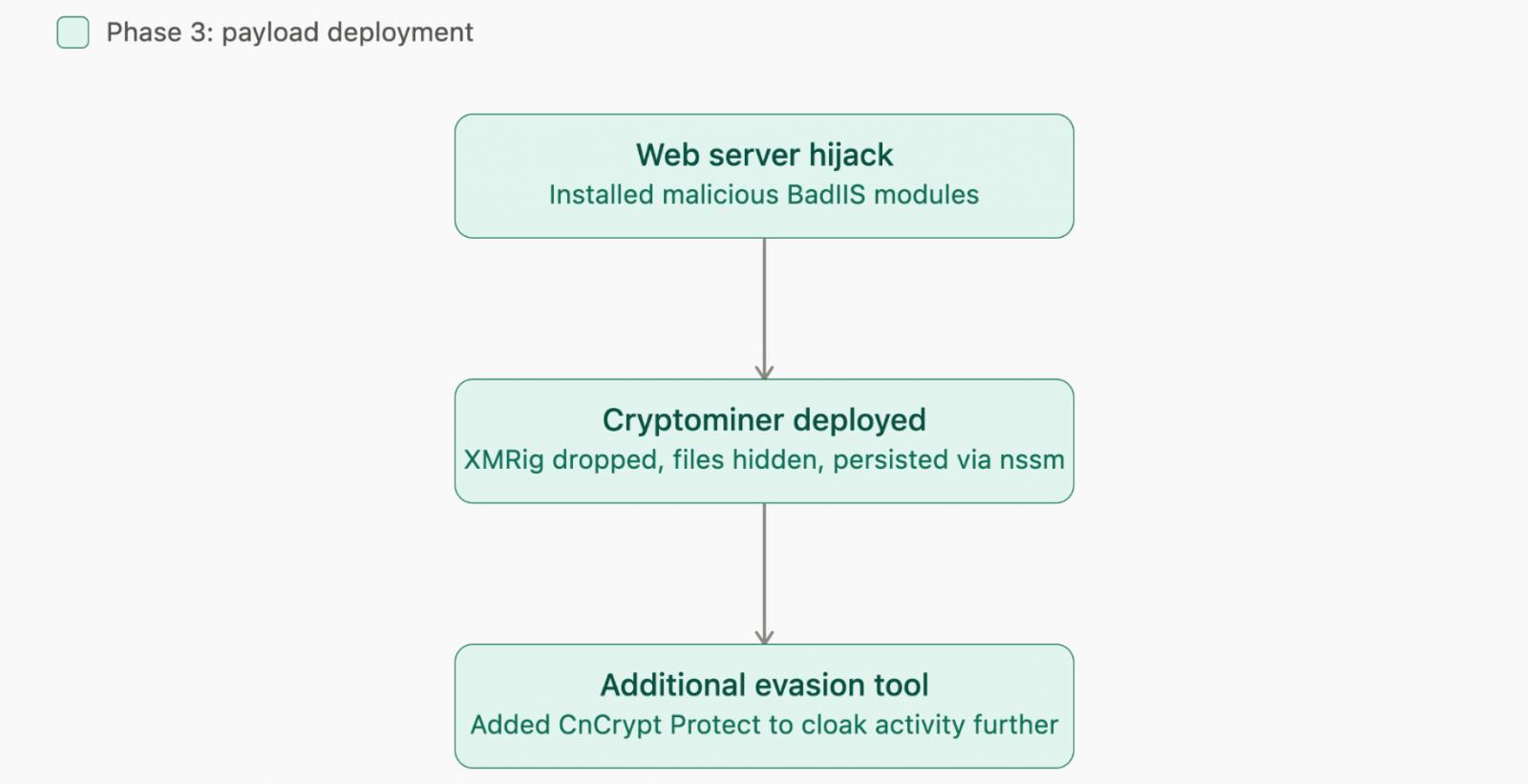
Next, a cryptocurrency mining program was deployed – a common tactic to leverage compromised systems' processing power for generating cryptocurrency, at the victim's expense.

To ensure stealth and persistence, the attacker:
* Disguised the mining program's files by marking them as hidden, system, and read-only, reducing their visibility during casual file system inspections.
* Configured the miner to run as a **Windows service** using a legitimate, freely available administrative tool, guaranteeing automatic startup and continued operation across reboots.
* Installed an additional tool specifically designed to help the malware evade detection.
## Extensive Scripting for Persistence
Throughout the incident, the intruder downloaded numerous **PowerShell** scripts and batch files from external servers. This is a common technique to introduce additional malicious tools dynamically, rather than bundling everything into the initial payload.
**PowerShell** was also utilized in a manner designed for silent execution – bypassing visible windows, security prompts, and Windows' script execution policies.
While none of these individual techniques are revolutionary, the sheer volume and variety of changes implemented by a single attacker on a single machine significantly impressed **Huntress** analysts.
For a deeper dive into the full investigation, refer to the [original **Huntress** blog post](https://www.huntress.com/blog/sql-injection-attacker-persistence).
## Implications for Defenders
While organizations often feel they have a 'home field advantage' on their own systems, an attacker who gains entry can quickly flip this dynamic. They reshape the environment to serve their objectives, often going far beyond simply disabling antivirus or dropping malware.
The paramount lesson here is that **identifying and rectifying the initial entry point is as crucial as cleaning up the immediate aftermath.**
In this specific case, the entry point was an unvalidated input field on a webpage. Had the security team merely removed the attacker's tools and accounts without patching the underlying **SQL injection** flaw, the attacker could have effortlessly re-entered through the same vulnerability, potentially making subsequent detection even harder.
## Actionable Steps for Strengthening Defenses
Start with foundational principles: comprehensive asset inventory. Maintain an up-to-date record of all physical and virtual systems, applications, and their versions across your environment. Building on this:
* **Reduce Attack Surface:** Minimize exposed services and applications to limit opportunities for attackers.
* **Remove Unnecessary Components:** Decommission or remove any unauthorized or non-essential software and services.
* **Implement Strict Access Controls:** Enforce the principle of least privilege and mandate **Multi-Factor Authentication (MFA)** wherever feasible.
* **Ensure Regular Updates and Monitoring:** Keep all active applications patched and ensure they are included in your continuous monitoring strategy.
* **Investigate Root Causes Religiously:** When an incident occurs, do not stop at superficial malware removal. Thoroughly investigate the precise method of entry to strengthen future defenses and prevent recurrence.
Attackers often rely on defenders stopping at surface-level cleanup. Digging deeper to identify and fix the true point of entry is what ensures the 'home field advantage' remains firmly with the defender.