Comcast's Xfinity Shield Leverages WiFi Signals for Home Motion Detection, Raising Privacy Questions
**Comcast** is rolling out **Xfinity Shield**, a new home protection platform that prominently features **WiFi Motion**. This innovative, yet not entirely new, technology transforms standard WiFi signals into an invisible motion detection system, alerting users to movement within their homes without the need for cameras or traditional sensors. While offering a novel approach to home security, the feature's data handling policies are prompting scrutiny from privacy advocates.
### Xfinity Shield: A New Approach to Home Protection
**Comcast** recently unveiled **Xfinity Shield**, an integrated application suite designed to enhance home security through a combination of cybersecurity, physical monitoring, and family safety features. Central to this offering is **WiFi Shield**, available at no extra cost to **Xfinity** Internet customers with compatible gateways. **WiFi Shield** bundles existing features like **CyberSecure** network protection and Family Settings with the intriguing new **WiFi Motion** capability.
For those seeking more comprehensive physical security, **Comcast** also offers **Shield Select** at $15 per month. This premium tier includes an indoor camera, door/window sensors, cloud video storage, and 24/7 urgent response services.

While marketed as a new cornerstone of **Xfinity Shield**, **WiFi Motion** itself isn't a brand-new concept. Reports from as early as August 2024, including a **Reddit** post and coverage from **WiFi NOW**, indicate that **Comcast** has been quietly testing and offering this feature for some time, now simply ramping up its public promotion.
### How WiFi Motion Works: Turning Signals into Sensors
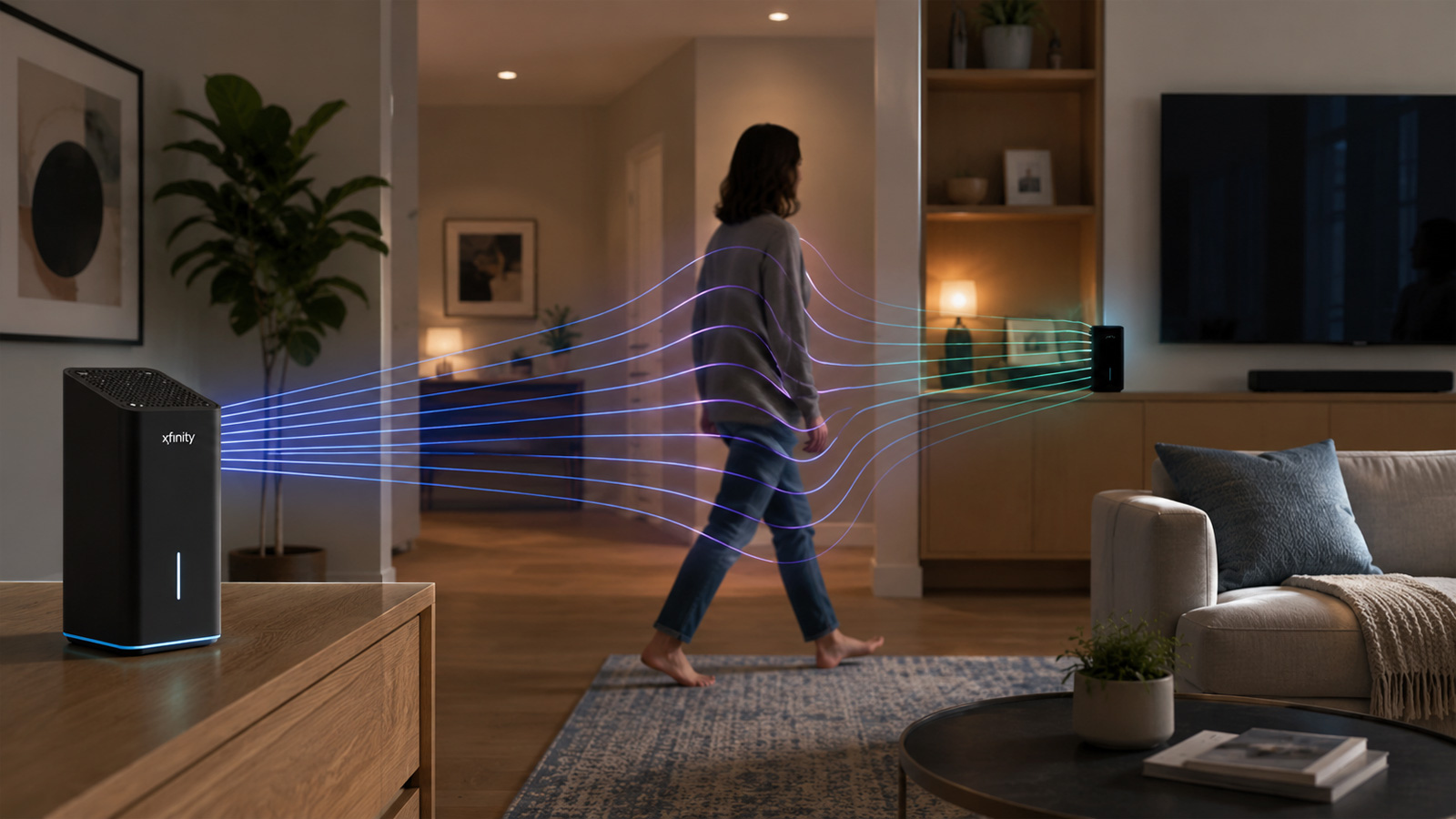
**WiFi Motion** operates by transforming the radio links between an **Xfinity Gateway** and other stationary WiFi-connected devices into virtual motion sensors. Users designate specific stationary devices, such as smart speakers or thermostats, positioned strategically around their homes. When an individual moves through the area between the gateway (or an extender) and one of these designated devices, their body subtly alters the path of the WiFi radio signals.
**Comcast** states that its system detects these minute changes in the home's radio frequency signals, interpreting them as movement. Customers then receive notifications via the **Xfinity** app, eliminating the need for traditional cameras or dedicated motion detectors. The company emphasizes that the system is designed to detect motion, not to identify specific individuals or track their precise location. Furthermore, **WiFi Motion** is an opt-in feature, disabled by default.
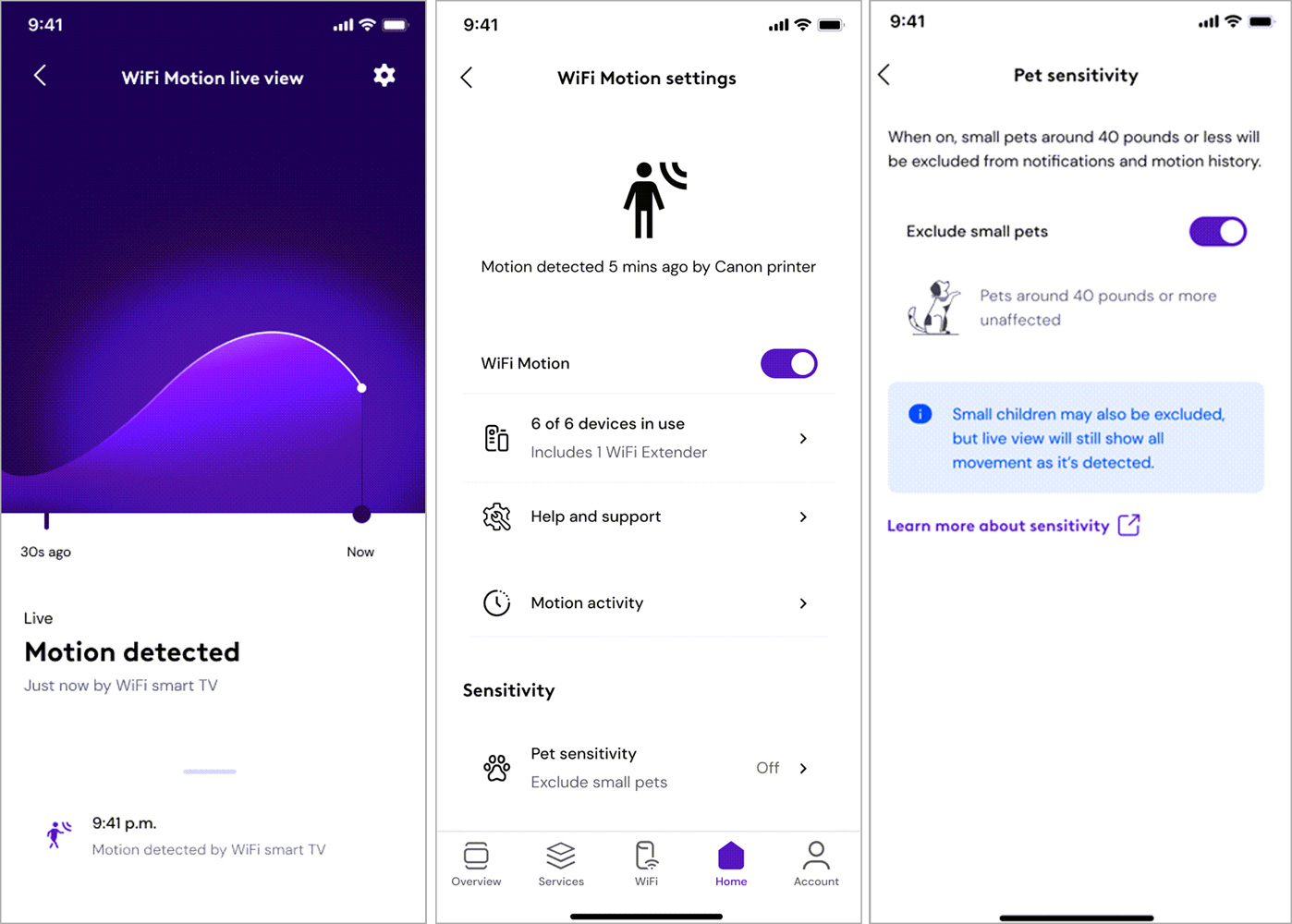
The technology can be quite sensitive, with adjustable motion sensitivity levels to filter out movement from small pets. However, **Comcast** acknowledges that without visual information, the system may struggle to differentiate between a small pet and a similarly sized child. For those in shared living spaces like apartments, **Comcast** advises lowering the sensitivity to prevent unwanted detections from movement outside the sensing zone.
### Patent Insights and Privacy Concerns
A pending patent application filed by **Comcast Cable Communications** in September 2023, titled "Methods, systems, and apparatuses for presence detection," offers further insight into the underlying technology. Published in April 2025, the patent details the use of stationary network devices for motion detection by analyzing changes in wireless signal characteristics. It explains how WiFi signals, which travel along multiple paths, are altered by movement, allowing software to infer presence.
This method draws on earlier patents from **Cognitive Systems**, a company specializing in WiFi motion detection, highlighting the established nature of this technology.
However, the use of WiFi signals as invisible motion sensors raises significant questions regarding data privacy. As initially reported by **TechCrunch**, **Comcast's** own **WiFi Motion** documentation states that information generated by the feature may be disclosed to third parties "without further notice to you" in specific circumstances. These include law enforcement investigations, disputes involving **Comcast**, or in response to court orders or subpoenas.
Crucially, **Comcast's** documentation does not explicitly detail what specific **WiFi Motion** information is retained, for how long it is stored, or the precise nature of data that could be furnished in response to legal demands. While **Comcast** asserts that it does not monitor the motion or notifications generated by the feature, the potential for data disclosure without explicit user consent warrants careful consideration by privacy-conscious users and IT security professionals alike. **Ghost Protocol** has reached out to **Comcast** for clarification on these data retention and disclosure policies and will update this report as more information becomes available.