DHS Plans Massive Expansion of Border Surveillance Towers, Raising Privacy Alarms
A new Government Accountability Office (GAO) report reveals that the Department of Homeland Security (DHS) intends to nearly triple its network of surveillance towers along U.S. borders by 2034. This ambitious expansion, part of **Customs and Border Protection's (CBP)** Integrated Surveillance Tower (IST) program, is projected to cost $1 billion and is sparking significant concerns among privacy advocates regarding its impact on civil liberties in border communities.
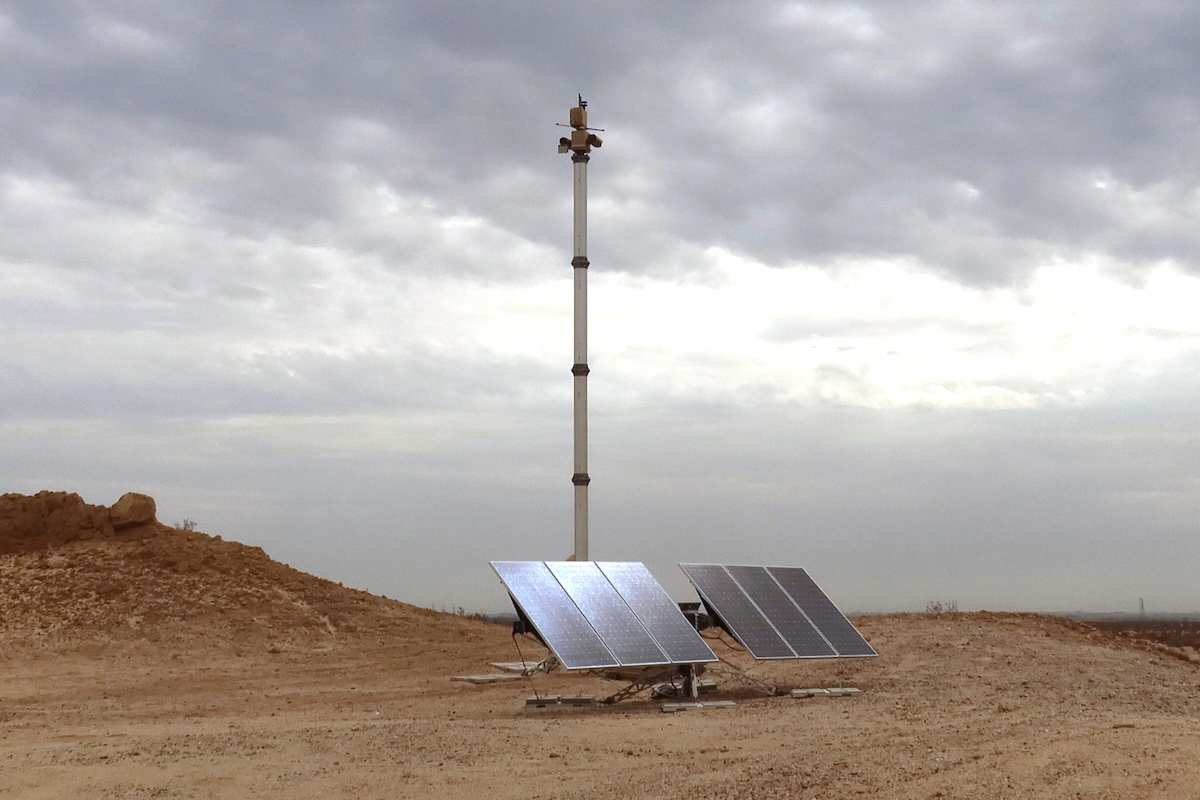
The **Department of Homeland Security (DHS)** is set to significantly expand its border surveillance infrastructure, increasing the number of towers from 830 to 2,300 over the next decade. This plan, detailed in a new **Government Accountability Office (GAO)** report, represents a substantial investment of taxpayer money, estimated at $1 billion.
### The Integrated Surveillance Tower (IST) Program
The expansion falls under **Customs and Border Protection's (CBP)** **Integrated Surveillance Tower (IST)** program. This program employs a range of advanced technologies designed to capture images of people and vehicles across vast distances. The towers utilize:
* **Autonomous Surveillance Towers**: Equipped with **AI-based systems**, radar, thermal infrared, and optical sensors to track targets over long ranges.
* **Integrated Fixed Towers**: Optimized for monitoring foot traffic and vehicles.
* **Remote Video Surveillance Systems**: Often positioned close to the border fence, these systems are capable of observing residential neighborhoods on both sides of the border.
**DHS** plans to acquire more long-range autonomous towers and upgrade existing infrastructure with autonomous capabilities. Funding for this initiative reportedly stems from the 'One Big Beautiful Act,' a significant tax and spending law signed in 2025.
### A Broader Surveillance Landscape
The expansion of surveillance towers is just one component of a much larger, taxpayer-funded infrastructure deployed along U.S. borders. This extensive network also includes drones, aerostats, surveillance vehicles, ground sensors, game cameras, and automated license plate readers.
These technologies are not exclusively used by U.S. federal agencies; state and local law enforcement, and even governments on the Mexican side, also deploy similar systems.
### Privacy and Civil Liberties at Risk
Privacy advocates, including the **Electronic Frontier Foundation (EFF)**, have voiced strong opposition to this expansion, citing significant threats to the privacy and civil liberties of residents in border regions. These surveillance systems are indiscriminately pointed at towns, school playgrounds, backyards, and vehicles, raising concerns about pervasive monitoring.
Since 2022, **EFF** has actively researched and mapped surveillance technology along the U.S.-Mexico border. Their work, based on public records, open-source intelligence, and fact-finding missions, includes an interactive map and a comprehensive guide titled "Surveillance Technology at the U.S.-Mexico Border." This guide, updated recently, helps individuals identify various surveillance technologies, including new military tech and disguised trail cameras.
**EFF**'s broader efforts also involve defending individuals whose devices are searched or seized at the border, pushing back against the collection of biometric and social media identifiers, and providing digital security guidance for cross-border travelers.
As the web of surveillance technology at the borders continues to grow, organizations like **EFF** are committed to investigating and exposing these systems, working with affected communities to challenge their impact on human rights.