GCHQ Director Warns of Relentless Russian Hybrid Attacks, Calls for Urgent Cybersecurity Action
The director of Britain's **GCHQ** (Government Communications Headquarters) has issued a stark warning about the daily hybrid attacks being waged by Russia against the UK and Europe. Anne Keast-Butler emphasized the need for businesses, governments, and allies to prioritize cybersecurity with unprecedented urgency, citing threats ranging from undersea cables to disinformation campaigns.
## Russia's Hybrid Warfare: A Call to Arms
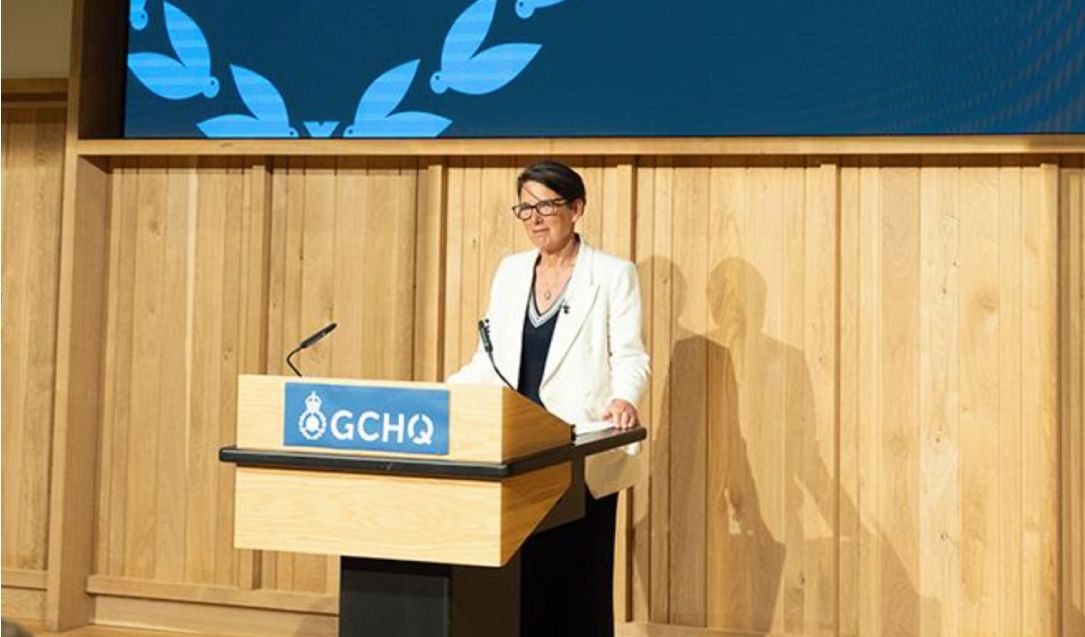
**BLETCHLEY PARK, England** – Speaking at the historic Bletchley Park, birthplace of modern computing and codebreaking, Anne Keast-Butler, director of **GCHQ**, delivered a compelling address highlighting the escalating cyber threats posed by Russia. She asserted that these attacks, spanning “from the seabed to cyberspace,” demand immediate and comprehensive countermeasures.
Keast-Butler urged a tenfold increase in cybersecurity urgency, emphasizing the critical juncture where proactive actions and strong partnerships are paramount. She drew parallels to the wartime efforts at Bletchley Park, where a team, largely composed of women, cracked Nazi ciphers, altering the course of history.

### Targeting Critical Infrastructure and Democratic Processes
Russia's targets, according to Keast-Butler, include “critical infrastructure, democratic processes, supply chains, and public trust.” **GCHQ** is responding with various defensive measures, including safeguarding subsea cables and energy pipelines in British waters, disrupting Russian networks involved in sanctioned technology smuggling, and countering acts of sabotage and assassination attempts.
Last month, the UK revealed it had tracked and forced the retreat of a Russian submarine operation near vital seabed infrastructure. Additionally, numerous Kremlin-operated saboteurs and spies have been identified and apprehended on British soil.
Keast-Butler also highlighted the role of the National Cyber Force, a joint initiative between **GCHQ**, the military, and other intelligence agencies, in combating state-sponsored threats, terrorist networks, and criminal elements, including child sex offenders. "We deliver high-impact cyber operations every single day," she stated.
### A Moment of Consequence: Urgency and Innovation
Keast-Butler repeatedly stressed the urgency required to address these challenges, stating, “The risk of miscalculation is as high as I have ever seen it.” Her address aimed to emulate the urgency and innovation displayed during the Nazi threat.
She referenced Alastair Denniston, the founder of the Government Code and Cypher School (now **GCHQ**), who began recruiting for Bletchley Park before the outbreak of World War II. The machines developed there, including the Bombe and the Colossus, are widely recognized as foundational to the computing age.
### AI-Powered Cyber Defense
One of the proposed solutions is a new national cyber defense capability incorporating agentic AI. This system aims to detect and respond to attacks faster than human operators, providing a crucial advantage in the face of increasingly rapid AI-driven cyber activity. The National Cyber Security Centre will be responsible for delivering this capability.
### China's Rising Cyber Prowess
Keast-Butler echoed recent warnings from Dutch military intelligence, noting that China's cyber capabilities now rival those of the United States. She described China as a “science and tech superpower with sophisticated intelligence, cyber and military capabilities.”
### Quantum Computing Threat
Looking ahead, Keast-Butler addressed the long-term threat posed by quantum computing. Once fully realized, quantum computers will be capable of breaking traditional encryption methods, jeopardizing government secrets, financial systems, and military communications. She urged businesses to begin transitioning to quantum-resistant systems proactively.
### Call to Action: Passkeys, Alliances, and Partnerships
Keast-Butler concluded with a call to action, urging individuals to adopt stronger security practices, such as switching to passkeys, and emphasizing the importance of international collaboration. She highlighted the Five Eyes intelligence-sharing alliance as a critical partnership in countering cyber threats from China and Russia.
<a href="https://www.recordedfuture.com/?utm_source=therecord&utm_medium=ad"><figure><img src="https://cms.therecord.media/uploads/2025_0514_Record_Ads_970x250_1_d144dbf901.png" data-nimg="1" decoding="async" height="500" width="1000" alt="Recorded Future"></figure></a>