Drone Journalism vs. Government Restrictions: The Fight for First Amendment Rights Continues
A crucial legal battle is unfolding in the D.C. Circuit Court, challenging the Federal Aviation Administration's (FAA) authority to restrict drone flights that record law enforcement. Privacy advocates and media organizations argue that such restrictions infringe upon First Amendment rights, particularly the ability to document government activities and ensure accountability.
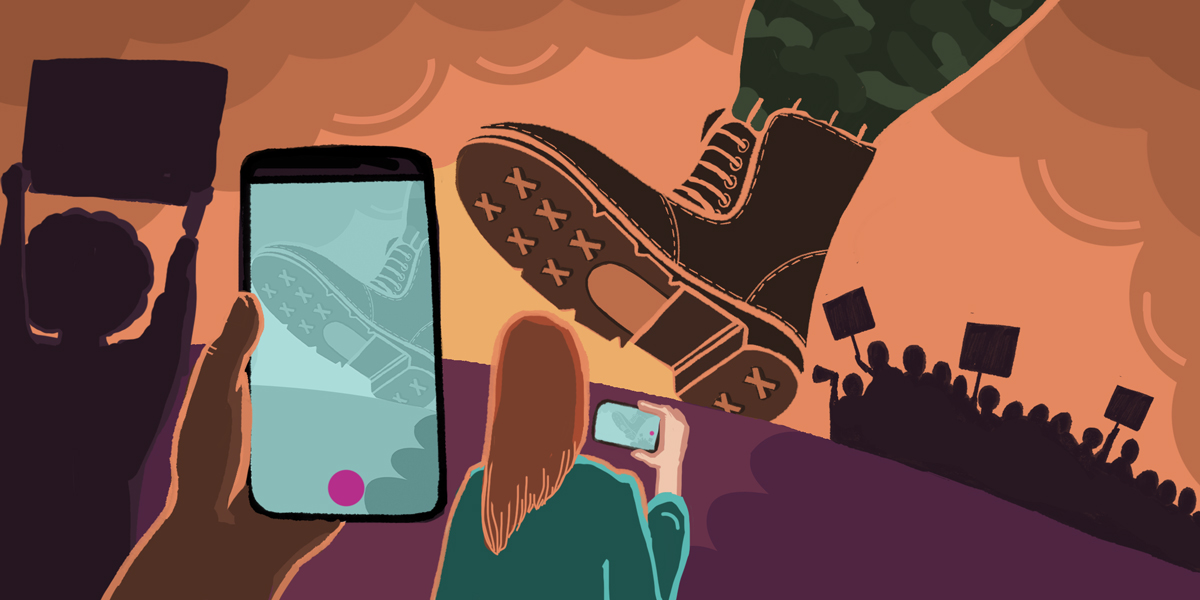
The **Electronic Frontier Foundation (EFF)**, alongside the **ACLU**, **ACLU of D.C.**, **National Press Photographers Association**, and **Professional Photographers of America**, has filed an amicus brief in the case of ***Levine v. FAA***. This case directly challenges the government's power to penalize drone pilots for recording law enforcement officers engaged in their official duties.
Earlier this year, the **FAA** issued a temporary flight restriction (TFR) for drones. This TFR effectively criminalized the recording of **Department of Homeland Security (DHS)** officers, including **Immigration and Customs Enforcement (ICE)** and **Customs and Border Protection (CBP)** agents, and their vehicles, even from over half a mile away.
### The Legal Challenge and FAA's Retreat
In March, a drone operator, represented by the **Reporters Committee for Freedom of the Press**, sued the **FAA**. However, in April, the **FAA** rescinded the controversial flight restriction.
Despite the rescission, the petitioner argues that the court should still evaluate the legality of the original restriction. This is crucial because drone pilots could still face punishment for violations that occurred while the TFR was active. Furthermore, there's concern that the **FAA** could reinstate the restriction at any time, suggesting the rescission was an attempt to avoid judicial review rather than a genuine policy change.
### The Unique Value of Drones in Journalism
The amicus brief highlights the unique perspectives drones offer. They can capture imagery and video that ground-based cameras cannot, providing a broader, safer, and more cost-effective way to document newsworthy events. Drones have proven invaluable in covering protests, documenting police use of force, and providing real-time information during natural disasters, all without putting journalists directly in harm's way.
### First Amendment Implications
The brief asserts that using drones for information gathering is a protected First Amendment activity, akin to using cell phones to record law enforcement. It also suggests the **FAA's** flight restriction was a targeted effort to prevent the recording of immigration agents, thereby hindering accountability for their enforcement actions.
Such a content-based restriction on speech would be subject to strict scrutiny, the highest First Amendment standard, and would be presumptively unconstitutional. Even under less rigorous scrutiny, the restriction is deemed unconstitutional as the **FAA** has failed to articulate a valid governmental interest to justify such a sweeping limitation on speech.
### The Future of Drone Documentation
The resolution of this case is particularly urgent as government agencies continue to invest heavily in counter-drone technology. This technology, if not properly regulated, could easily be deployed against journalists and citizens seeking to document government actions and potential abuses. The **EFF** and its allies urge the D.C. Circuit to vacate the **FAA's** flight restriction, sending a clear message that the government cannot circumvent accountability by punishing those who exercise their First Amendment rights.