EFF Lawsuit Uncovers Medicare AI Program's 'Operational Chaos' and Patient Harm
The **Electronic Frontier Foundation (EFF)** has released approximately 1,000 pages of documents obtained through litigation against the **Centers for Medicare & Medicaid Services (CMS)**. These records shed light on the **Wasteful and Inappropriate Service Reduction (WISeR)** model, an experimental AI program designed to evaluate prior authorization requests, revealing widespread delays, denials, and patient harm.

In March, the **EFF** initiated a lawsuit against the government, seeking transparency into the **WISeR** model. This new Medicare program leverages AI to streamline prior authorization decisions for specific medical services.
Today, the **EFF** has made public a trove of nearly 1,000 pages of records from **CMS**. These documents, secured through the litigation, include contracts with tech companies, internal status reports, and a litany of complaints from healthcare providers. The revelations indicate that **WISeR** has led to significant care delays, inappropriate denials, operational disarray, and reports of direct patient harm.
## Why the EFF Sued for WISeR Records
The **EFF**'s **FOIA** lawsuit aimed to bring much-needed transparency to an AI program that, if unchecked, could severely compromise Medicare beneficiaries' access to essential care. Launched in January 2026, the **WISeR** model subjected seniors in six states to AI-driven prior authorization decisions. Under this model, private companies contracted by **CMS** use AI to evaluate requests for medical treatments before Medicare coverage is assured.
Without robust safeguards, AI-driven prior authorization can result in unwarranted—and potentially discriminatory—delays or denials of critical medical care. Details about the AI systems employed by **WISeR** vendors remain largely obscure. While **CMS** maintains that all denials undergo review by a qualified human clinician, research consistently shows that AI-generated recommendations heavily influence human decision-making.
Furthermore, the **WISeR** program's design introduces a financial incentive for vendors to deny care, as they are compensated for averted expenditures. Within months of the program's inception, medical providers began reporting improper denials, administrative friction, and prolonged delays, leaving patients in considerable pain while awaiting approvals.
The **EFF**'s **FOIA** request specifically targeted records concerning **CMS** contracts with **WISeR** software vendors, any accuracy, bias, or 'hallucination' tests performed on the vendors' technology, and any audits, monitoring, or evaluations of **WISeR** and its participating vendors.
## CMS Documents Confirm WISeR's Flaws
The records obtained by the **EFF** corroborate the concerns raised by medical providers, patient advocates, and lawmakers since **WISeR**'s launch. These issues encompass extended wait times, widespread technical failures, inappropriate denials, and adverse patient outcomes.
### Delayed Responses to Prior Authorization Requests
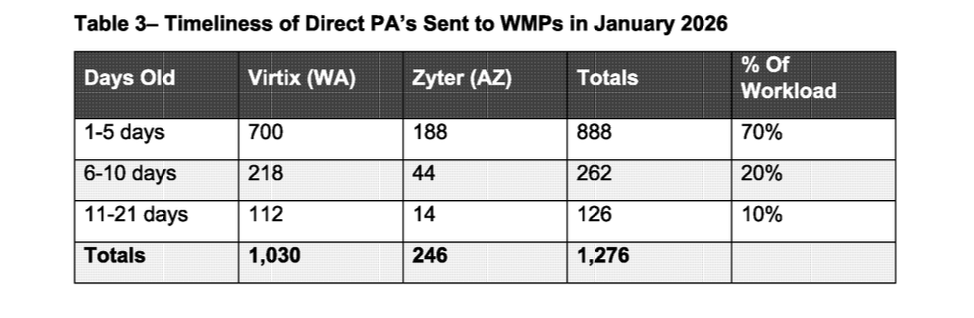
**CMS** publicly states that **WISeR** vendors should respond to prior authorization requests within 72 hours. However, the newly released records reveal widespread non-compliance. Internal status reports from the program's initial months demonstrate that a significant number of requests exceeded the 72-hour response window. One report even cites a prior authorization request that remained unanswered for 83 days. Such delays have grave consequences for patients, with medical providers reporting that **WISeR** has postponed medically necessary care, leaving patients in agony.
### Financial Incentive to Deny Care Confirmed
The released documents confirm that **WISeR**'s payment structure incentivizes care denials. Specifically, vendors receive payment for denied requests (excluding those reversed on appeal). This profit motive exacerbates the risk that AI-assisted decisions may unfairly deprive individuals of essential services.
**CMS** publicly asserts that it safeguards against inappropriate denials by linking vendor payment rates to 'quality scores,' reflecting the timeliness and accuracy of their decisions. However, the recently released *WISeR Data Reporting Guide* indicates that low quality scores only reduce payments by a marginal 5-10%.
### Thousands of Prior Authorization Requests Denied
Documents obtained by the **EFF** appear to support reports of unusually high denial rates by **WISeR** vendors. Two companies alone denied over 20,000 prior authorization requests within the program's first three months. Notably, **Virtix**, a vendor that **CMS** required to submit a Corrective Action Plan, denied more requests than it approved during this period.
### Provider Feedback Links Delays to Patient Harm
Feedback from medical providers unequivocally highlights that **WISeR** delays have caused patient harm. The released records include March 2026 responses to a feedback form concerning **Innovaccer**, the **WISeR** vendor handling requests for Ohio. Providers complained about poor communication, administrative issues, and lengthy response times. Several responses explicitly link these long response times to patient suffering:
> *“We have patients calling our offices crying in pain because their procedures are being delayed while awaiting approvals or guidance tied to this model. A 3–4 day delay for necessary pain procedures is already difficult for vulnerable patients, but when providers cannot obtain answers for weeks, the situation becomes unacceptable.”*
>
> *“I HAVE HAD TO WATCH 3 PATIENTS CRY AT BEDSIDE FOR NOT HEARING BACK ON THEIR PRIOR AUTH FOR KYPHOPLASTY/VERTABRAL AUGMENTIATION PROCEDURE. THESE PATIENTS ARE IN DEEP PAIN.”*
>
> *“I have had cases submitted and waiting over 1 1/2 months for a UTN to be generated… In the meantime patients are having to be cancelled for surgeries they need. This is not acceptable they are severely hindering patient care.”*
### Rushed Rollout Amidst Widespread Technical Failures
The **CMS WISeR** program launched in January 2026, merely six months after its announcement. Despite warnings from both medical providers and a vendor about insufficient preparation time, **CMS** proceeded with the launch.
Approximately a month prior to launch, **Innovaccer** informed **CMS** of its intention to go live with a version of its software lacking full functionality and comprehensive testing. The vendor cited changing requirements, unclear governance processes, and insufficient time for end-to-end testing with the provider community as barriers to a fully functional launch. **Innovaccer** stated it would auto-affirm all prior authorization requests until full functionality could be developed, explaining that "Given **CMS**'s decision not to delay the model start date, auto-affirming is the only path available."
According to an April 2026 status report, **Innovaccer** had not yet completed development or testing of some features several months into the program. **Innovaccer** was not the sole vendor facing technical challenges both before and after **WISeR**'s launch. Weekly status reports and provider feedback in the released records illustrate widespread difficulties stemming from **WISeR**'s rushed implementation.