Pentagon Grapples with Securing AI-Driven Warfare Systems
As the **Pentagon** integrates artificial intelligence into military operations, a critical challenge emerges: securing and controlling the underlying software. Concerns over vulnerabilities, supply chain risks, and adversarial exploitation are paramount as the military increasingly relies on privately developed AI systems.
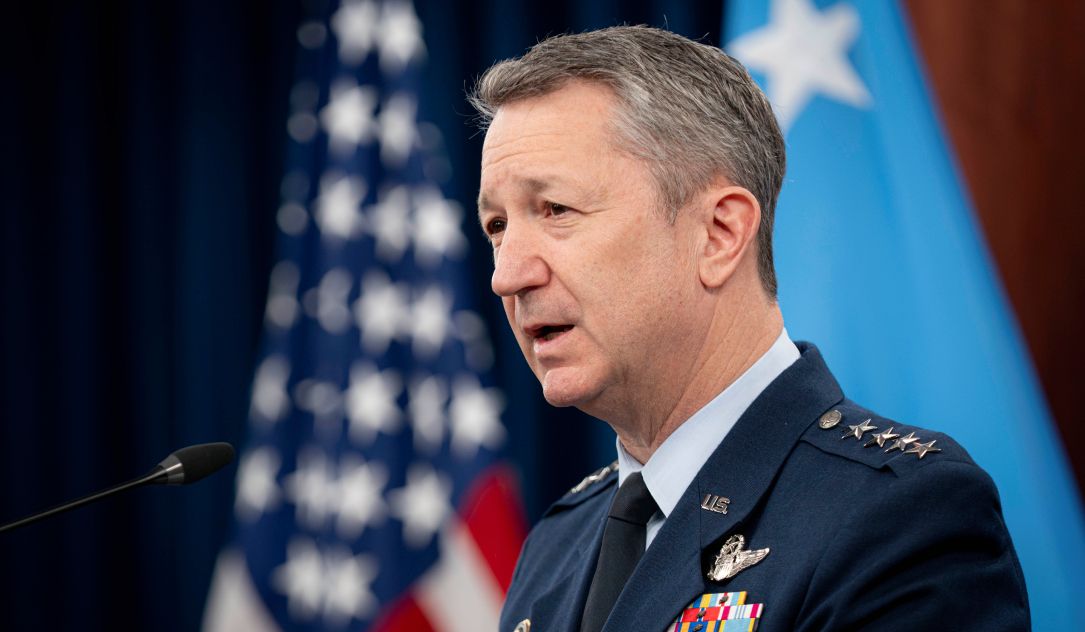
The **Pentagon** is facing a significant hurdle as it moves to incorporate artificial intelligence (**AI**) into its warfighting capabilities: ensuring the security and control of the software that will drive battlefield decisions.
### The Rise of Autonomous Weapons
According to Chairman of the Joint Chiefs of Staff Gen. Dan Caine, autonomous weapons are poised to become a "key and essential part of everything we do." This shift necessitates a robust digital infrastructure, encompassing command-and-control networks and machine-learning models, that can be trusted even under adversarial conditions.
### Bridging the Gap Between Military and Private Sector AI
A growing dependence on privately developed software systems, not initially designed for military applications, raises serious concerns. These include vulnerabilities, supply chain risks, and the potential for exploitation by adversaries. Gen. Caine highlighted the widening gap between military and private sector **AI** development, urging the **Defense Department** to become early adopters of technologies like large language models (LLMs).
### Anthropic Standoff Highlights Supply Chain Risks
The complexities of this challenge are exemplified by a recent standoff with **Anthropic**, a leading **AI** firm. **Anthropic** withheld the public release of its **Mythos Preview** model due to cybersecurity risks and potential misuse. Despite this, intelligence agencies, including the **National Security Agency (NSA)**, have reportedly been granted access to the model.
Earlier in the year, **Anthropic** declined to ease restrictions on the use of its systems, including limitations on domestic surveillance and fully autonomous weapons. This led the **Pentagon** to designate the company a "supply chain risk," a label typically reserved for foreign vendors whose technology could introduce vulnerabilities into government systems. A subsequent **White House** order to phase out the use of **Anthropic**'s tools was temporarily blocked by a federal judge, with the government planning an appeal.
### Trust, Security, and Control in AI Adoption
This episode underscores a fundamental issue: the U.S. is rapidly adopting **AI** for national security while relying on a commercial ecosystem that doesn't always align with military priorities, particularly concerning risk tolerance and control. Military planners are focused not only on the speed and quality of **AI**-driven decisions but also on securing these systems against manipulation, data poisoning, and unintended behavior.
These risks are not merely theoretical. Questions have been raised about the potential use of **AI** systems in a deadly strike on an Iranian school, highlighting the need for rigorous testing, auditing, and governance of these tools. Gen. Caine also emphasized the need for better contracts that are suited to continuously evolving software requiring ongoing security updates. He advocated for risk-sharing between the government and private companies to ensure both effectiveness and resilience.
### The Procurement Obstacle
Gen. Caine also pointed to the government’s own procurement system as an obstacle. “We have to write better contracts,” he said, arguing that current acquisition frameworks are ill-suited to software that evolves continuously and requires ongoing security updates. Traditional contracts, designed for fixed hardware systems, can slow the deployment of critical technologies and leave gaps in accountability.
As the **Pentagon** delves deeper into **AI**-enabled warfare, the central challenge is shifting from the technology's functionality to its trustworthiness, security, and controllability in high-stakes environments where errors are unacceptable.
[](https://www.recordedfuture.com/?utm_source=therecord&utm_medium=ad)