Elevating Fraud Prevention: Beyond Transactional Silos
Effective fraud prevention demands a holistic approach, moving beyond isolated transaction monitoring to encompass account, platform, and network-level insights. This multi-layered strategy provides the necessary context to detect sophisticated fraud schemes and adapt to evolving threat landscapes, significantly reducing false positives and financial impact.
Fraud prevention programs often begin by addressing immediate chargeback pressures at the checkout page. However, relying solely on **transaction-level** monitoring creates vulnerabilities that sophisticated fraudsters quickly exploit, shifting their tactics from payment fraud to **Account Takeovers (ATOs)**, identity theft, and the use of mule accounts.
### The Limitations of Siloed Monitoring
When fraud detection is limited to individual transactions, organizations frequently encounter increased false positives and false negatives. Fraudsters, adept at adapting, will mimic legitimate user behavior at this level, making it difficult for siloed checks to identify malicious activity until significant damage has occurred.
### A Multi-Layered Defense Strategy
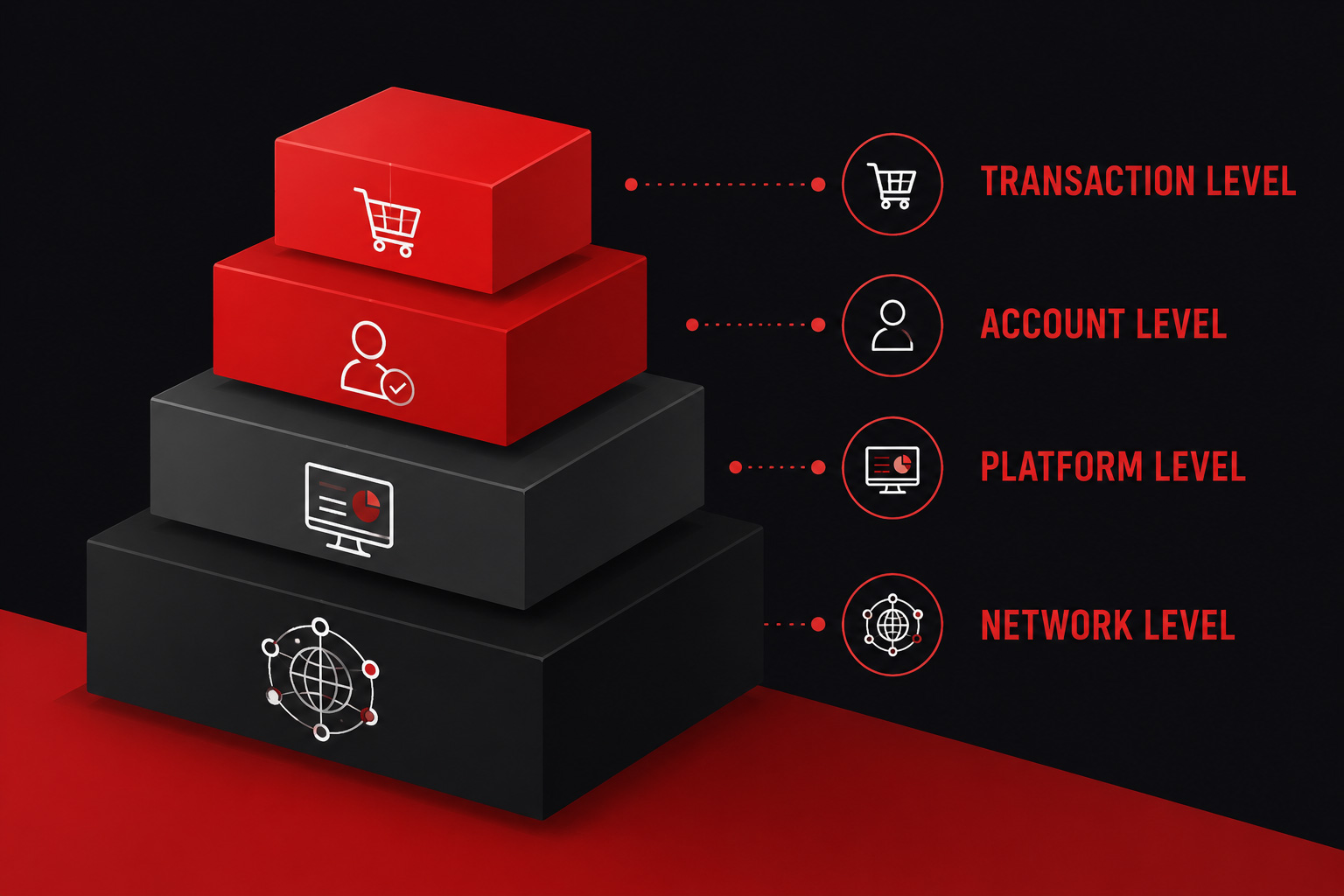
To counter these advanced tactics, a comprehensive fraud prevention program must integrate monitoring across four critical levels:
#### 1. Transaction Level
This is the foundational layer, monitoring individual user interactions. While necessary, it's insufficient on its own. Fraudsters can bypass these checks by, for instance, contacting customer service with stolen **Knowledge-Based Verification (KBV)** information to reset access or order new cards. They meticulously mimic legitimate spending patterns, making their activities appear benign at this granular level.
#### 2. Account Level
Moving beyond individual transactions, **account-level** monitoring tracks the historical performance of an account. This includes **device intelligence**, spending behaviors, geolocation, and behavioral biometrics. By establishing a baseline of 'trusted' behavior, anomalies such as changes in payment information, repeated failed verification attempts, or new associated addresses become clear indicators of potential ATOs. Fraudsters struggle to replicate established trusted behaviors without triggering suspicion.
Consider an example: a fraudster compromises a bank account. At the transaction level, their transfers might mimic the account's history. However, at the account level, several suspicious behaviors emerge:
* Calling customer service from a new phone number.
* Updating contact information.
* Ordering a secondary card shortly after account access.
* Suspicious relationships between the authorized user and account holder.
* An unusual timeline of transfers and withdrawals.
* The device used for these actions differing from historical patterns.
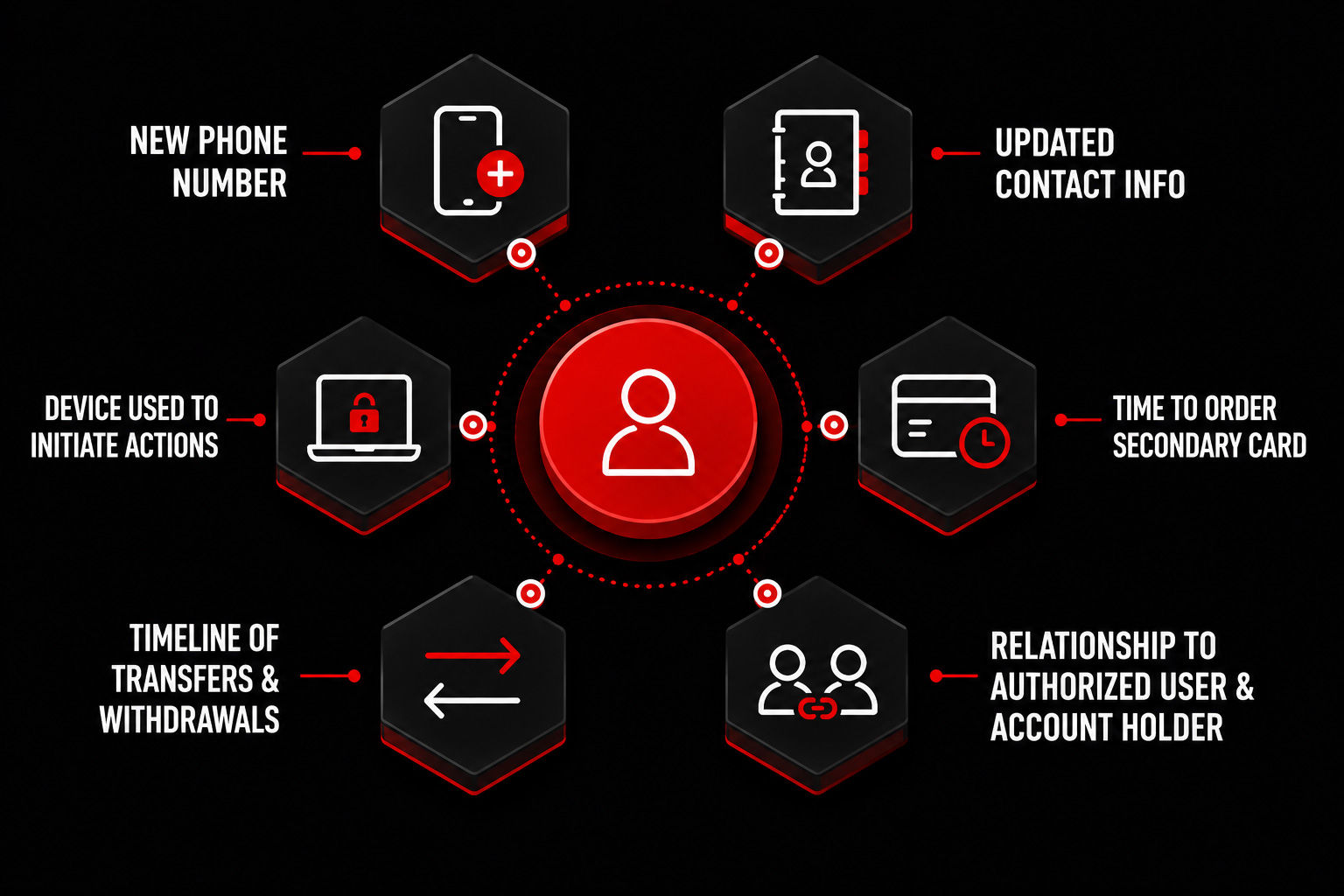
Each of these interactions, when viewed in context, provides high-confidence signals of fraudulent activity.
#### 3. Platform Level
This layer aggregates data from multiple accounts on a single platform. By tracking both 'trusted' and 'confirmed fraud' account behaviors, organizations can identify patterns indicative of fraud rings and multi-account attacks. Indicators like shared geolocations, device fingerprints, or IP resolutions across seemingly unrelated accounts can quickly expose larger coordinated efforts. This insight allows for proactive decisioning, reducing friction for legitimate users and lowering false positive rates.
#### 4. Network Level
The most advanced layer involves partnering with external solution providers. This allows organizations to leverage shared intelligence across a broader network of practitioners. What might be 'first seen' fraud for one organization could be a known pattern for a network partner. This collaborative data enrichment and decisioning accelerate the identification and mitigation of emerging threats, providing a significant competitive advantage against rapidly evolving fraud schemes.
### The Urgency of Coordinated Defense
Fraudsters operate with speed, often executing multi-step attacks within hours. A compromised account can quickly lead to significant financial impact if detection is delayed. By integrating insights from transaction, account, platform, and network levels, security professionals can build robust, adaptive fraud prevention programs that stay ahead of attackers. This holistic view is crucial for minimizing financial losses and maintaining customer trust in an increasingly complex threat landscape.