EU Kids Act: A New Era of Digital Surveillance or Child Protection?
The European Commission's proposed **EU Kids Act** aims to safeguard children online, but critics warn its broad scope and mandatory age verification measures could undermine privacy and fundamental rights for all internet users. This draft legislation introduces stringent age gates and 'safety by design' principles, raising concerns about its practical implementation and potential impact on civil liberties.
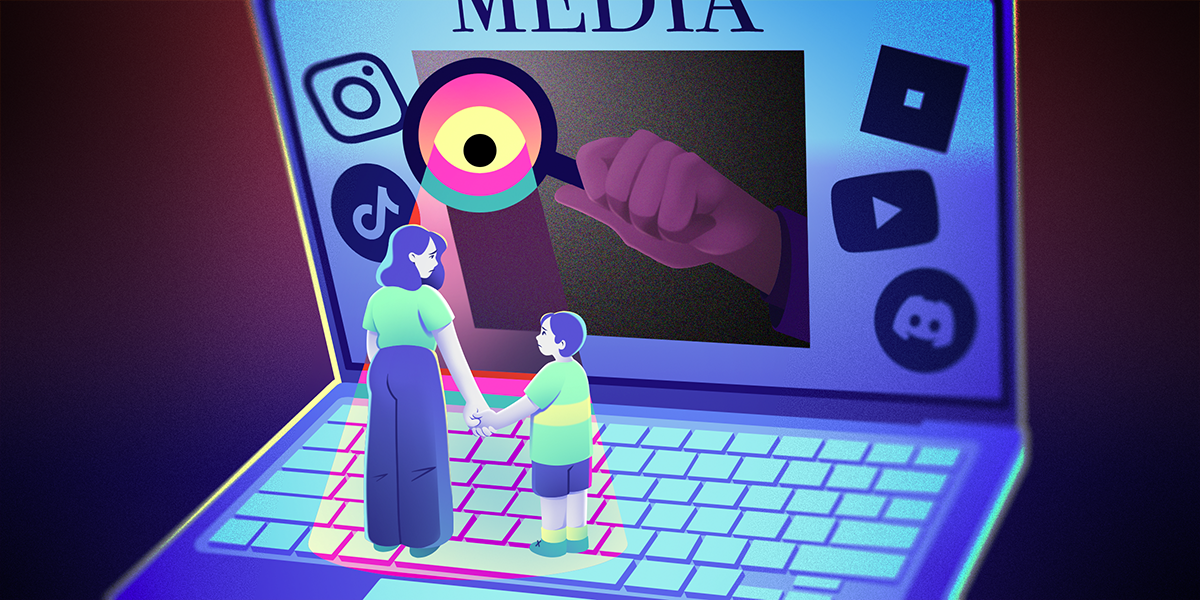
The **EU Commission** has unveiled its draft **EU Kids Act**, a legislative proposal designed to enhance child safety across digital platforms. While the intent is laudable, the proposed measures, including mandatory age gates and expanded intrusive age verification, are poised to significantly impact the privacy and accessibility of online services for everyone.
Building upon the **Digital Services Act (DSA)**, the **EU Kids Act** seeks to codify certain 'safety-by-design' principles into 'hard law.' Its core elements include phased access for social media, comprehensive safety by design, age assurance with parental responsibility, and robust enforcement mechanisms.
### Mandatory Age Gates for Social Media and Video-Sharing Platforms
The proposal, informed by an expert panel, introduces a tiered access system for social media and video-sharing platforms deemed 'risky' – a category broadly defined by the use of personalized recommender systems or offering 'uninterrupted content consumption.' Under this framework:
* Children under 13 would be prohibited from having accounts.
* Users aged 13 to 15 would require restricted accounts under tight parental supervision.
* Ages 15 to 18 would access 'autonomous accounts' within a 'safe-by-design' environment.
Full, unrestricted online access would thus be reserved for adults. This complex system necessitates privacy-intrusive age verification across the board, leveraging an EU-wide age verification scheme. For teenagers, this translates to significant parental control, requiring parents to set up accounts and verify their identities – an additional layer of verification that presents its own challenges.
While the **EU Kids Act**'s gradual approach appears to consider proportionality, distinguishing it from blanket social media bans (which a French court recently declared unconstitutional), its broad scope remains a concern. It indiscriminately covers virtually all mainstream social media and video-sharing services. Critics argue that focusing heavily on safety and harms overlooks the fundamental rights of privacy and freedom of expression for all users, including children's right to access information and participate online.
**However they’re designed, age gates undermine civil liberties, reduce safety, and create barriers to internet entry**, often at the expense of marginalized groups. They also risk consolidating power within large tech companies capable of investing in complex compliance measures, while potentially stifling small and medium-sized enterprises (SMEs).
### Safety by Design Across Covered Services
The second pillar, 'safety by design,' extends its reach across a wider array of services, including social media, video-sharing, online games, AI companions, chatbots, and even app stores. Providers would be mandated to make child-safe design the default, with relaxations only possible if age assurance confirms the user is an adult.
Examples include rules on addictive features like infinite scrolling, default safe account settings, and enhanced user control over recommender systems. For AI companions and chatbots, companies must design services to mitigate emotional dependencies and harmful interactions. Online games would require contact protections, and app stores would become gatekeepers for age-appropriate access via a rating system.
The specifics of these measures raise significant fundamental rights concerns. Some provisions may also be ill-suited to the decentralized architecture of platforms like the **Fediverse**. The requirement for very large online platforms to establish compliance plans before launching new services also raises questions about applying product-safety doctrines to speech regulation. **Deciding what is “safe” can easily become a question of what content people can access or share.**
### Next Steps
By encompassing such a broad range of digital activities, the **EU Kids Act** risks creating a privacy minefield and intertwining the digital fairness agenda with more fundamental questions of age assurance and information access. This policy choice could politicize well-intentioned efforts to curb manipulative design practices.
Notably, the **Kids Act** has not undergone a full impact assessment, which would typically involve a systemic review of alternative policy options and comprehensive stakeholder consultations. We **call on the EU lawmakers to pull the teeth of the most harmful suggestions** and ensure that these new measures do not erode the fundamental rights of *all* users.