EU Proposes Sweeping 'KIDS Act' to Bar Under-13s from Social Media, Mandate 'Safe by Design' Platforms
The **European Commission (EC)** has unveiled a comprehensive proposal, dubbed the **EU KIDS Act**, aimed at significantly restricting children's access to social media and compelling platforms to implement 'safe by design' features. This initiative seeks to block children under 13 from creating social media accounts and establish a bloc-wide minimum age of 15, with strict parental controls for those aged 13-15.
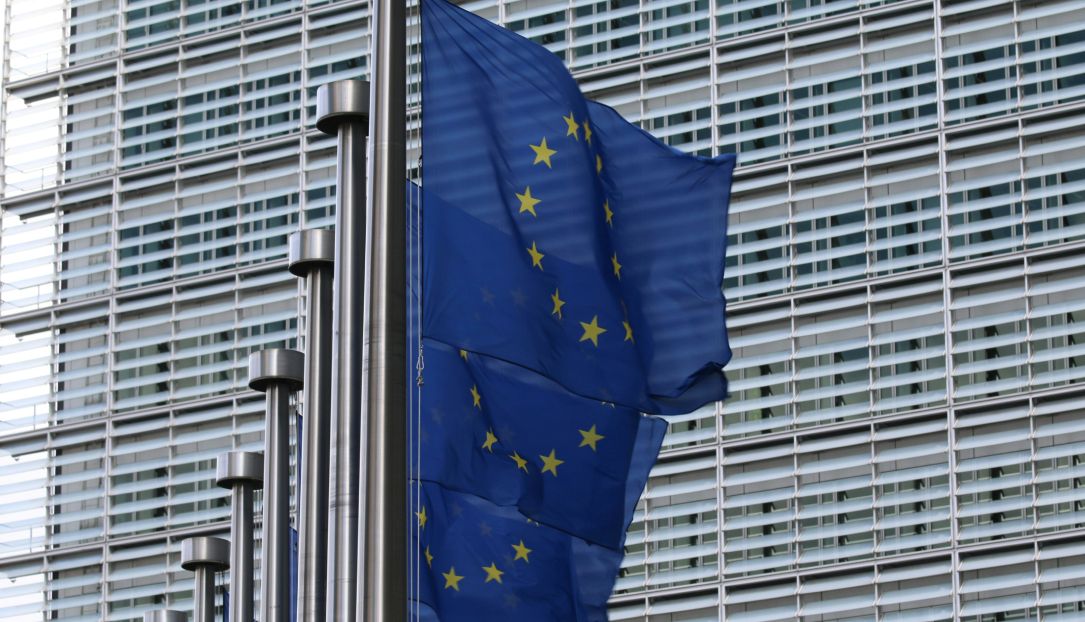
The **European Commission (EC)** announced a detailed roadmap for a proposal designed to bar children younger than 13 from accessing social media and mandate improved platform design for minor protection. This move aligns with growing global concerns about technology's impact on children, with countries like Australia, Spain, France, China, Turkey, and the UK already implementing or planning similar bans.
### The EU KIDS Act: Age Restrictions and Parental Controls
The proposed **EU KIDS Act** would prevent social media platforms from offering accounts to children under 13 and set a minimum age of 15 across the bloc for account creation. Children aged 13 to 15 would only gain access through guardian-created "mini accounts" linked to their parents' profiles.
According to an **EC** press release, these mini accounts would be strictly regulated, requiring services to limit social contacts and cap screen time at one hour daily. Children under 13 would be entirely blocked from social media, with exceptions only for parent-controlled tools designed to limit adult device use to child-friendly video-sharing services. Providers would be responsible for creating and ensuring the ease of use of these tools.
The proposal's enactment hinges on securing support from the **European Parliament** and member states. Given broad European support for social media bans for young teens, the proposal has a strong chance of becoming law.
**Commission President Ursula von der Leyen** emphasized the rationale: “Today, our children are engaging with the most sophisticated technologies ever created. Technology that was never created with their wellbeing in mind.”
### Safe by Design: New Requirements for Online Services
The **KIDS Act** proposal generally directs service providers to demonstrate that their offerings are "safe by design" and appropriate for children. These requirements extend to social media, online games, video-sharing services, and **AI** chatbots and companions for users under 18.
Key "safe by design" mandates include:
* A ban on what the **EC** calls "addictive features and profiling-based recommender feeds dragging minors into ‘rabbit holes' of harmful content."
* Prohibitions on "infinite scroll without stopping points, reward tricks and push notifications during sleeping hours, as well as unsolicited contact from strangers."
* Requiring **AI** companions and chatbots to be off by default and to establish protocols preventing them from simulating relationships that create emotional dependency.
* Default private profiles for minors, with geolocation, microphone, and camera access blocked. Providers must also offer simple methods for blocking and muting users, along with "safe recommender" systems that minors can reset or control.
To safeguard children's privacy, the **KIDS Act** will mandate online services and app stores to deploy an **EU** age verification app, unveiled in April. This app is designed not to store identity documents or biometric data, meeting "highest privacy-preserving safeguards." Additionally, social media and video-sharing platforms must deploy age verification tools for new accounts and estimate ages for existing ones using methods like account creation date or credit card information.
### Enforcement Plans and Challenges
The **KIDS Act** requires "very large" providers to submit a "compliance plan" to the **EC** and a third-party auditor. The **EC** will review auditor reports and address identified deficits. Enforcement is expected to be streamlined by existing frameworks like the continent’s **Digital Services Act** and the **Artificial Intelligence Act**.
Investigations into suspected violations will be accelerated, aiming for completion within 90 days. Non-compliant online providers face fines of up to 6% of their global annual sales and will be required to bankroll regulatory oversight through fees.
However, enforcing social media bans has proven challenging. Australian government-retained researchers found that their country's ban failed to prevent 61% of Australian children aged 12 to 15 from accessing major platforms. Australia's Parliament recently passed a law doubling maximum fines for non-compliant tech platforms to AU$99 million ($68 million) and strengthening investigative authorities for the **eSafety Commissioner**.
**Joe Jones**, director of research and insights at the **IAPP**, noted via email that "The technological state of the art, including with **VPNs** and age assurance technologies and the extent to which privacy issues are engaged due to the collection of data, will pose complications for lawmakers and, eventually, those implementing, overseeing and enforcing the law."
### Fierce Backlash from Tech Lobbyists and Privacy Advocates
The plan has drawn swift condemnation from tech lobbyists and privacy and digital freedoms advocates.
**Mitchell Rutledge**, **CCIA Europe's** technology and security policy manager, criticized the proposal for not setting technical, security, or accreditation standards for **KIDS Act** implementation. "The Commission is kicking those critical decisions down the road to future implementing and delegated acts," Rutledge stated via email. "Europeans are essentially being asked to trust a system before anyone knows how it’s actually going to be built."
Digital freedoms advocates argue the proposal is dangerous and threatens the privacy of all Europeans. **Simeon de Brouwer**, policy advisor at **European Digital Rights (EDRi)**, Europe's largest network of digital rights organizations, commented via email: “If the EU really wants to protect children, it should make platforms prove that they are safe, not make children and everyone else prove that they are old enough to exercise their fundamental rights online.”
De Brouwer highlighted that the **KIDS Act's** age verification mandate for all users would require adults to submit ID documents and use smartphones for the **EU** age verification app and European ID wallets. He warned this could disproportionately harm marginalized individuals without IDs and strip children of their rights, citing **Greta Thunberg's** climate change campaign as an example of youth leveraging online services.
Despite the backlash, the **European Commission** cited strong public support, with the **Special Eurobarometer on the Digital Decade 2026** survey indicating that 92% of Europeans consider better kids' online safety protections a "top policy priority."