FamousSparrow Deploys New SparroWocky Backdoor in Latin American Espionage Campaign
The state-sponsored threat group **FamousSparrow**, linked to China, has been observed utilizing a sophisticated new backdoor dubbed **SparroWocky** in a persistent espionage campaign targeting government organizations across Latin America. This advanced malware replaces their previous custom backdoor, **SparrowDoor**, and demonstrates a deep understanding of anti-analysis techniques and Windows internals, signaling a well-resourced adversary.


For over a year, the China-aligned espionage group **FamousSparrow** has been actively targeting government entities in Latin America. Their latest tool of choice for these operations is **SparroWocky**, a new backdoor that supersedes their previously identified **SparrowDoor** malware.
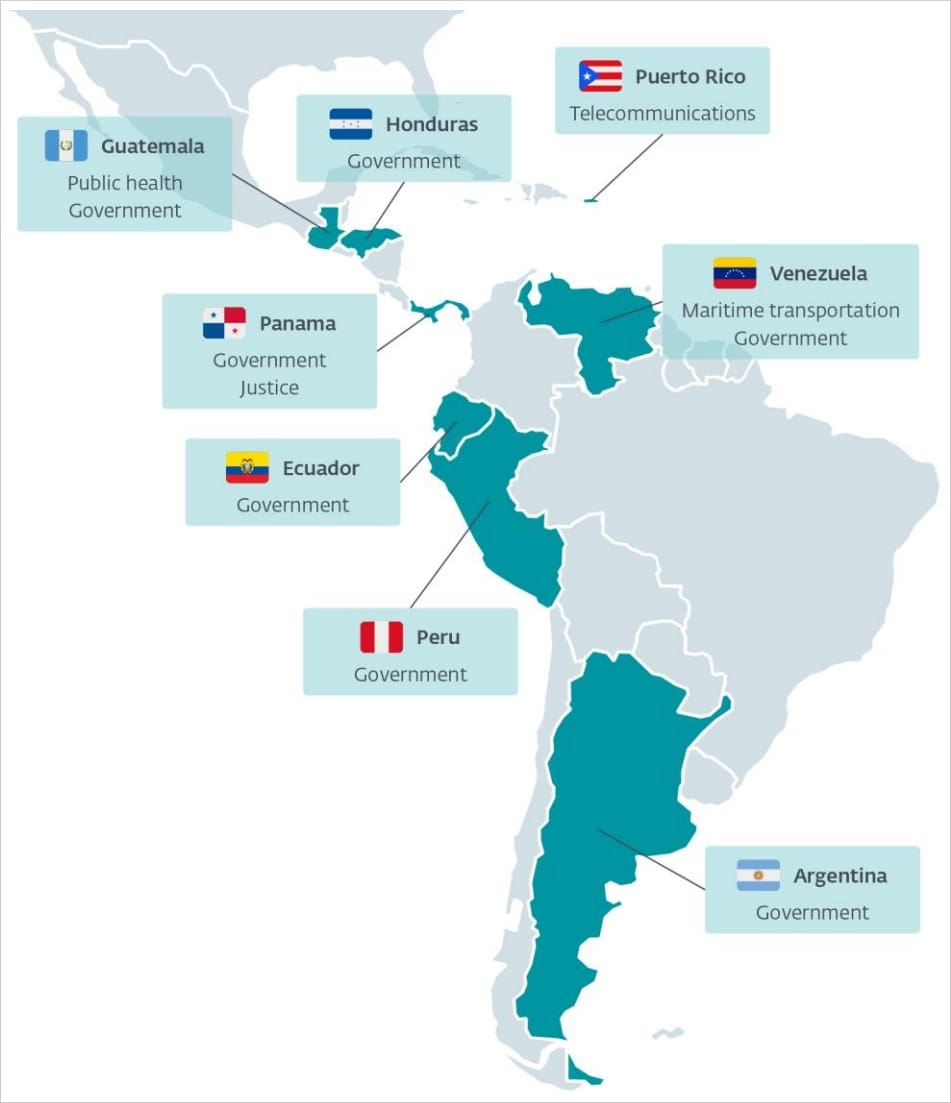
**ESET** researchers have documented the deployment of **SparroWocky** in attacks against organizations in Argentina, Ecuador, Guatemala, Honduras, Panama, Peru, Puerto Rico, and Venezuela.
### Strategic Intelligence Gathering
The primary objective of these operations, as assessed by **ESET**, appears to be the collection of intelligence regarding Latin American governments' responses to increasing U.S. pressure on Chinese economic interests.
### SparroWocky's Advanced Capabilities
**ESET**'s in-depth analysis reveals **SparroWocky** as a modular, full-featured C++ backdoor. It incorporates code from various open-source projects and boasts robust anti-analysis mechanisms, including the manipulation of low-level memory structures and runtime code patching.
The backdoor's extensive capabilities include:
* Executing commands and launching executable files.
* Loading and executing **Beacon Object Files** in memory.
* Gathering comprehensive system, network, user, domain, and Windows version details.
* Enumerating drives, directories, files, displays, and active user sessions.
* Performing file operations such as uploading, downloading, copying, moving, renaming, and deleting.
* Capturing screenshots every 500 milliseconds, with subsequent transmissions limited to changed screen regions after an initial full-screen capture.
* Creating processes within other logged-in user sessions.
* Operating as a TCP proxy and forwarding connections.
* Removing its own persistence mechanisms and deleting its files.
### Evasion and Persistence Techniques
**SparroWocky** is typically deployed via DLL side-loading. A loader decrypts an **RC4**-encoded payload from a `.dat` file and maps it directly into memory, a common evasion tactic.
The malware employs several sophisticated evasion techniques, including call stack and threat origin spoofing, dynamic API resolving, and disguising malicious in-memory code and DLLs as legitimate Windows components.
To further elude security solutions, **SparroWocky** intercepts the Windows thread creation process to alter the start address. **ESET** explains: "**SparroWocky** uses the **MinHook** library to hook the `CreateThread` function in order to conceal the original `lpStartAddress` parameter from security products. Essentially, any thread created by **SparroWocky** would have `AnimateWindow` as the starting address, which would likely be considered legitimate by a security product."
Persistence is established either through a Windows service named `ProcAuditManager` or by adding a Windows registry key, `SnapCart`, under **HKLM** or **HKCU**, depending on the available privileges.
These advanced architectural and evasion techniques underscore the threat actor's profound knowledge of anti-analysis tricks and Windows internals, reinforcing the attribution to a well-resourced and experienced group.
### Command and Control Infrastructure
During their analysis, **ESET** identified at least 18 command-and-control (C2) addresses. These communicate with the malware directly over ports 443 or 8080, or indirectly through HTTP and **SOCKS5** proxies.
**ESET**'s telemetry indicates that **FamousSparrow**'s operational focus has primarily been on the Latin American region since mid-2025.
**ESET**'s comprehensive report includes a detailed technical analysis of the **SparroWocky** backdoor and provides a list of indicators of compromise (**IoCs**) associated with this campaign, available on their GitHub repository.