FBI: Cybercrime Losses Soar to $21 Billion, Driven by Investment Scams and BEC
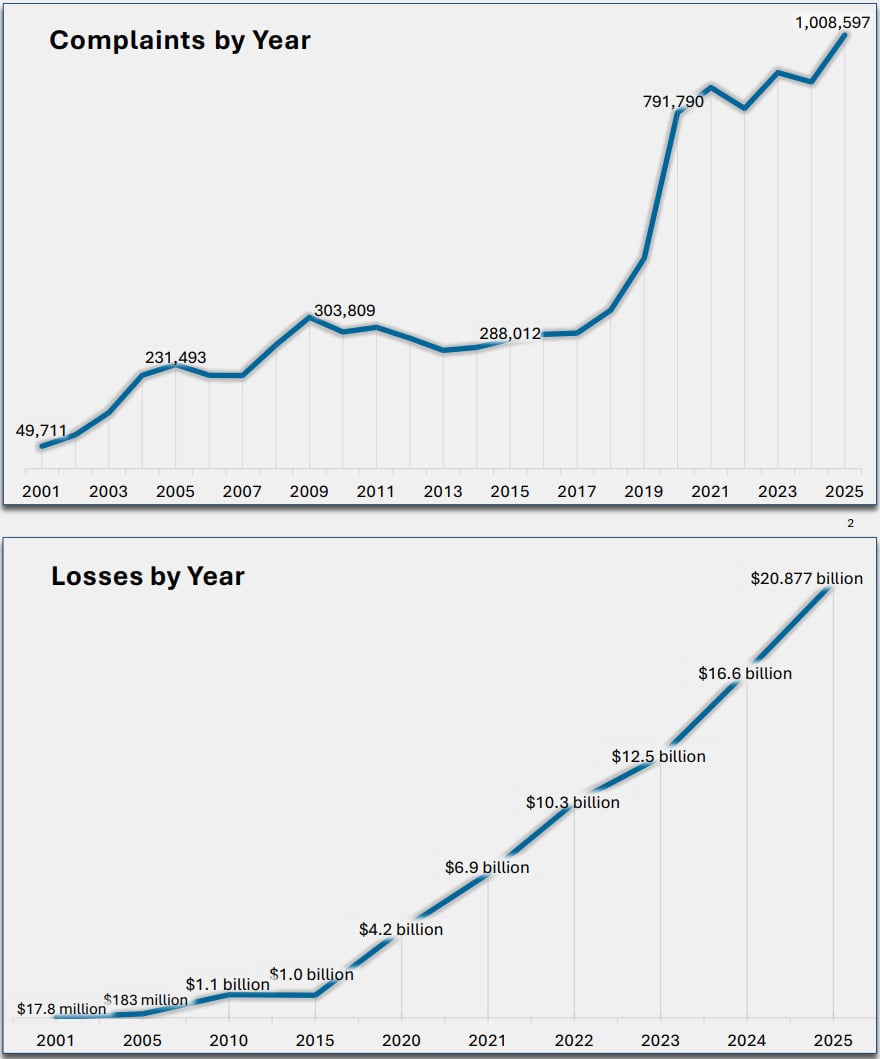
The **Federal Bureau of Investigation (FBI)** reports that U.S. victims lost nearly $21 billion to cyber-enabled crimes last year, a 26% increase from the previous year. Investment scams, business email compromise (BEC), tech support fraud, and data breaches are the primary drivers behind these staggering losses.

## Cybercrime Losses Continue to Climb
The **FBI**'s Internet Crime Complaint Center (**IC3**) received over 1 million complaints last year, up from 859,000 the year before, highlighting the escalating threat landscape. This surge underscores the urgent need for enhanced cybersecurity measures and increased vigilance among individuals and organizations.
## Top Complaint Categories
The most frequent complaints reported to the **IC3** involved phishing attacks (191,000), extortion (89,000), and investment scams (72,000). While ransomware attacks (3,600) and SIM swapping (971) occurred less frequently, they remain significant concerns due to their potential for severe financial and operational disruption. Business email compromise (BEC) accounted for 24,700 cases, and data breaches numbered 3,900.
## Investment Fraud and Cryptocurrency Losses
Investment fraud accounted for 49% of all scam-related incidents, resulting in losses of $8.6 billion. Cybercrime targeting cryptocurrency caused the largest loss, exceeding $11 billion across 181,565 cases. This highlights the growing exploitation of digital currencies by cybercriminals.
Cyber-enabled fraud was present in 453,000 complaints and accounted for $17.7 billion of the total losses submitted to the **IC3** in 2025.
## Impact on Older Adults
Americans over the age of 60 were disproportionately affected, with reported losses of $7.7 billion, a 37% increase compared to the previous year. This demographic is particularly vulnerable to social engineering tactics and scams.
## AI-Related Scams
For the first time, the **FBI**’s report includes AI-related scams, accounting for 22,300 complaints and $893 million in losses. These schemes involved voice cloning, fake profiles, forged documents, and deepfake videos, demonstrating the evolving sophistication of cybercriminals.
## Critical Infrastructure Attacks
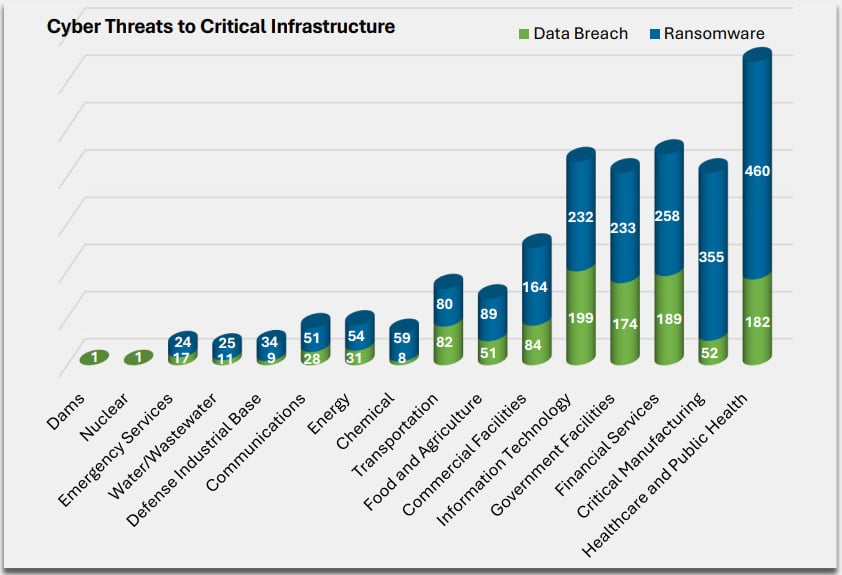
In two cases, attacks targeting critical infrastructure (dams and nuclear facilities) were classified as data breaches. The most targeted critical infrastructure sectors were healthcare, manufacturing, financial services, information technology, and government facilities.
## FBI's Response
The **FBI** reports enhanced efforts to block attacks, notify victims, and freeze stolen funds. In 2025, the agency initiated 3,900 Financial Fraud Kill Chain (**FFKC**) interventions, successfully freezing $679 million of the $1.16 billion targeted by attackers. Initiatives like ‘Operation Level Up’ proactively identify and alert victims of cryptocurrency investment fraud.
Of the 3,780 victims notified last year, 78% were unaware that they were being scammed.
The **FBI** advises individuals to exercise caution when faced with urgent requests and pressure tactics, and to verify the authenticity of communications before sending money or data. Suspected compromises should be reported to ic3.gov.