FedRAMP 20X: The Shift from Point-in-Time Audits to Continuous Assurance
The new **FedRAMP 20X** framework is poised to revolutionize how organizations approach security compliance, moving away from annual, narrative-based assessments to a model of continuous, machine-readable evidence. This significant shift demands a re-engineering of security and compliance processes, focusing on real-time validation over static documentation.
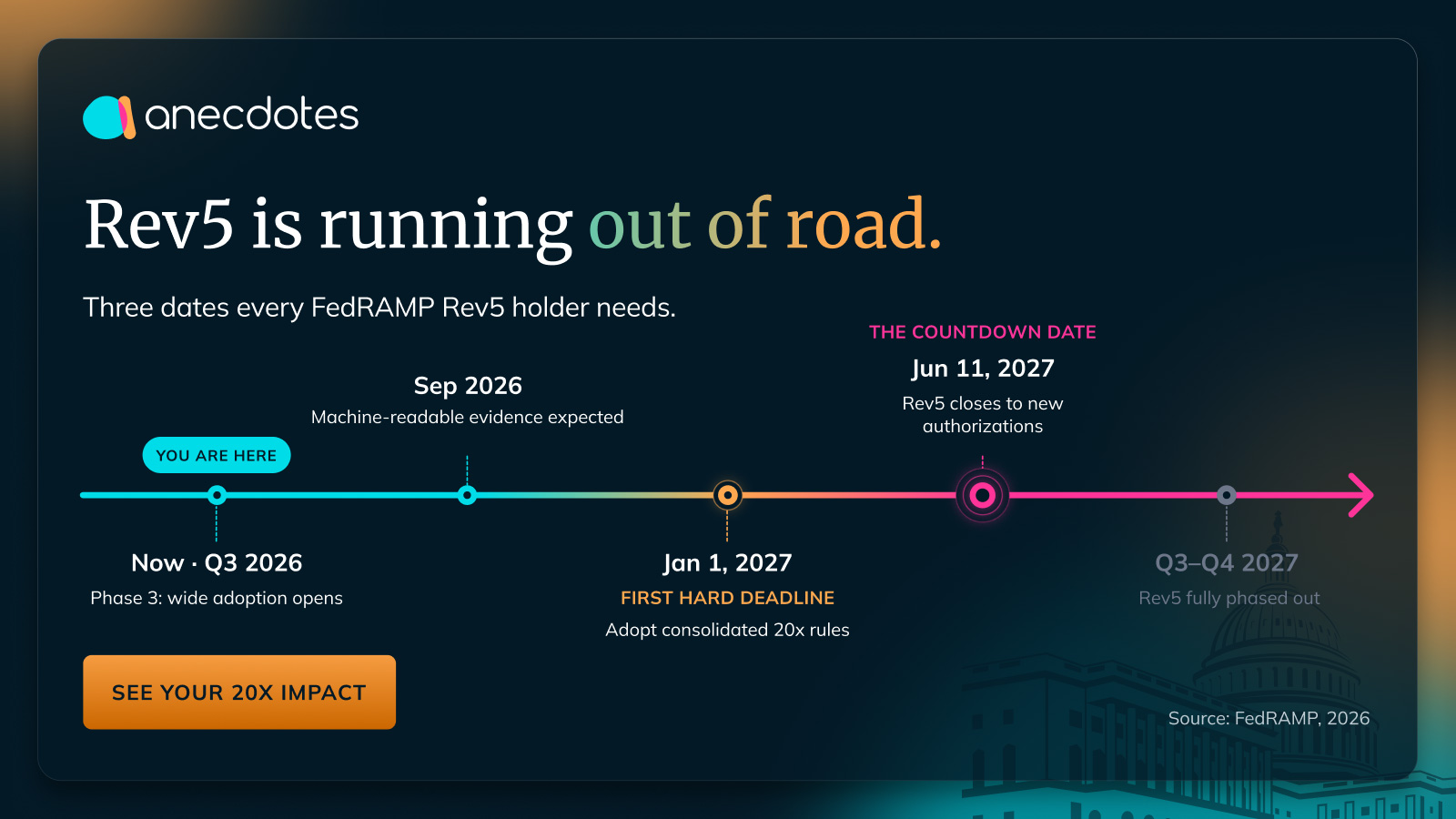

For years, security professionals, including those on offensive 'red and purple teams,' have highlighted the ease with which security controls, even those deemed robust by **GRC** teams and auditors, could be bypassed. This wasn't due to negligence but rather a system that rewarded proving control existence at a single moment, not its sustained operational integrity.
**FedRAMP Rev5** embodied this model, relying on organizations to describe control implementations, map them to **NIST 800-53**, and support them with curated evidence. Assessors would then sample this evidence annually. However, as any pentester knows, this approach leaves ample room for managing scope and narrative, creating potential blind spots.
**FedRAMP 20X** fundamentally alters this paradigm. Instead of asking organizations to describe their security posture, it mandates continuous proof. This seemingly subtle change has profound implications for assurance.
## The Biggest Change Isn't the Framework. It's the Evidence.
**FedRAMP 20X** replaces narrative-heavy controls with **Key Security Indicators (KSIs)**: measurable outcomes backed by machine-readable evidence. The framework outlines 56 **KSIs** for the Low baseline and 61 for Moderate, spanning twelve security domains including cloud-native architecture, identity and access management, monitoring, incident response, and change management.
The core shift is from documenting a process to demonstrating its continuous effectiveness. For instance, while **Rev5** might ask for a multi-factor authentication policy description, a corresponding **KSI** under **20X** requires machine-readable evidence proving phishing-resistant **MFA** is enforced across *every* privileged production account, today. One is a claim, the other an objective, undeniable fact.
This transition demands that organizations accustomed to optimizing for annual assessments build systems capable of continuously producing trustworthy evidence, rather than assembling it just before an audit.
## Continuous Beats Point-in-Time, Because Modern Threats Are Continuous
The most significant operational change in **FedRAMP 20X** is its cadence. Under **Rev5**, evidence supported a point-in-time assessment. Under **20X**, evidence becomes part of a living system.
Machine-based **KSIs** are revalidated frequently—as often as every few days for Moderate systems—while process-based **KSIs** require at least quarterly validation. The expectation is no longer proving something was true once, but continuously proving its validity as the environment evolves.
This aligns with the reality of modern infrastructure. Cloud environments are dynamic, with developers deploying multiple times daily. Identities are constantly created, modified, and removed. Attackers have long understood that environments don't remain static post-audit, and **FedRAMP 20X** is one of the first major assurance frameworks to acknowledge this.
## Continuous Assurance Demands Continuous Evidence
Building an evidence package every few days is impractical and unnecessary. **20X** requires evidence to flow directly from the systems generating the data. This means machine-readable data, aligned with **OSCAL** where applicable, alongside human-readable summaries that provide context, timestamps, and sufficient information for an assessor.
The Phase 2 completeness guidance explicitly states that automation must cover at least 70 percent of **KSIs**, every **KSI** must be addressed, and evidence must exist in both machine-readable and human-readable forms. This isn't busywork; it's a recognition that modern assurance requires both scalable automation and human interpretability.
For organizations transitioning from **Rev5**, this often feels less like a compliance update and more like an engineering challenge.
## The Real Work is Engineering, Not Writing
The primary gap between **Rev5** and **20X** isn't documentation; it's systems design. The initial step involves a **KSI** gap analysis, scoring each requirement as fully, partially, or not covered, and identifying whether automation, manual processes, or both are needed.
Following **FedRAMP**'s recommended priority, organizations should start with Authorization by **FedRAMP**, then Cloud Native Architecture and Identity and Access Management, before moving to Service Configuration, Monitoring, and other domains.
Next, build the evidence pipeline. Most automatable **KSIs** rely on existing organizational data from cloud platforms, identity providers, **SIEMs**, vulnerability scanners, and configuration management tools. The challenge isn't data creation, but consistent collection, normalization, mapping to **KSIs**, structured evidence generation, and maintaining this cadence at scale.
Ironically, the most challenging aspects often aren't technical telemetry, but rather manual processes like policy approvals, governance workflows, and training records that were never designed for continuous operation. These are often the longest lead-time items and should be tackled first.
The assessor's role also evolves. Under **Rev5**, a **3PAO** largely evaluated documentation. Under **20X**, they validate the accuracy and integrity of the evidence pipeline. Audits become less about reviewing policies and more about trusting the systems that produce evidence, significantly reducing hiding places for threat actors.
## Automation Isn’t the Goal, Sustainability Is
While organizations can build these pipelines themselves, continuously collecting evidence, normalizing data, mapping to **KSIs**, generating outputs, creating summaries, and maintaining integrations quickly becomes an ongoing engineering effort. This is where automation proves invaluable, freeing skilled engineers from repetitive evidence package rebuilding.
Persistent validation should be an operational capability, not a perpetual manual project. **Anecdotes**, for example, achieved **FedRAMP 20X** Moderate authorization using its own platform, illustrating the framework's intent: rewarding continuous improvement and feedback loops over mere storytelling.
## Start Before You Have To
The biggest mistake for a **Rev5** organization is to treat **20X** as a simple paperwork migration. Simply remapping an **SSP** without building systems for continuous, trustworthy evidence will inevitably lead to last-minute, manual rebuilding, precisely what **20X** aims to eliminate.
Start small. Pick a **KSI** with readily available data. Instrument it end-to-end, run continuous validation, identify and fix issues, and repeat. Build the 'muscle' of continuous assurance before scaling. **FedRAMP 20X** isn't asking if you can survive one audit; it's asking if your assurance program can survive every 'random Tuesday' thereafter. Success will belong to those who proactively build continuous assurance, not those forced into it by deadlines.
For deeper insights, **Anecdotes** CISO **Jake Bernardes** will further unpack this transition at the **GRC Data and AI Summit 2026**, a virtual event on August 12 for security, risk, and compliance leaders.