Google Chrome's 'Swiss Cheese' Defense Blocks Billions of Abusive Android Notifications
Google has announced a significant reduction in unwanted Android notifications, crediting its multi-layered 'Swiss cheese' defense model within **Chrome**. This proactive approach, designed to combat scams, malware, and phishing, has curtailed over 7 billion abusive notifications daily in Q1 2026, enhancing user security and device performance.

Abusive notifications have become a prevalent vector for distributing scams, malware, phishing attempts, and fraudulent payment requests. In response, **Google** has implemented a sophisticated, multi-layered defense system within **Chrome** for Android.
### The 'Swiss Cheese' Defense Model
**Google** refers to its strategy as a 'Swiss cheese' defense model, where multiple overlapping systems are designed to intercept abuse at various stages. The core principle is that if one layer fails to catch a threat, another will. This approach aims to prevent deceptive content from reaching users while maintaining a balance between utility and security.
### Automatic Permission Revocation
**Chrome** now automatically revokes notification permissions from inactive websites and those that repeatedly trigger suspicious-notification warnings. When permissions are revoked, users are automatically unsubscribed from a site's notifications.
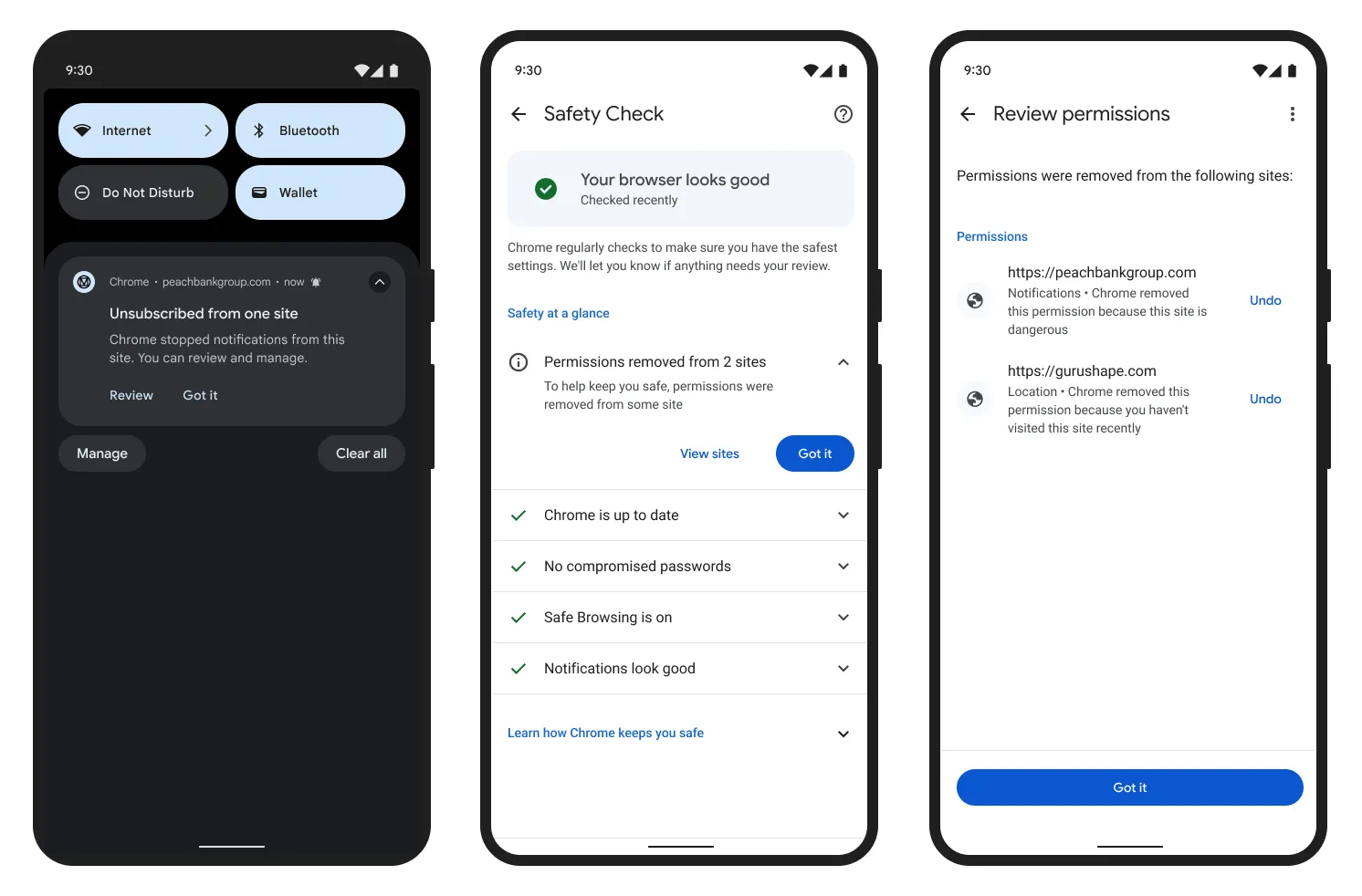
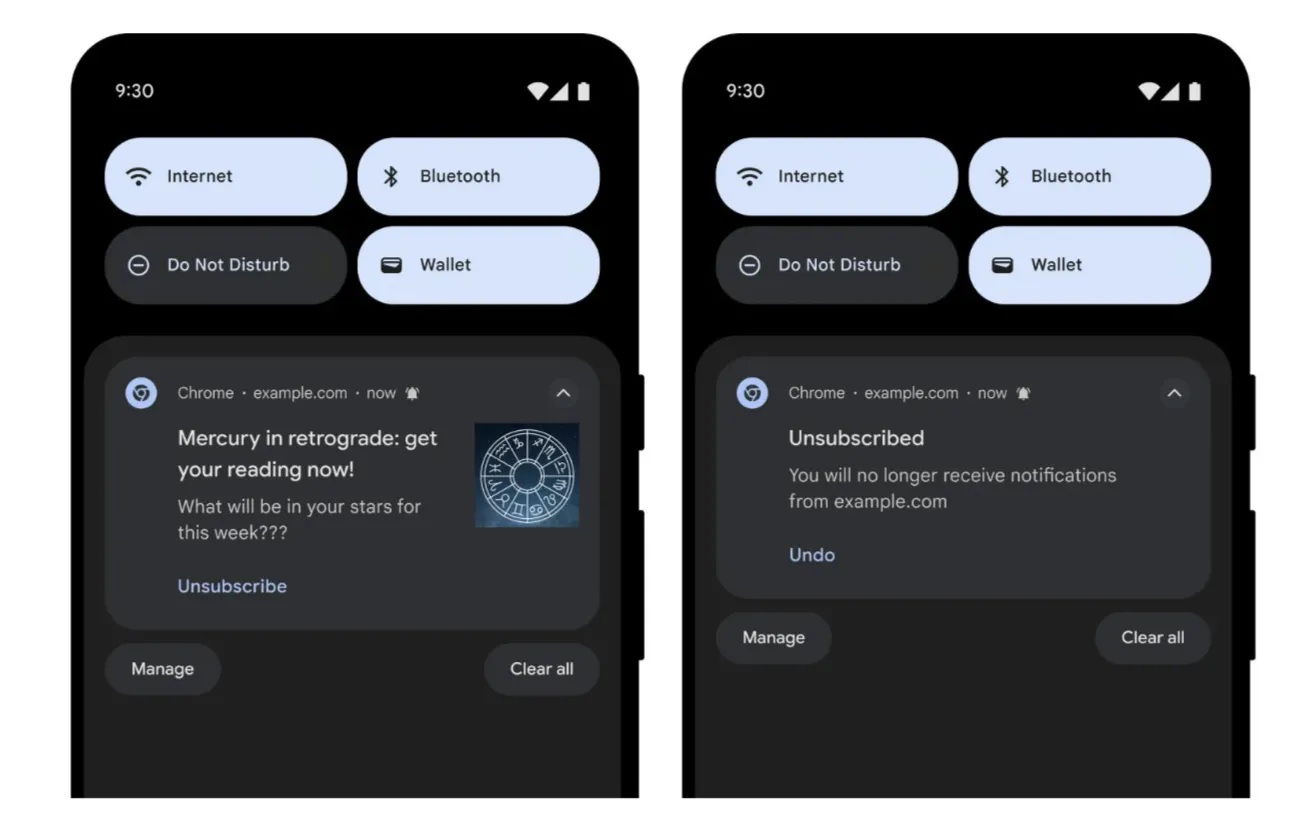
Users retain control, with the ability to review these automatically revoked permissions in **Safety Hub** and grant access again if desired. Additionally, users can unsubscribe from notifications directly via Android's notification panel.
### Proactive Malicious Actor Identification
**Google** is also leveraging behavioral analysis across networks of related websites, including coordinated service-worker activity, to identify groups distributing malicious or deceptive notifications. This enables the proactive revocation of permissions from persistent bad actors, safeguarding users even when site content might not appear inherently malicious.
Factors such as notification volume, user time spent on a site, permission-prompt frequency, and engagement are all considered. For instance, sites classified as disruptive may face limits of 1,000 messages per minute, with excess requests returning an HTTP 429 error. These restrictions can become more aggressive for repeat offenders and are only reset after a period of non-disruptive behavior.
### Enhanced User Experience and Control
**Chrome** has also refined how notification permission prompts function on Android, introducing a less disruptive interface. This design allows users to decide on notifications without interrupting their browsing experience. This strategy has significantly reduced unnecessary background activity, decreased device battery consumption, and refined the notification lifecycle to ensure users receive only valuable content.
Users can review and manage notification permissions via **Settings > Privacy and security > Site Settings > Notifications** on desktop, or **Settings > Notifications** on Android.