Google Rolls Out Granular Privacy Controls for Search and Play, But Check Your Settings
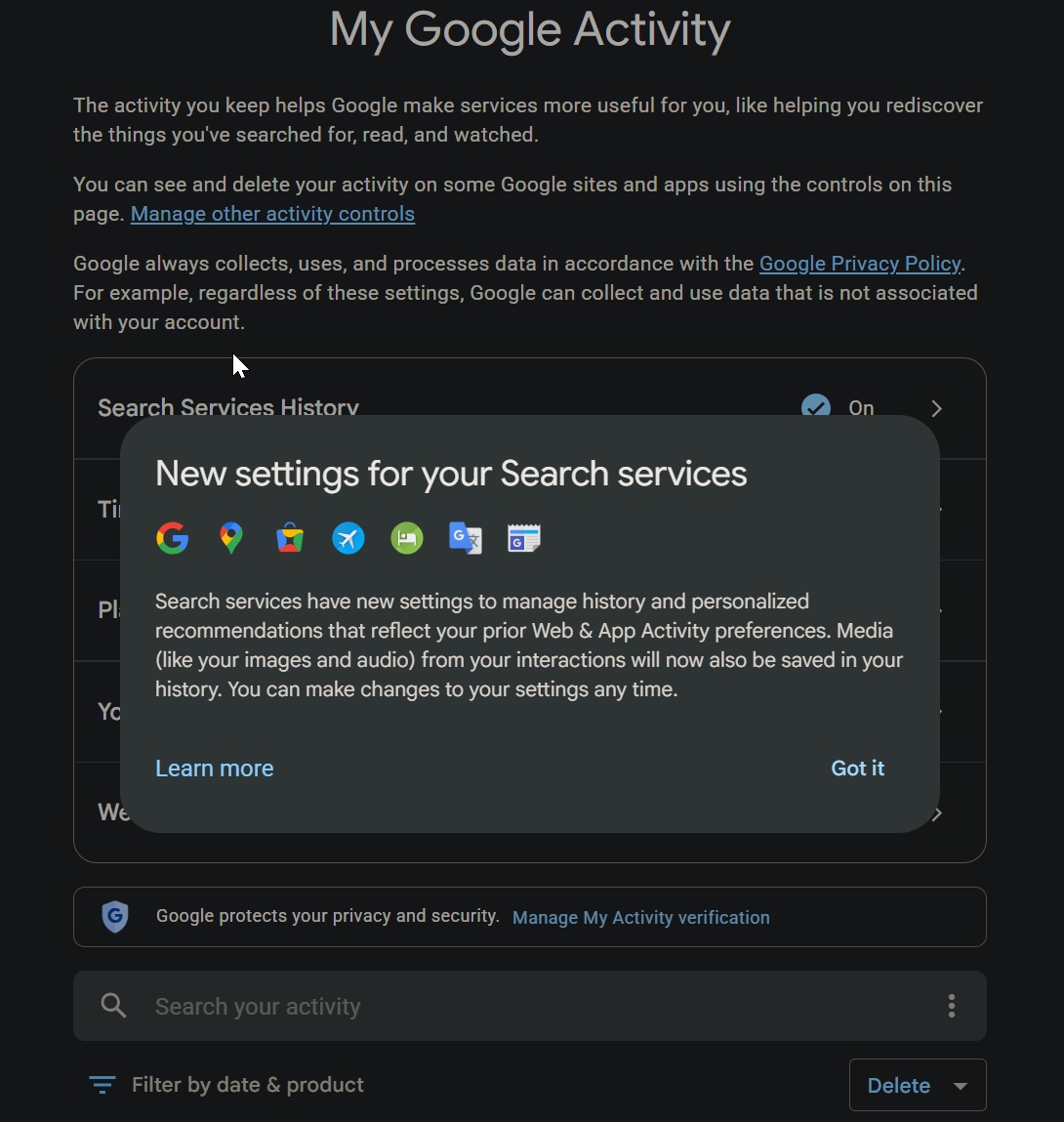
Google is introducing new, more granular privacy controls for its Search services and Google Play. While designed to offer users enhanced management over their saved history and personalized recommendations, an important detail regarding media saving requires attention from privacy-conscious users.
In an email sent to users, **Google** announced significant updates to its privacy settings, aiming to provide more control over saved history and personalized recommendations across **Google Search** services and **Google Play**. These changes are expected to roll out to user accounts over the coming days.
The affected **Search** services include **Search**, **Maps**, **Shopping**, **Hotels**, **Flights**, **Translate**, and **News**.

### Separating History and Personalization
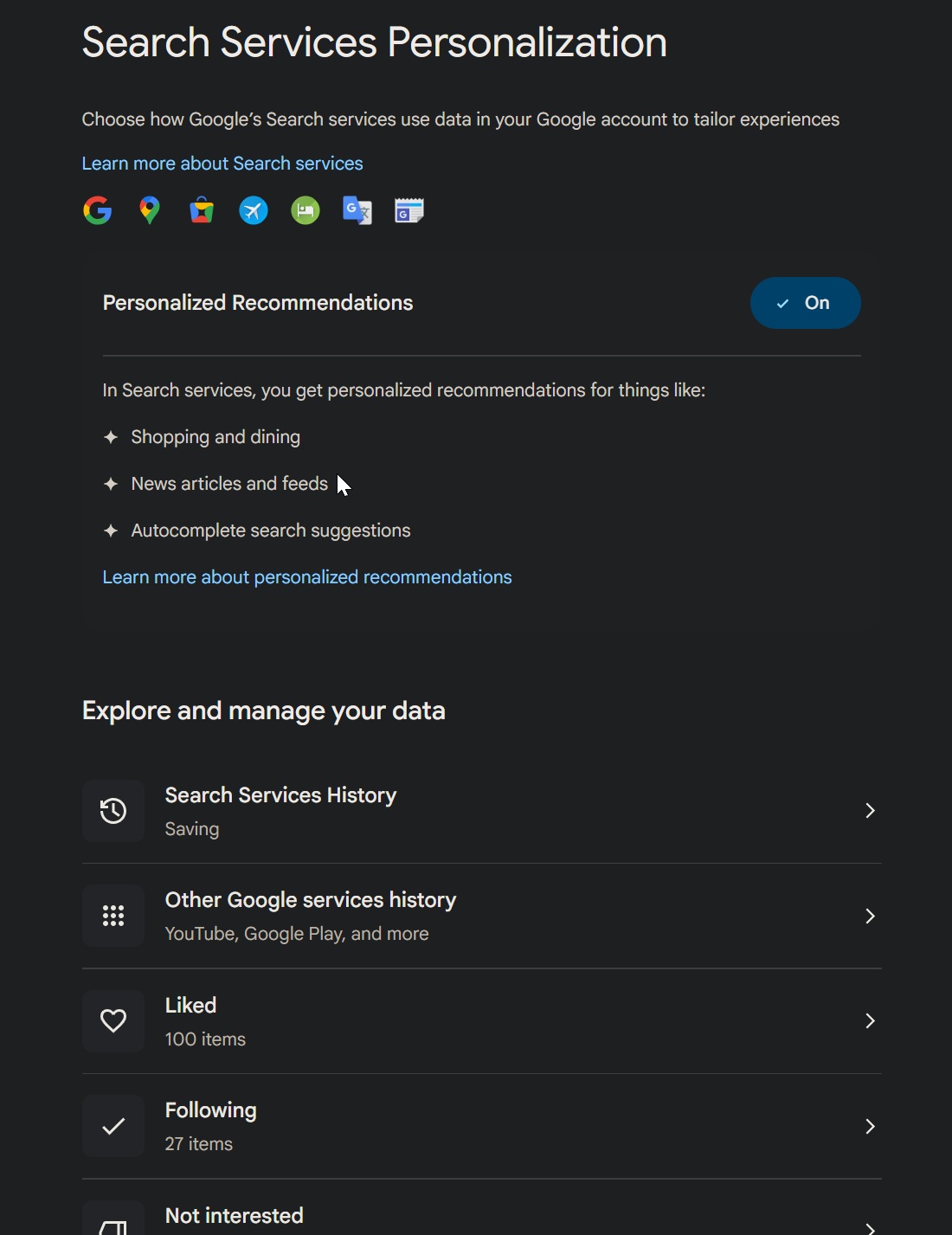
Previously, history and personalization for **Google** services were largely managed under the overarching **Web & App Activity** feature. **Google** is now introducing separate settings: **Search Services History** and **Personalized Recommendations**.
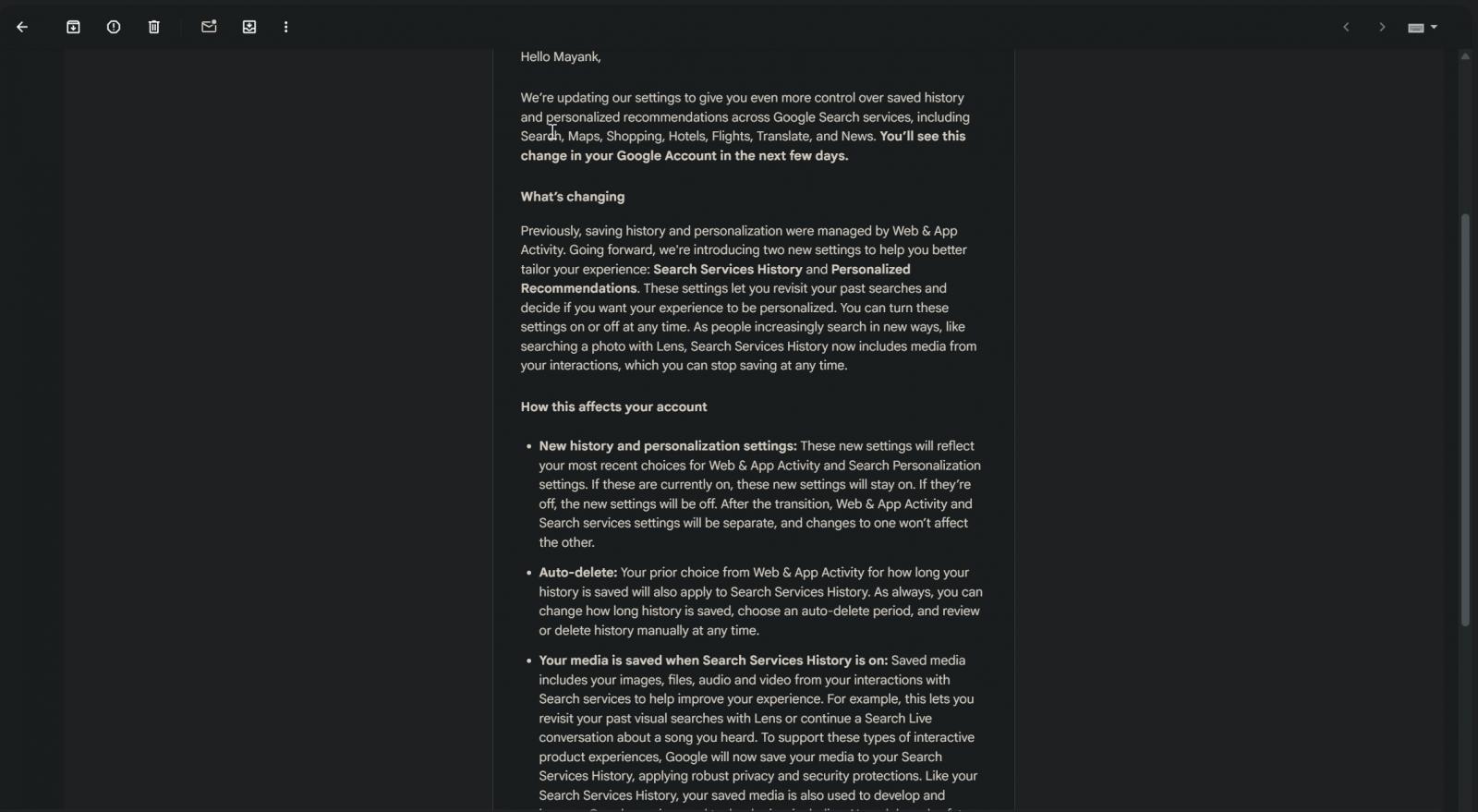
This separation allows users to tailor their experience more precisely. For instance, a user might want their search history saved for convenience but prefer to opt out of personalized recommendations based on that data. **Google** states that these new settings will enable users to "revisit your past searches and decide if you want your experience to be personalized."
### The 'Save Media' Subsetting: An Important Detail
One critical element within the new **Search Services History** is the "Save Media" subsetting. **Google** has clarified that this will include images, files, audio, and video from user interactions with **Search** services. This encompasses visual searches via **Google Lens** or audio from voice-based interactions, designed to support interactive product experiences.
However, there's a significant caveat: if **Web & App Activity** is currently enabled on an account, **Search Services History** will automatically be turned on after the transition, and critically, the "Save Media" subsetting will also be enabled by default.
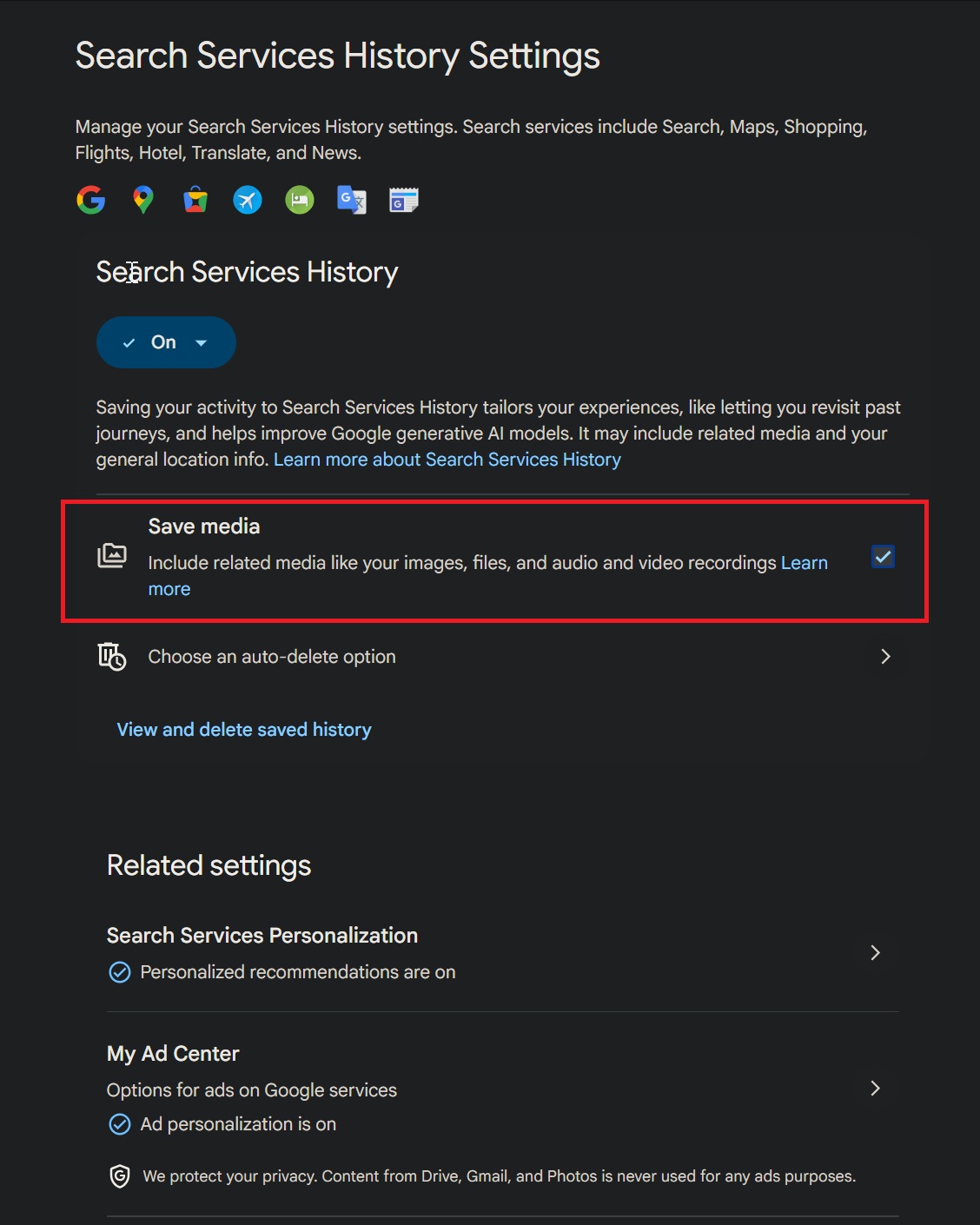
**Google** notes that this saved media, like **Search Services History** itself, can be used to "develop and improve **Google** services and technologies, including AI models and safety measures." While users can turn off the "Save Media" subsetting at any time and delete individual pieces of media, the default activation for existing **Web & App Activity** users means a proactive check is necessary.
### Personalized Recommendations as a Separate Control
The new **Personalized Recommendations** setting will specifically control whether **Google** uses saved activity to tailor the user's **Search** services experience. This provides a clear distinction between data retention and data utilization for personalization.
### Google Play Also Gets Granular Controls
Similar to **Search** services, **Google Play** will also receive new **Play History** and **Personalization in Play** settings. These will appear even for users who have not previously used **Google Play** and can be toggled on or off.
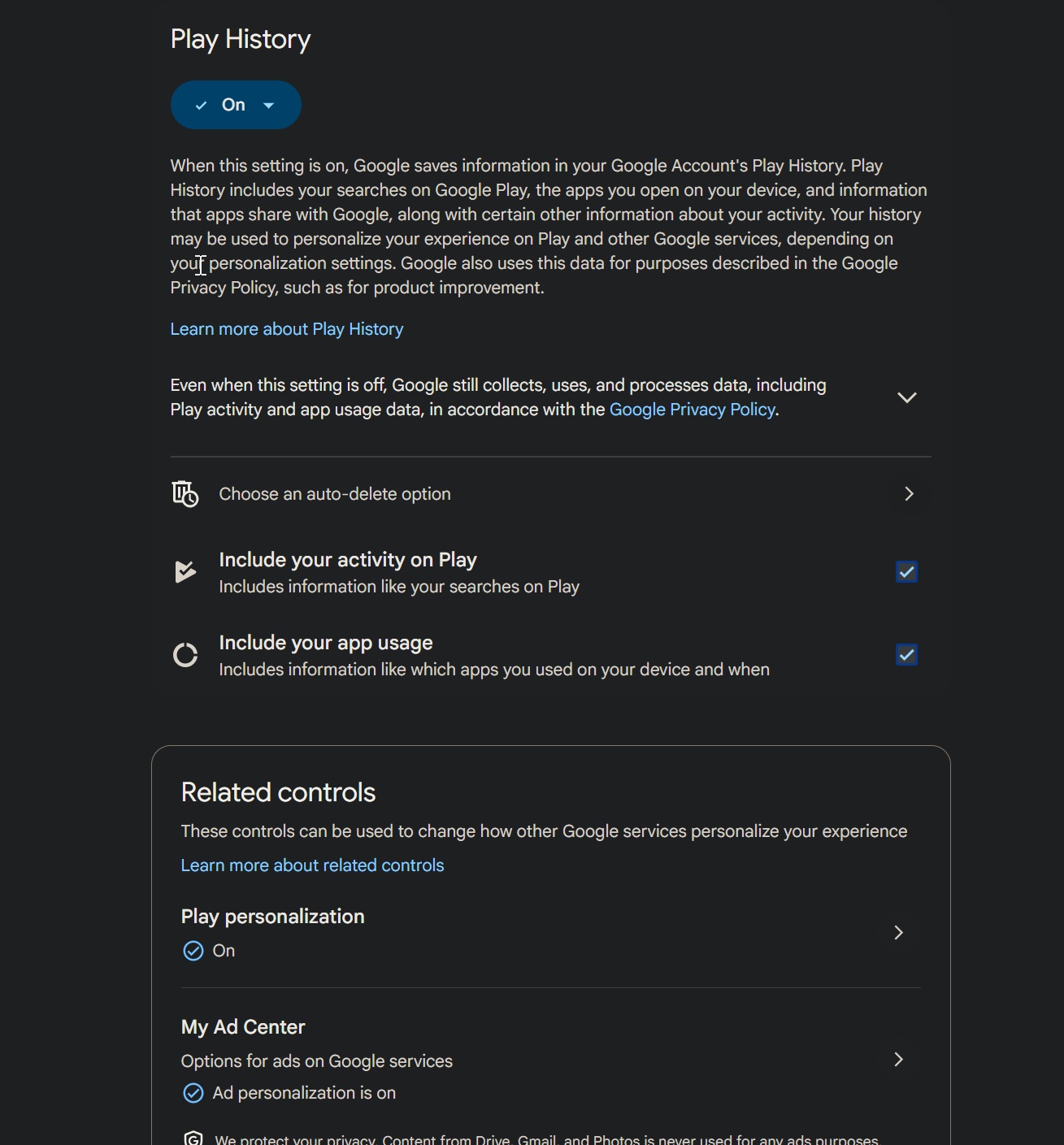
**Google** assures users that their prior choices regarding how long history is saved under **Web & App Activity** will carry over to the new **Search Services History** and **Play History** settings. Users retain the ability to change auto-delete periods, review history, or delete activity manually.
### Action Required for Privacy-Conscious Users
While the move towards more granular controls is a positive step for user privacy, the automatic enablement of the "Save Media" subsetting for existing users with **Web & App Activity** turned on necessitates immediate attention. IT security professionals and privacy-conscious individuals should proactively review their **Google Account** settings as these changes roll out in the coming days to ensure their preferences align with **Google**'s new defaults.