Google's Automated Systems Lock Hundreds of Legitimate Blogger Sites Over False Malware Positives
Hundreds of legitimate websites hosted on **Google**'s **Blogger** platform have been erroneously locked or even deleted due to an apparent false positive from the company's automated 'Malware and Similar Malicious Content' policy. This widespread issue, which began on August 4th, has left web administrators scrambling to restore access and prevent permanent deletion of their content.


**Google**'s **Blogger** platform is currently experiencing a significant incident where numerous legitimate websites have been flagged and locked under its 'Malware and Similar Malicious Content' policy. The widespread issue, which commenced on August 4th, appears to be a large-scale false positive affecting blogs that do not host malicious content or scripts.
Reports from hundreds of web administrators have flooded **Google**'s official support forum for **Blogger**, seeking assistance to regain access to their sites. The forum thread has garnered over 300 'I have the same question' votes and more than 100 replies from affected publishers, underscoring the scale of the problem.
A **Blogger** Product Expert acknowledged the situation, stating, "Today's huge number of reports regarding blogs flagged/locked for the same reason suggests misclassification by automated systems. False positives do occur from time to time, but not on this scale."
### Impact on Blog Owners
Affected users are greeted with a prominent red padlock icon in their **Blogger** dashboard, accompanied by a warning: "Note: this blog has been locked." The message further elaborates, "This blog was removed for violating **Blogger**'s Community Guidelines. If you wish to request a review of the blog, click 'Request Review' below."
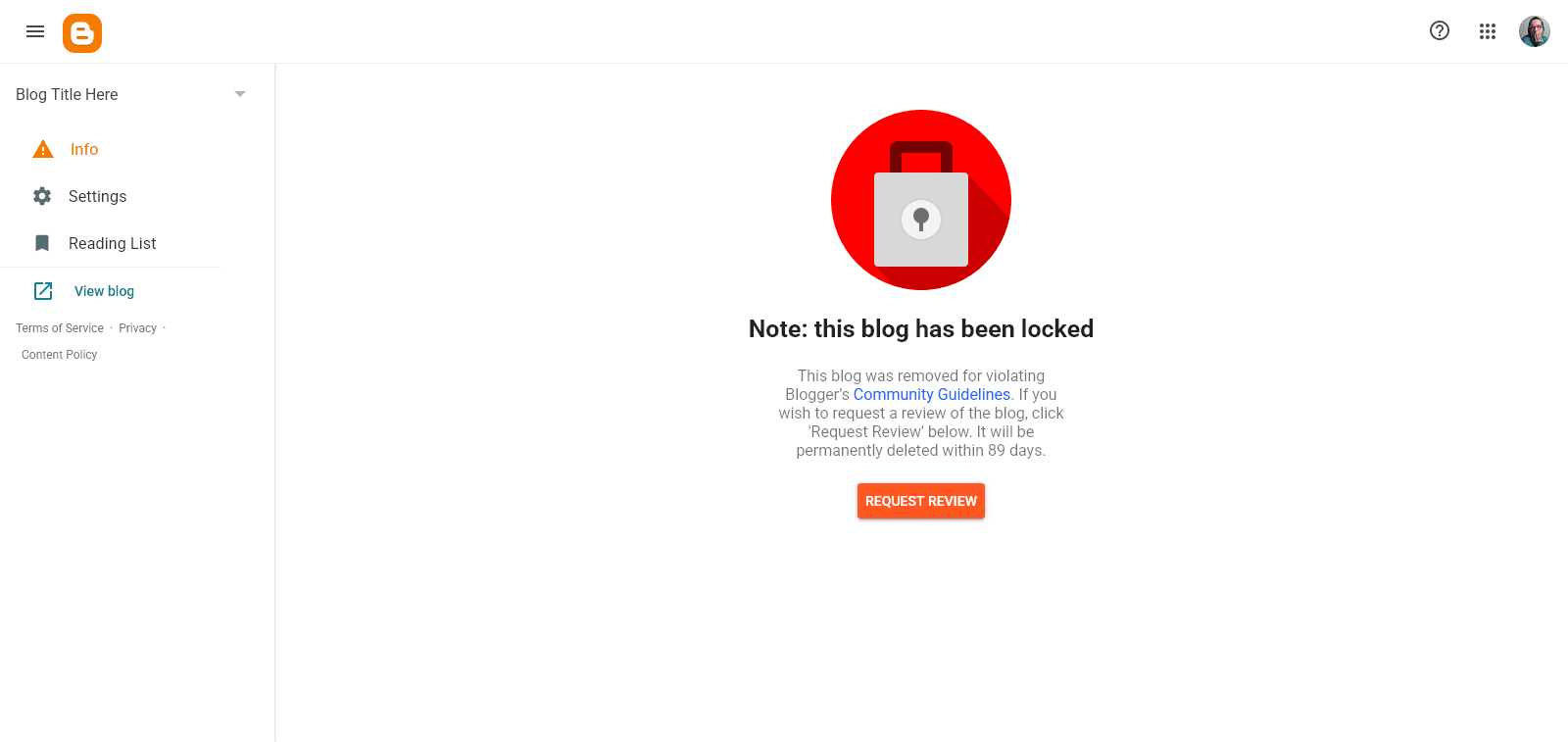
**Google**'s automated system also warns publishers that their blogs face permanent deletion within three months if no appeal is submitted. While locked, owners are unable to access critical dashboard functions for managing posts, settings, themes, or other site components.
Some users have reported an added layer of frustration, noting that their blogs were restored after an appeal, only to be subsequently deleted again. One publisher reported, "The removal happens automatically after updating the homepage or making changes to the blog template."
### Ongoing Situation
While not all **Blogger** users are impacted, some who have submitted appeals are already seeing their blogs return online. The exact number of sites hosted on **Blogger** is not publicly disclosed by **Google**, but third-party trackers estimate close to 200,000 sites utilize the platform.
**Ghost Protocol** has reached out to **Google** for an official statement and will provide updates as more information becomes available. This remains a developing story.