Russia and China Deepen Cybersecurity and AI Cooperation to Counter Western Tech Dominance
**Russia** and **China** are expanding their technological partnership, focusing on cybersecurity, AI, and satellite internet. This collaboration aims to reduce reliance on Western technology and build an independent ecosystem.
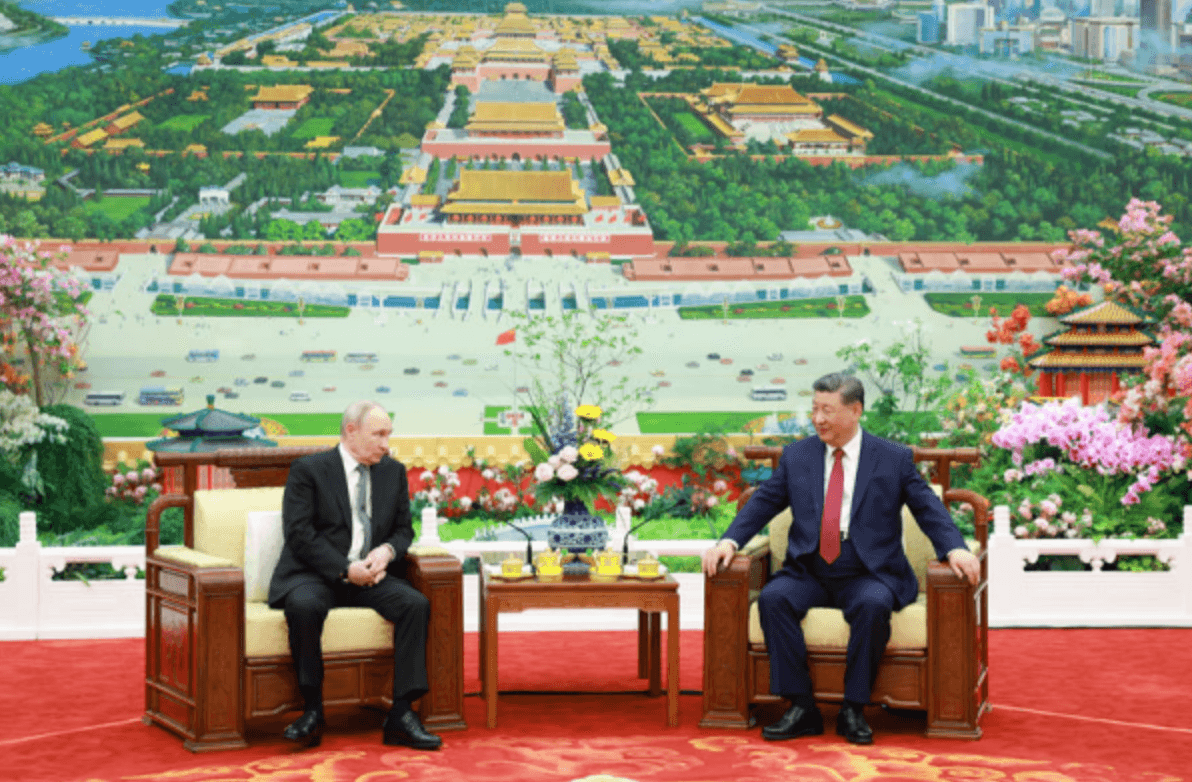
## Russia and China Forge Closer Tech Ties
During a summit in Beijing, Chinese leader **Xi Jinping** and Russian President **Vladimir Putin** solidified their commitment to enhanced cooperation in key technological areas, including cybersecurity, artificial intelligence, and satellite internet. The move signals a strategic effort to counter what both nations perceive as Western technological dominance.
A joint statement released by Moscow and Beijing outlined plans for closer collaboration on satellite internet technologies, joint software development projects, and open-source initiatives. This is viewed as a direct response to sanctions and export controls that have limited **Russia's** access to Western technology.
### Reducing Reliance on Western Software
The two countries intend to explore joint software development projects and expand cooperation on open-source technologies. This strategy aims to mitigate their dependence on Western software, particularly for **Russia**, which faces increasing restrictions due to international sanctions.
They also plan to advance joint satellite navigation cooperation, improving interoperability between **Russia's GLONASS** and **China's BeiDou** systems. This includes closer coordination on radio frequencies, satellite orbits, satellite internet technologies, and Internet of Things (IoT) systems.
### Cybersecurity and Internet Governance
The statement emphasizes deeper cooperation on cyber policy and internet governance. Moscow and Beijing will strengthen high-level coordination on information security, collaborate more closely on responding to cyber threats, and share experiences in internet regulation. Both nations advocate for "internet sovereignty," asserting governmental control over their domestic digital environments.
**Russia** has been actively pursuing the concept of a "sovereign internet," attempting to disconnect from the global internet and test its domestic infrastructure. The Kremlin is also replicating aspects of **China's** model, such as developing a government-backed messaging app similar to **WeChat**.
### AI Cooperation and Concerns
Artificial intelligence emerged as a significant area of cooperation. **Russia** supports **China's** proposal for a global organization dedicated to AI collaboration, opposing the use of AI as a geopolitical tool by individual countries seeking to maintain technological dominance.
**Ukraine** has recently reported that **Russia** is increasingly integrating AI into its cyber warfare tactics, embedding AI directly into malware capable of generating malicious commands. Concerns have also been raised about **China's** cyber ambitions. Leaked documents suggest the existence of a secret cyber-training platform used to simulate attacks on critical infrastructure in countries considered potential adversaries.

