The Looming Threat of Weaponized Police Drones and Robots
The emergence of armed drones and robots in domestic law enforcement is no longer a distant threat but a rapidly approaching reality. A concerning shift in corporate stances and the introduction of weaponized solutions in unexpected sectors highlight the urgent need for robust regulation.
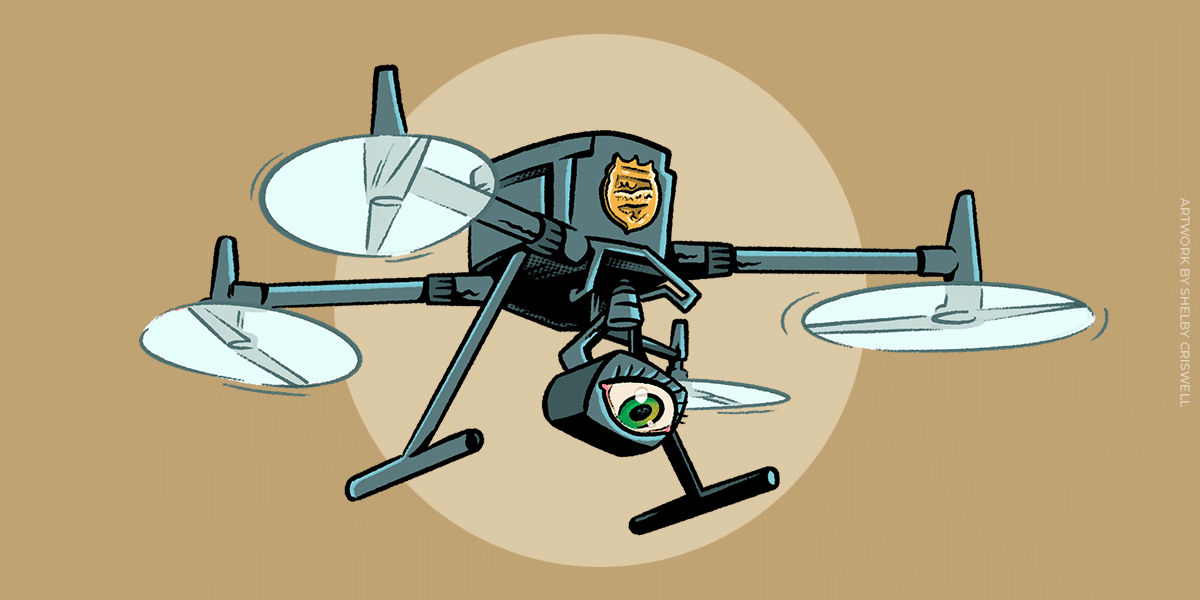
The landscape of domestic law enforcement technology is shifting, with the potential for weaponized drones and robots moving from hypothetical to imminent. A lack of substantial regulation on the deployment of force via drones in the U.S. has created a permissive environment, prompting technology vendors to push boundaries.
Since 2021, the **Electronic Frontier Foundation (EFF)** has actively campaigned against the use of armed robots and drones by law enforcement. This advocacy has become more critical as companies leverage the regulatory vacuum.
### Skydio CEO Signals Permissive Stance on Arming Drones
Recent developments have heightened concerns, particularly a statement from **Adam Bry**, CEO of **Skydio**, a prominent vendor of police drones. Bry indicated a more lenient attitude toward arming their drones than previously understood. In a podcast, he stated, "We said some things previously that led folks externally and internally to believe that, for example, we would prevent the military from putting weapons on our drones [...] I think that’s ultimately misguided."
This statement suggests **Skydio** may not impose restrictions on how its customers, including law enforcement, use their devices. Given **Skydio's** extensive contracts with police departments, including supplying fleets for **Drone as First Responders (DFR)** programs, this stance raises alarm bells. The historical pattern of military technologies, such as surveillance aerostats, being repurposed for domestic use further fuels fears of armed police drones becoming commonplace.
### Weaponized Drones for School Safety: A Dangerous Precedent
Another alarming development is the introduction of weaponized drones for school safety. **Campus Guardian Angel** plans pilot programs in Georgia and Florida schools by Fall 2026. These drones are designed to swarm, distract, crash into, and even deploy irritants against potential school shooters. This initiative comes years after a significant backlash compelled police tech giant **Axon** to halt the development of Taser-armed drones for similar purposes.
Deploying drones to physically harm or antagonize an active shooter is a perilous concept. In chaotic scenarios, such actions could inadvertently injure bystanders or good Samaritans. Furthermore, the efficacy of this technology in real-world situations remains unproven, with current demonstrations often involving controlled environments and stationary mannequins. Critical questions about the drones' ability to detect individuals behind a target and the potential for increased danger if a shooter engages the drone are yet to be adequately addressed. This approach not only poses direct risks but also normalizes the use of armed drones for broader policing challenges.
### The Urgent Need for Comprehensive Regulation
Existing policies, such as San Francisco's 2022 ban on police using deadly force via robots, are insufficient. Effective regulation must encompass both drones and robots and explicitly prohibit the deployment of any physical harm, including deadly force and less-lethal measures like kinetic strikes, pepper spray, rubber bullets, or tasers. Additionally, cities and states should refrain from procuring weaponized drones and robots altogether.
The **EFF** continues to advocate for lawmakers to act decisively. Relying on the internal ethical commitments of companies profiting from selling technology to police departments is an inadequate safeguard against the proliferation of dangerous police technology. The time for legislative intervention is now.