New York Budget Proposal Threatens 3D Printer Censorship and Felony Charges for Design File Sharing
A proposed budget in New York could mandate censorware on all 3D printers sold in the state, surveilling every print for forbidden designs. This policy also introduces felony charges for possessing or sharing certain design files, raising serious concerns about free expression and innovation.
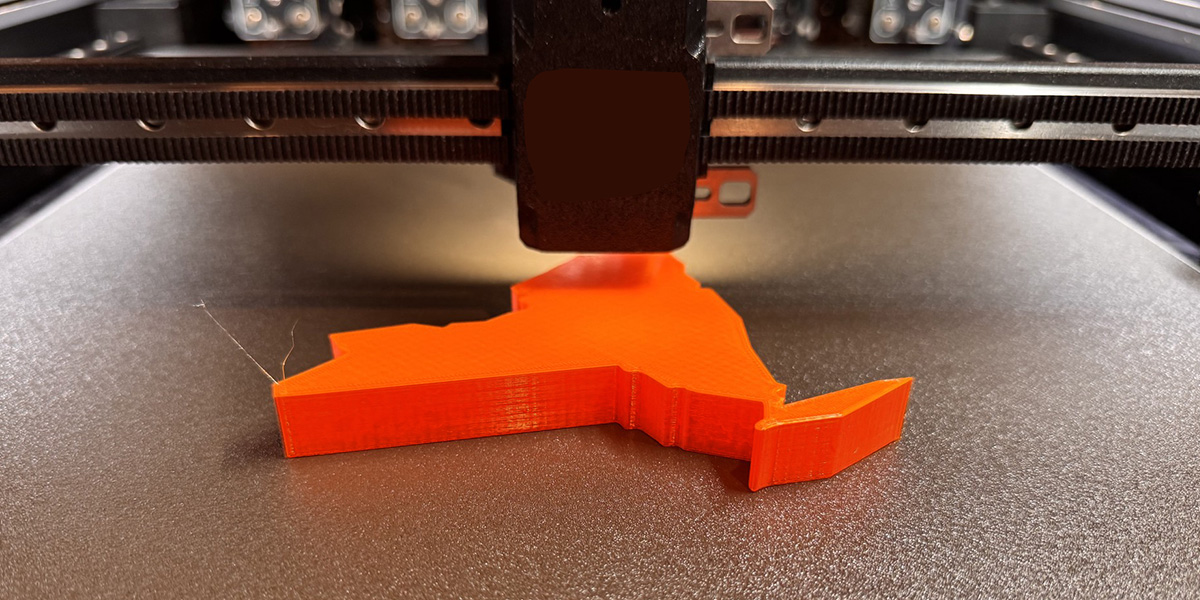
New York's proposed 2026-2027 budget includes provisions that would require all 3D printers sold in the state to run print-blocking *censorware*—software that surveils every print for forbidden designs. This policy would also create felony charges for possessing or sharing certain design files. The vote on the state budget could happen as early as next week, so New Yorkers need to act fast and demand that their Assemblymembers and Senators strip this provision from the budget.
[Take action](https://act.eff.org/action/stop-new-york-s-surveillance-and-censorship-mandate-before-it-s-too-late)
Tell Your Representative to Stand with Creators
State legislators across the US are rushing to regulate 3D-printed firearms under the syllogism “something must be done; there, I've done something.” The most reckless of these proposals is a mandate for manufacturers to implement print blocking on all 3D printers. We, and [other experts](https://blog.adafruit.com/2026/02/03/new-york-wants-to-ctrlaltdelete-your-3d-printer/), have already pointed out that this [algorithmic print blocking is simply unfeasible](https://www.eff.org/deeplinks/2026/04/print-blocking-wont-work-permission-print-part-2) and will only serve to [stifle competition, free expression, and privacy](https://www.eff.org/deeplinks/2026/04/print-blocking-anti-consumer-permission-print-part-1). While most detrimental to the creative communities lawfully using these printers, every New Yorker will be impacted by this blow to innovation.
This policy is unfortunately buried in Part C of the New York State’s proposed budget for the 2026-2027 fiscal year ([S.9005 / A.10005](https://www.nysenate.gov/legislation/bills/2025/S9005/amendment/B)), which is urgently moving toward a vote after [facing extensive delays](https://www.nytimes.com/2026/04/01/nyregion/budget-delayed-hochul.html). It’s also bundled with a policy that would allow felony charges to be brought against researchers and journalists for sharing design files restricted by the state. The worst of these impacts won’t be known until *after* it is negotiated behind closed doors, with no safeguards for creative expression or privacy.
### **Researchers and Journalists Could Face Felony Charges**
Part C Subpart A of the budget includes two particularly concerning provisions: §2.10 and 2.11. These threaten Class E felony charges for distributing or possessing 3D-printer files that would produce firearm parts with a 3D printer or CNC machine.
Under these provisions merely sharing a print file with any of them could result in criminal charges
The first provision, 2.10, makes it a felony to sell or distribute files that can produce major firearm components to someone who is not a federally and NY-licensed gunsmith. Under 2.11, it’s also a felony to possess these files if you intend to illegally print a firearm or share them with someone you believe is not permitted to own or smith a firearm.
A [journalist reporting](https://www.wired.com/story/luigi-mangione-ghost-gun-built-tested/) on 3D-printed guns. A [researcher studying](https://www.sciencedirect.com/science/article/abs/pii/S2468170917300140) printable firearms. An artist incorporating parts into a new work commenting on gun culture. Under these provisions merely sharing a print file with any of them could result in criminal charges, even if no one involved intends to assemble a firearm.
Criminalizing information doesn’t work. Someone intent on illegally printing a firearm is already subject to charges for that act. Adding felony liability for simply possessing a file or design piles on additional charges while doing nothing to stop printing. New charges for someone distributing these files won’t make them inaccessible to lawbreakers, but they will have a chilling effect on legitimate and entirely legal work.
Unsurprisingly, a similar law was proposed and subsequently [scrapped in Colorado](https://hoodline.com/2026/03/polis-veto-scare-ends-with-scaled-back-3d-gun-ban-at-colorado-capitol/) due to First Amendment concerns. We recommend New York do the same.
### **Mandated Surveillance, Less Access**
Part C Subpart B would require every 3D printer and CNC machine sold in New York to include algorithms that scan your design files and block prints the system identifies as producing firearm components. Furthermore, all sales and deliveries of these machines must be made face-to-face.
Unlike other bills we have seen, there are no exceptions to this mandate. These restrictions apply to sales to researchers, commercial manufacturers, and—oddly enough—federally and state-licensed gunsmiths.
Applying these restrictions to CNC machine sellers is particularly absurd. These cousins of 3D printers, which make 3D objects by *removing* materials, are often tens of thousands of dollars and used by commercial manufacturers. Automotive, [aerospace](https://www.stratasys.com/en/resources/videos/lockheed-martin-3d-prints-spaceready-parts/), medical manufacturers, and many others industries will be subject to the in-person sales, surveillance risk, and all the [other problems with these print-blocking algorithms](https://www.eff.org/deeplinks/2026/04/print-blocking-anti-consumer-permission-print-part-1) introduce.
Industries will be subject to the in-person sales, surveillance risk, and all the other problems
Even limiting the focus to individual buyers—hobbyists and artists who use these machines at home—this restriction to face-to-face sales comes with its own issues. Beyond unnecessarily complicating the use of printers in the state, this barrier to access will hit rural New Yorkers the hardest. People in rural or remote locations can stand to benefit from the saved time and costs of printing useful parts at home. With this restriction, they will need to drive to one of the few retailers who actually sell this equipment and settle for the models they stock.
That is, if sellers continue to stock these printers despite the risk. Subpart B §§ 2.3 and 2.5 open sellers up to liability, including anyone on the second-hand market, for selling out-of-date printers. Meanwhile, buyers hoping to illegally print firearms can simply [build their own printer](https://all3dp.com/2/how-to-build-a-3d-printer-from-a-kit-or-from-scratch/) with widely available equipment.
### **The Law Won’t Work as Advertised**
Here’s what makes Subpart B of the New York budget particularly reckless: the technology it mandates is not capable of doing what it is supposed to.
There is very little detail provided about requirements for the mandated algorithms. What the bill does outline boils down to this: the algorithms must evaluate print files to determine whether they would produce a firearm or illegal firearm parts, and if so, block the print. In an attempt to enable this, New York state would also create and maintain a library of forbidden files with tightly restricted access.
We’ve already gone over why [this idea simply won’t work](https://www.eff.org/deeplinks/2026/04/print-blocking-wont-work-permission-print-part-2). Design files are trivially easy to modify, split into segments, or otherwise alter to evade pattern detection. Even if printers fully rendered and analyzed the print with cloud-based AI, any number of design or post-print tricks can be used to dodge detection. Meanwhile, such fuzzy AI interpretation will rapidly increase the percentage of lawful prints censored.
Firearms aren’t a highly specific design like paper currency; these proposed algorithms are futilely attempting to block an infinite number of designs capable of—or that can be made capable of—the few simple mechanical functions that make up a firearm.
This group has no peer review requirements, so it could easily be loaded with profiteers or incumbent manufacturers
As we’ve said before: the internet always routes around censorship. Anyone determined to print a prohibited object has straightforward workarounds. The people who get surveilled and blocked are the people trying to follow the law.
The bill aims to enforce this impossible mandate by creating a working group to define the actual technical requirements of enforcement—but only after the law passes. This group has no peer review requirements, so it could easily be loaded with profiteers or incumbent manufacturers who are [already lining up to participate](https://www.theverge.com/tech/905922/new-york-3d-printed-ghost-gun-ban-luigi-mangione-united-healthcare-shooting). These incumbents stand to profit from shutting out new competitors and locking in users to their devices, and sellers into their platform, subjecting both to the type of *enshittification*