Proton Launches Privacy-Focused 'Meet' Video Conferencing Platform with End-to-End Encryption
**Proton**, known for its commitment to privacy, has unveiled **Meet**, a new video conferencing service designed as a secure alternative to mainstream platforms. Meet offers end-to-end encrypted (E2EE) calls and aims to address growing concerns about data privacy and compliance with regulations like GDPR.
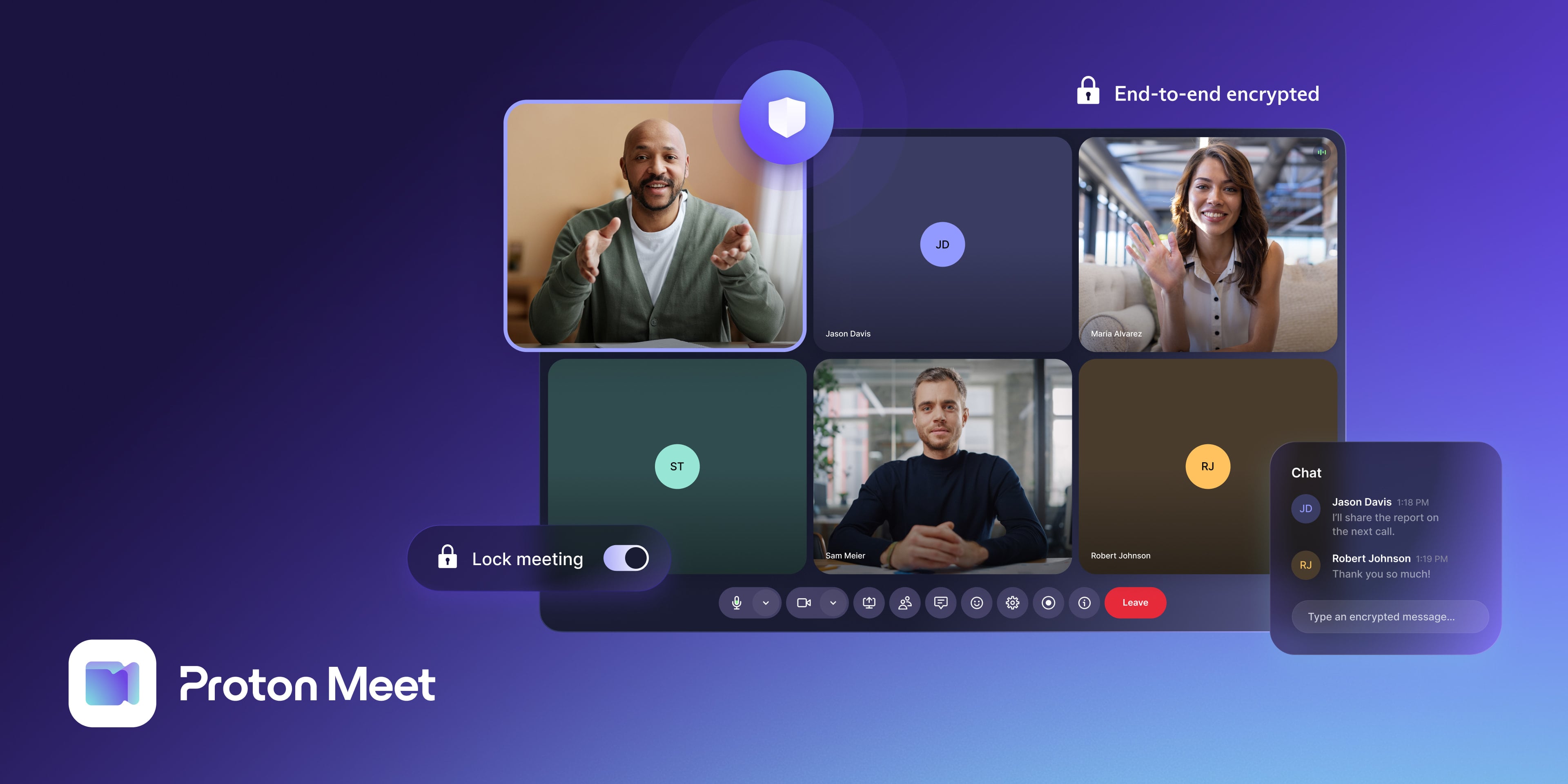

**Proton** has officially launched **Meet**, a video conferencing service emphasizing privacy and security. Positioned as an alternative to services like **Google Meet**, **Zoom**, and **Microsoft Teams**, **Proton Meet** aims to provide a secure communication channel for privacy-conscious users and organizations.
### Key Features and Pricing
**Meet** offers end-to-end encrypted (E2EE) calls to ensure the confidentiality of conversations. Users can participate in one-hour meetings with up to 50 participants for free, without even needing a **Proton** account. For longer calls, **Proton** provides a “pro” plan starting at $7.99/month.
**Proton** developed **Meet** in response to the increasing demand for privacy-first, EU-based alternatives that facilitate compliance with GDPR, CCPA (California Consumer Privacy Act), and address challenges posed by the US Cloud Act and geopolitical instability. The company also highlights the risk of user conversations being used to train AI models, potentially exposing private data from large language models (LLMs).
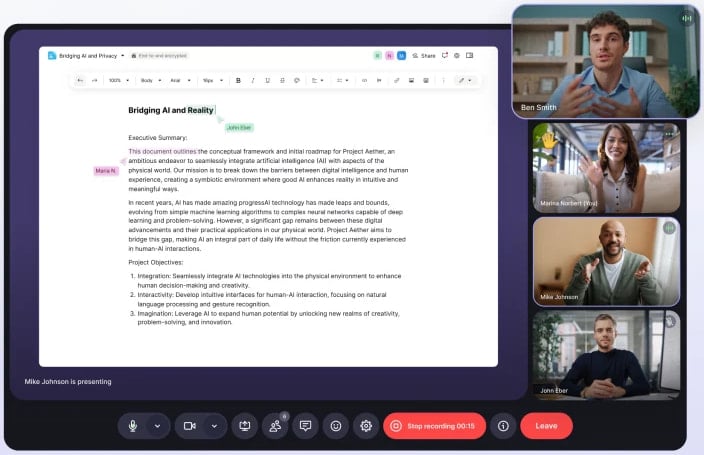
*Screenshare on Proton Meet. Source: Proton*
"**Proton Meet** gives you back your privacy and peace of mind by protecting your calls with end-to-end encryption, so nobody can listen in or use your conversations to sell ads, conduct surveillance, or train AI,” **Proton** states.
Using **Meet** is straightforward: users create a conference call link and share it with participants. The service integrates with **Proton Calendar** and supports adding scheduled meetings to **Google** and **Microsoft** calendars.
### Robust Privacy and Security Measures
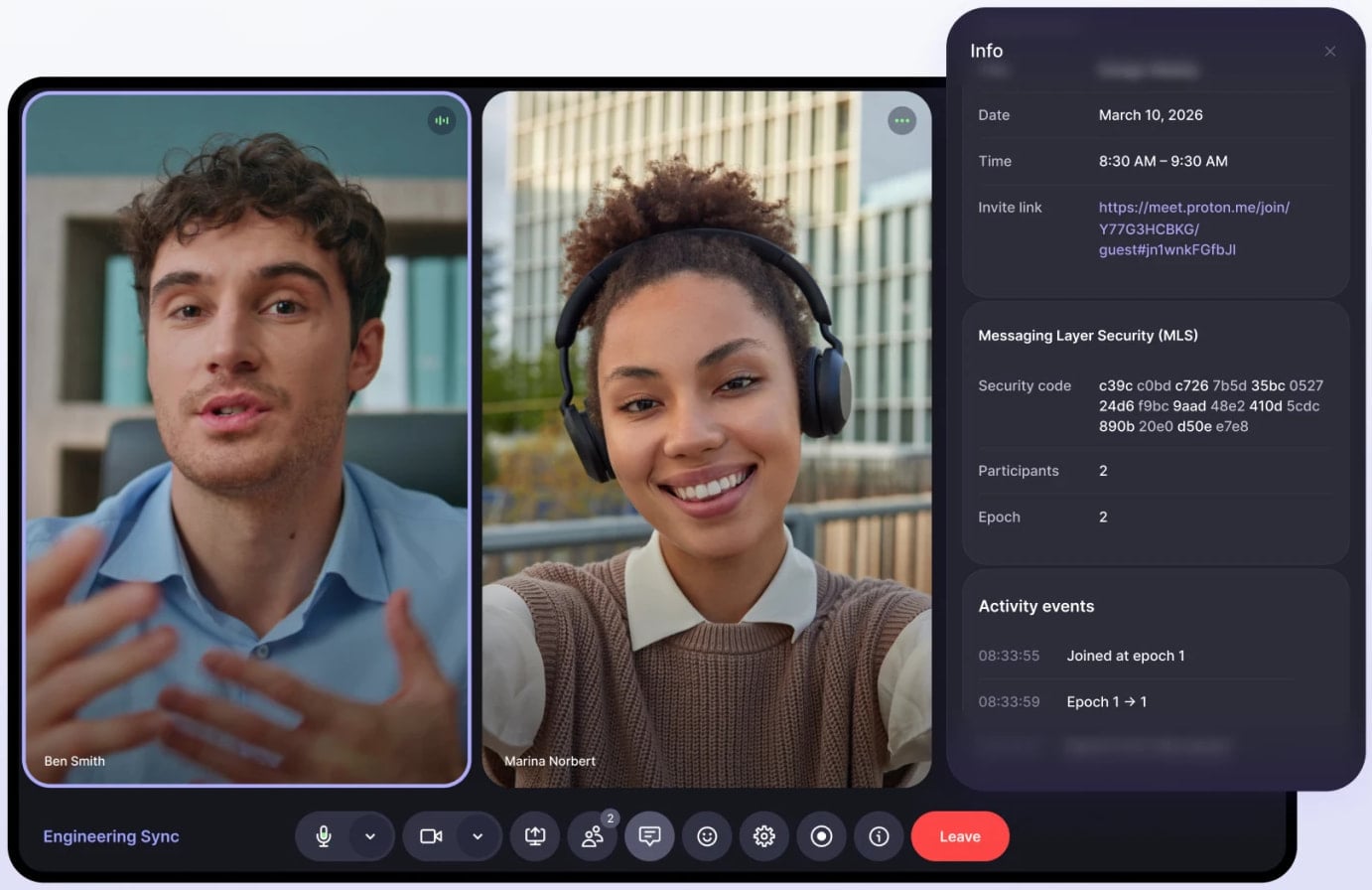
**Proton Meet** secures calls using Messaging Layer Security (MLS), an independently reviewed open-source end-to-end encryption protocol designed for real-time group messaging.
**Proton** has published additional details about MLS, emphasizing that all media and chat are encrypted client-side, preventing the company from accessing or processing any cleartext data.
**Proton Meet’s** architecture is built on WebRTC with Selective Forwarding Units (SFU) for relaying media and chat to all participants.
Each meeting link includes an ID and a password stored locally on the client side, authenticating participants via the Secure Remote Password (SRP) protocol, which has been used on other **Proton** services for a decade.
*Source: Proton*
The MLS system forms a cryptographic group sharing an epoch key for encryption, rotated upon each join/leave event. New members cannot read past messages (forward secrecy), old members cannot read future messages, and all participants have full visibility on the call participants, while their names remain end-to-end encrypted.
Email and IP address information remains private between participants, and **Proton** does not retain records of who met with whom.
**Proton** asserts that even in the event of a server compromise, traffic remains unreadable and unmodifiable, and databases only contain meeting IDs, preventing the exposure of sensitive information to attackers.
The primary risk lies in the compromise of the meeting link, which can be mitigated by locking entries after all expected participants have joined, removing unauthorized participants, or rotating the link.