Ransomware's Hidden Toll: Why the Ransom is Just the Tip of the Iceberg
While the ransom demand often grabs headlines, the true financial burden of a ransomware attack extends far beyond the initial payment. New reports highlight that downtime, recovery efforts, and compliance obligations contribute significantly more to the overall cost, underscoring the critical role of robust Business Continuity and Disaster Recovery (BCDR) strategies.
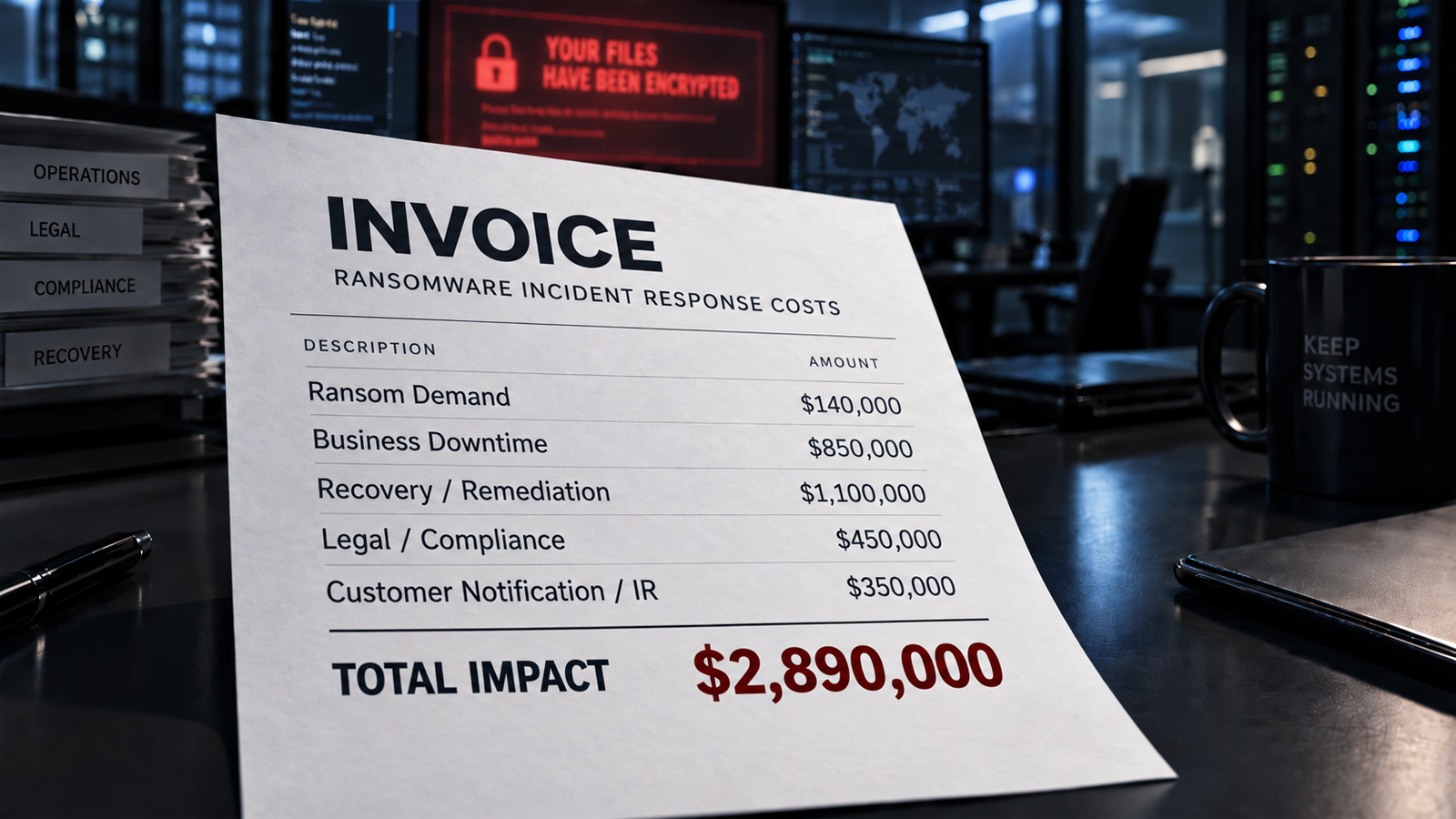

When organizations assess the fallout from a ransomware incident, the ransom payment frequently receives the most attention. However, this payment represents only a fraction of the total financial impact.
According to **IBM**'s Cost of a Data Breach Report 2025, the average total cost of a ransomware incident reached an alarming **$5.08 million** when factoring in downtime, remediation, legal expenses, and business disruption. In stark contrast, the median ransom payment stands at **$139,875**, as reported by the 2026 **Verizon** Data Breach Investigations Report.
This significant disparity reveals that the most substantial ransomware-related costs typically emerge after the initial attack, rather than from the ransom itself.
This article delves into the origins of these escalating costs and demonstrates how a mature Business Continuity and Disaster Recovery (BCDR) strategy can play a pivotal role in mitigating them.
## The Ransom: Only the First Line on the Invoice
A ransomware attack doesn't generate a single bill; it triggers a cascade of concurrent costs. These include lost revenue during system outages, extensive recovery and remediation expenses, legal and compliance work, and the persistent operational disruption until the business fully stabilizes.
### Downtime: Where the Bill Begins to Swell
The longer critical systems remain unavailable, the more financially damaging an incident becomes.
The **Datto** State of BCDR Report 2025 revealed that over 60% of organizations believed they could recover from an incident within a day, yet only 35% actually achieved this. Each additional hour of downtime translates into lost productivity, delayed transactions, disrupted customer service, and IT teams diverted from their regular duties to focus solely on recovery.
For mid-market businesses, recovery time is not merely an IT metric—it's a critical financial indicator. The faster critical operations can be restored, the more effectively these burgeoning costs can be contained.
### Recovery: Adding Another Layer to the Bill
Attackers are increasingly targeting backup infrastructure during ransomware attacks, potentially leaving organizations with limited recovery options. If backups are compromised, recovery may necessitate costly forensic investigations, engagement of incident response specialists, complete system rebuilds, new software acquisitions, and significant allocation of internal IT resources.
Even when backups exist, their utility is contingent on them being clean, accessible, and reliably recoverable.
This is where BCDR maturity truly matters. A backup confirms the existence of a data copy. A thoroughly tested recovery strategy, however, dictates how swiftly that copy can be transformed back into a fully functioning business operation.
### Then Comes the Compliance Cost
While IT teams are actively engaged in containing and recovering from an attack, the regulatory clock is already ticking.
Regulations such as the EU’s **General Data Protection Regulation (GDPR)** mandate notification of a qualifying personal data breach within **72 hours** of becoming aware of it. The **SEC** requires public companies to disclose material cybersecurity incidents within four business days. Other regulations, including **HIPAA**, impose their own specific requirements.
This introduces another potential layer of cost: legal support, investigations, mandatory notifications, reporting, and potential regulatory exposure. The longer recovery takes and the less prepared an organization is, the more challenging it becomes to manage these obligations effectively alongside the technical response.
## The Faster You Recover, the Smaller the Ransomware Bill
This brings us back to the core economic question of ransomware: How quickly can a business recover?
The **Datto RTO & Downtime Cost Calculator** can assist businesses and Managed Service Providers (MSPs) in quantifying this exposure and building a more concrete case for investing in resilience.
A mature BCDR strategy may not prevent a ransomware attack entirely, but it can significantly reduce the duration of business disruption, simplify recovery complexity, provide a more predictable path back to operations, and ultimately diminish the overall financial burden that follows.
## What Changes When BCDR is in Place
The true value of BCDR becomes evident when comparing the cost of operational paralysis with the speed of recovery.
When **Techify**, a **Datto** MSP partner, responded to a client hit by ransomware via a compromised printer, their team restored **19 TB** of data and had the business fully operational in under two hours. Crucially, the client avoided paying a ransom and did not endure weeks of rebuilding their environment.
This exemplifies the profound difference BCDR can make, transforming recovery from a prolonged business crisis into a controlled IT event.
### Recover in Minutes, Not Days
Post-ransomware attack, every hour of downtime inflates the cost. **Datto BCDR** is engineered to minimize this recovery window by capturing snapshots of entire systems—including files, operating systems, applications, and settings—at intervals as short as five minutes.
In the event of an attack, affected systems can be virtualized on the backup appliance or in the **Datto Cloud** while the compromised environment is isolated. This allows the business to resume critical operations promptly while the IT team investigates the attack and works towards full recovery. The primary objective is to restore business access first, then complete the recovery process in the background.
### Immutable Backups Provide a Clean Path to Recovery
Speed is only beneficial if you have a clean recovery point to return to. Ransomware operators are increasingly targeting backup infrastructure because destroying backups can leave organizations with few alternatives. **Datto** protects cloud backups using Write-Once-Read-Many (**WORM**) storage, which helps prevent backup data from being modified or deleted by ransomware. Furthermore, machine learning-based anomaly detection monitors backup activity for unusual patterns.
Combined, these capabilities ensure a clean and usable path back to operations during an attack.
### Turn Downtime Into a Number
The most crucial BCDR conversation should occur well before a ransomware incident. Instead of speculating, "What would a ransomware attack cost us?", calculate the precise cost of each hour of downtime for your business. Then, compare this figure with your organization's Recovery Time Objective (**RTO**), Recovery Point Objective (**RPO**), and the investment required to achieve them.
The equation is straightforward:
Cost of downtime × recovery time + recovery and remediation costs + potential legal and regulatory costs = potential business impact.
Once this number is clearly visible, the business case for robust BCDR becomes significantly more compelling.
**Whether you’re positioning yourself as a strategic partner in BCDR or fortifying your own organization’s resilience, the [Datto State of BCDR Report 2025](https://www.datto.com/resources/the-state-of-bcdr-report-2025/e) offers actionable takeaways to help you stay ahead of cyberattacks.**