Navigating Your Right to Record Law Enforcement: A Guide for Security Professionals and Privacy Advocates
The ability to record law enforcement officers serves as a vital tool for government accountability and social change. However, exercising this First Amendment right comes with important legal and practical considerations. This article outlines the scope of your right to record and offers crucial advice for protecting both yourself and your captured footage.
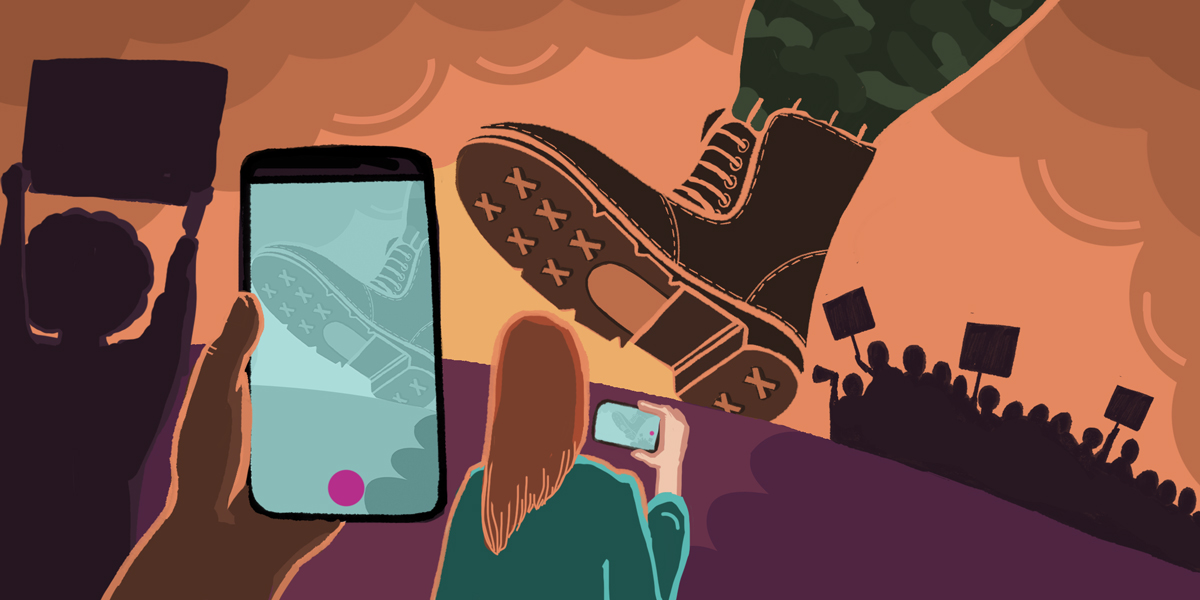
Recordings of law enforcement, whether by bystanders or those directly interacting with officers, are powerful instruments for government accountability and can fuel movements for social change. Yet, recording officers also carries inherent risks. Below, we delve into key legal and practical considerations for recording the police and other law enforcement personnel.
### The Legal Basis: Your Right to Record
**Yes, all Americans possess a First Amendment right to record law enforcement.** This extends to local police and federal officers, including those from **Immigration and Customs Enforcement (ICE)** and **Customs and Border Protection (CBP)**. While the **Supreme Court** has not directly ruled on this issue, nine different federal appellate courts have recognized and affirmed this right, drawing on decades of Supreme Court precedent.
Courts typically frame this right as **"the right to record officers exercising their official duties in public."** This encompasses bystanders and individuals recording their own interactions with law enforcement, such as livestreaming a traffic stop. The right also applies in private places where the recorder has a legal right to be, such as their own home.
You are permitted to take photos, and record both video and audio. Courts have determined that wiretap laws, which generally safeguard private conversations, do not prohibit civilians from audio recording law enforcement. This is because **officers exercising their official duties, particularly in public, do not have a reasonable expectation of privacy.** Similarly, civilians in public spaces who speak to law enforcement in a manner audible to passersby also lack this expectation.
### Limitations on the Right to Record
Courts have consistently stated that behavior which **obstructs or interferes** with effective law enforcement or public safety **is not protected.** Officers cannot order you to move *because* you are recording, but they may order you to move for public safety reasons *even if you are recording*.
Your right to record may be limited if the law enforcement officer is **off-duty or in a private space where you do not have a legal right to be**. For instance, a Los Angeles jury in 2026 convicted two women of felony stalking after they followed an **ICE** agent to his home and livestreamed the pursuit.
### Other Considerations When Recording Officers
Even when you believe you are properly exercising your First Amendment right, officers may still escalate the situation or retaliate. Here are some key points to remember:
* Maintain a calm and courteous demeanor.
* If you are a bystander, position yourself at a **safe distance** from the scene you are recording. Be aware that officers might approach and confront you, closing that distance to accuse you of interfering or even assaulting a federal officer.
* Be vigilant about the possibility of officers **illegally retaliating** against you through various means, including arrest, destruction of your device, or bodily harm. They may also attempt to retaliate by harming the person being arrested.
* Consider the **sensitive nature** of recording during an arrest. For example, the person being arrested or their loved ones might be concerned about exposing their immigration status. Consider obtaining consent or blurring faces in any published version to focus on **ICE/CBP** conduct, while retaining the original video.
* Law enforcement may not search your cell phone or other device **without a warrant** based on probable cause from a judge, even if you are under arrest. Therefore, **you may refuse an officer's request to review or delete your recordings. You also may refuse to unlock your phone or provide your passcode.**
### Protecting Your Footage
The security of your photos and video footage depends on both your device and your recording method. Livestreaming services can save video to the cloud if enabled. But what about recordings stored locally?
Modern smartphones generally protect data, including videos, through encryption. This means that if your phone is locked and secured by a strong passphrase, it is more challenging for an officer to delete content stored on the device. Removing biometric unlock methods like face and fingerprint recognition can further enhance your device's security. You can review your settings by following the steps in the **EFF's Surveillance Self-Defense** guides to ensure device encryption is enabled.
### Further Information
* Read more about your right to record law enforcement: <https://www.eff.org/issues/right-record>
* Read **EFF's Surveillance Self-Defense** technical guide: <https://ssd.eff.org>