Underground Forum Tutorial Reveals 'Hacking for Profit' Blueprint for Novice Threat Actors
A popular tutorial circulating on underground forums, penned by an actor named "Hercules," is providing aspiring cybercriminals with a simplified, step-by-step guide to discovering, exploiting, and monetizing software vulnerabilities. Analyzed by **Flare** researchers, the guide's accessibility and clear monetization strategies are fostering a new generation of hackers.

A forum thread titled “*Hacking for Profit. Working method*” offers a rare glance into how underground communities pass information about vulnerability exploitation and hacking techniques in a form of tutorial. The post, written by an actor using the name "**Hercules**", is not especially long or technical. Its value lies in breaking down a complex process into clear, actionable steps, covering how to scan, detect, assess, exploit, and monetize vulnerabilities in the wild, while also offering rare insight into the significance of vulnerability disclosure programs.
Researchers at **Flare** analyzed the original post along with the responses over a period of a few months. The activity around the thread showed its influence was not limited to the original post; multiple users thanked "**Hercules**", asked to connect privately, described themselves as beginners, or sought guidance on moving from theoretical learning to practical hacking. This post was so popular that the same method was reposted and discussed across four additional forums, providing novice threat actors with a simple framework for understanding vulnerability exploitation and how to gain money from it.

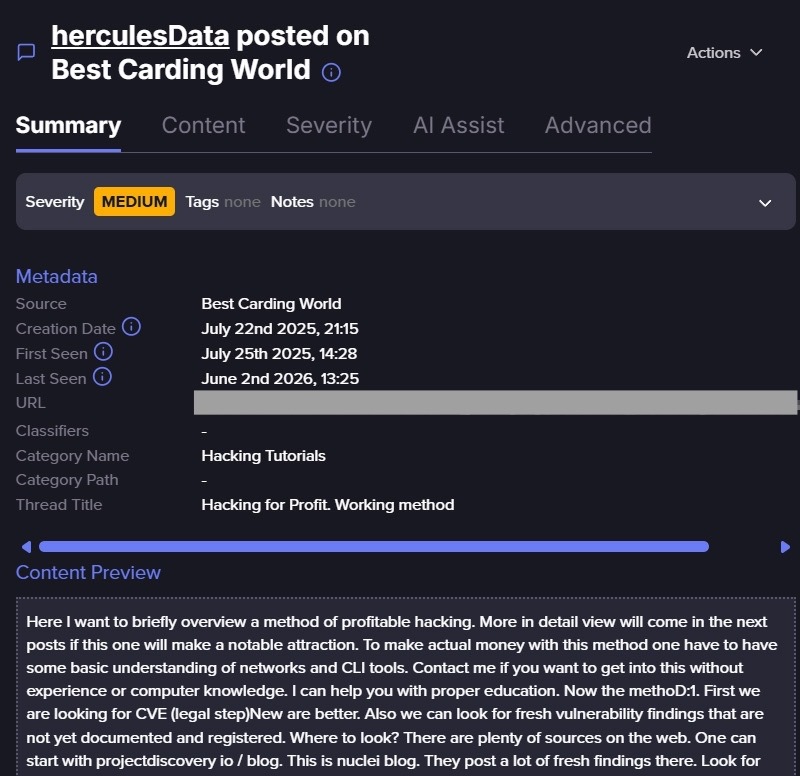
## What the Tutorial Shows
"**Hercules**" explains how to monetize a vulnerability discovery. He begins with advice on how to search for newly disclosed vulnerabilities, especially high-impact classes such as remote code execution, authentication bypass, account takeover, IDOR, and data exposure. He then moves to identifying exposed systems, validating whether those systems may be vulnerable, and deciding whether the results should be reported, sold, or exploited.
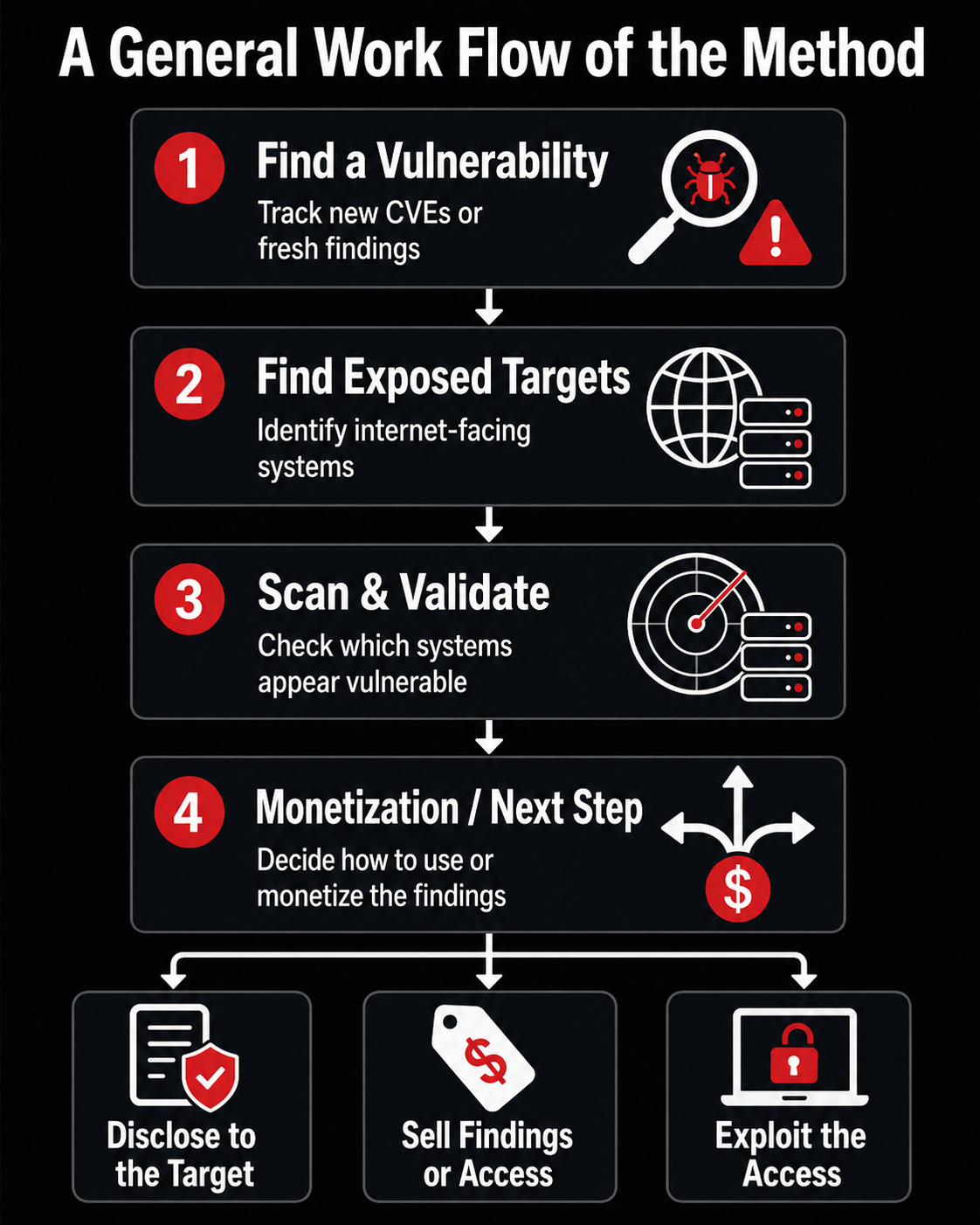
Three aspects stand out in the threat actor’s tutorial:
1. The usage of the **Nuclei** framework by **ProjectDiscovery.io**, which is highly popular among offensive security practitioners.
2. The understanding of the challenges defenders have when patching newly discovered vulnerabilities. These topics are further discussed in an educational blog by **Yakir Kadkoda** and **Ilay Goldman** in the “50 shades of vulnerabilities: Uncovering Flaws in Open-Source Vulnerability Disclosure” on **Aqua Security**'s blog.
3. The tutorial is divided into “legal” and “illegal” parts, meaning the reader can stop at any stage and decide to move from vulnerability disclosure to hacking.
## Accessibility as the Main Selling Point
The most effective part of the tutorial is not a technical trick; it is the tone. "**Hercules**" writes in plain language and presents the process as something that can be learned through action. He argues that many tutorials focus too much on computer science, operating systems, programming, or scanner parameters, while beginners want to "hack," "break in," and "gain access."
He also suggests that users do not need to be advanced software engineers to begin. Public tools, community templates, automation, and even AI assistance are presented as ways to reduce the barrier, while programming skills are described as useful but not mandatory. The underlying message is simple: the technical gap is smaller than beginners think.
That message explains much of the forum response. One user said they had finished many hacking courses but still could not apply them in the real world. Another said they did not even know how to program and asked whether that would be a problem. Others asked "**Hercules**" to contact them privately, said they wanted to learn under his guidance, or praised the post as clear and well structured.

## The Monetization Layer
The most intriguing part of the method is the monetization logic. "**Hercules**" describes several actions his “students” can take once a vulnerability is discovered:
1. Approach the owner of the server/website or hosting company and ask for payment in exchange for vulnerability information. **Hercules** even notes that some people will provide payment for vulnerability disclosure, stating, “…you can take your money home and be proud of yourself.”
2. Offer the finding on underground markets. **Hercules** even suggests that an actor could approach the victim and sell the information elsewhere at the same time.
3. Exploit the vulnerability and detect what’s on the server.
Remote code execution can become access sold to botnet operators, used for illicit resource abuse, or leveraged for data theft. Account takeover, IDOR, and data leak vulnerabilities are framed as assets that can be sold quickly. "**Hercules**" describes himself as a hacker rather than a fraudster, preferring to sell quickly instead of conducting downstream fraud.
## The Forum Reaction: Demand for Practical Mentorship
The replies show that the post resonated because it offered experience and confidence, not just information. Users repeatedly asked for private contact, mentorship, and additional guidance. Some were blocked by forum limitations and said they could not send private messages yet. Others described the post as a useful starting point and waited for follow-up material. Following are some replies from the thread:
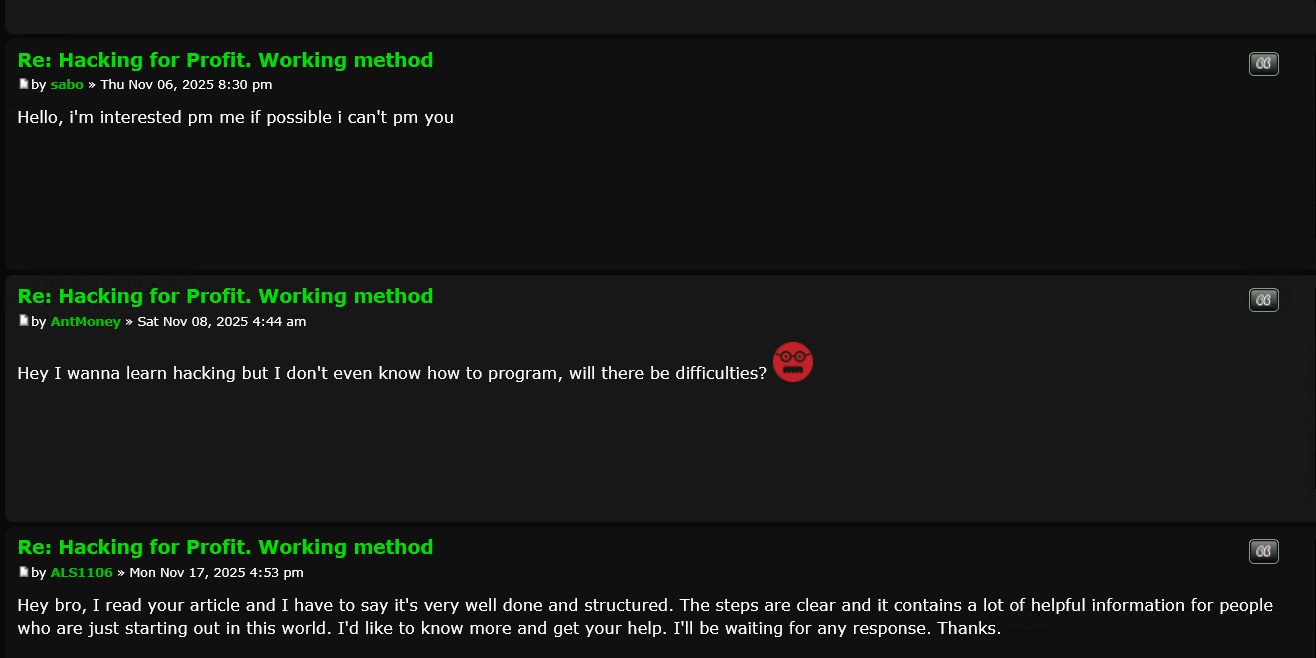
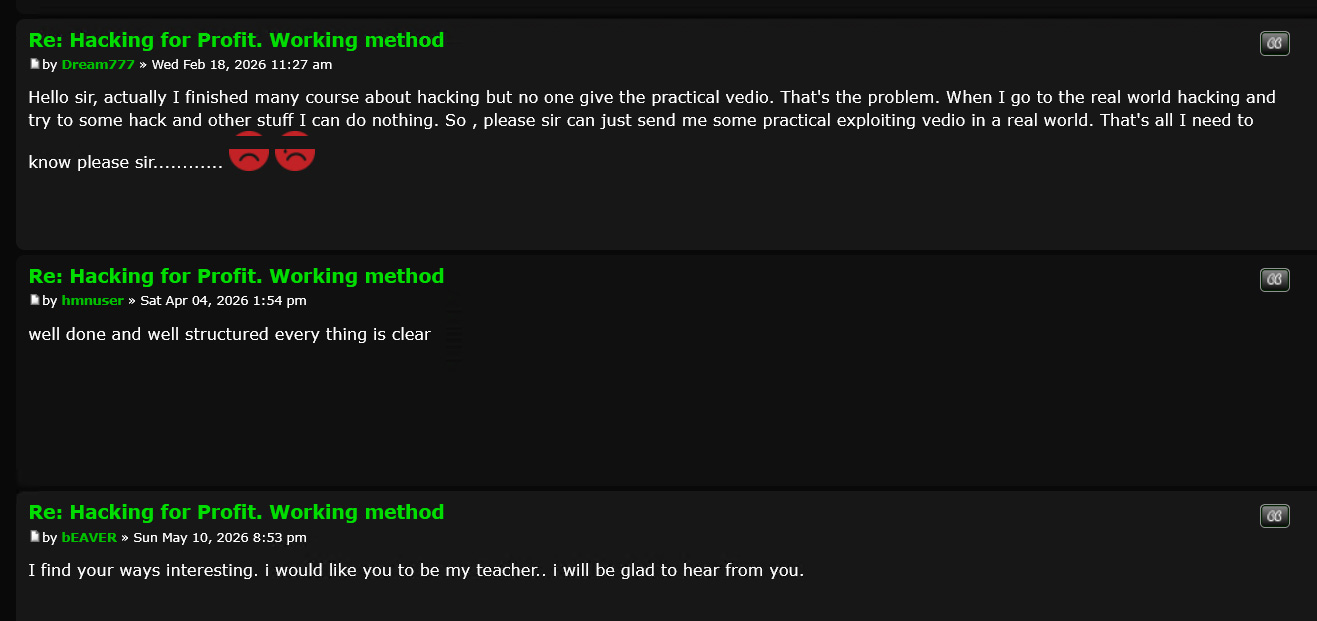
This long tail of engagement is significant. A sophisticated exploit write-up may attract technical readers, but a simple, motivational workflow can attract a broader audience. It can remain relevant for months because it does not depend on one specific vulnerability. It teaches a reusable mindset: monitor new flaws, find exposed systems, validate, monetize, and repeat.
From a threat intelligence perspective, that makes the thread valuable even without unique indicators. It reveals how new actors are taught to think, what vulnerability classes they are encouraged to prioritize, and how experienced forum members convert curiosity into participation. The post is also a soft recruitment channel, with "**Hercules**" repeatedly inviting users to contact him privately.
## Why This Matters for Defenders
This tutorial highlights several critical aspects for effective vulnerability management programs:
1. **Prioritization of Critical Vulnerabilities**: The focus on high-impact vulnerabilities like RCE, authentication bypass, and account takeover by aspiring hackers underscores the need for organizations to prioritize patching and mitigating these specific flaw types.
2. **Understanding Attacker Mindset**: The tutorial offers valuable insight into how new threat actors are trained, what tools (**Nuclei**) they use, and how they identify and exploit vulnerabilities. This knowledge can inform defensive strategies and threat intelligence efforts.
3. **The "Legal" vs. "Illegal" Transition**: The clear delineation between responsible disclosure and outright exploitation within the tutorial serves as a stark reminder that even well-intentioned vulnerability research can quickly pivot to malicious activity, emphasizing the importance of robust security measures and monitoring.