UpdraftCentral Key Compromise: Millions of WordPress Sites at Risk After TeamUpdraft Breach
A recent security incident at **TeamUpdraft**, the developers behind popular WordPress backup and security plugins, has potentially exposed connection keys for its **UpdraftCentral** service. This breach could allow threat actors to remotely control up to 400,000 WordPress websites, with evidence suggesting active exploitation is already underway.


**TeamUpdraft**, a prominent developer of WordPress backup and security plugins, recently disclosed unauthorized access to its infrastructure. The breach, detected over the weekend of October 17-18, has raised significant concerns for the security of millions of WordPress sites.
### The Breach Details
**TeamUpdraft** immediately responded to the incident, containing the access route, signing out all accounts, and replacing potentially compromised keys and credentials. The company believes the threat actor accessed its customer database, which contained sensitive information including:
* Password hashes
* Two-factor authentication settings
* Connection keys for **UpdraftCentral**, **UpdraftVault**, and **UpdraftClone** services.
Crucially, **TeamUpdraft** stated that no payment details were stored on their systems and that **UpdraftPlus** plugin files and downloads remain unaffected. Self-hosted **UpdraftCentral** instances are also not impacted.
### Widespread Exposure
The most alarming aspect of this breach is the potential 'blast radius.' An estimated 10% of sites utilizing **UpdraftPlus** also have an **UpdraftCentral** or **Migrator** key. With **UpdraftPlus** boasting over 4 million downloads, this translates to approximately 400,000 websites potentially exposed to remote compromise.
According to **Patchstack**, a leading WordPress plugin security company, attackers began leveraging stolen access keys on October 18 at 15:32 UTC. These attacks aim to execute arbitrary code and establish accounts with full administrator privileges on connected sites. **Patchstack** researchers noted at least 99 distinct malicious backdoor plugins disguised as legitimate WordPress maintenance and optimization tools, such as “Site Health Cache.”
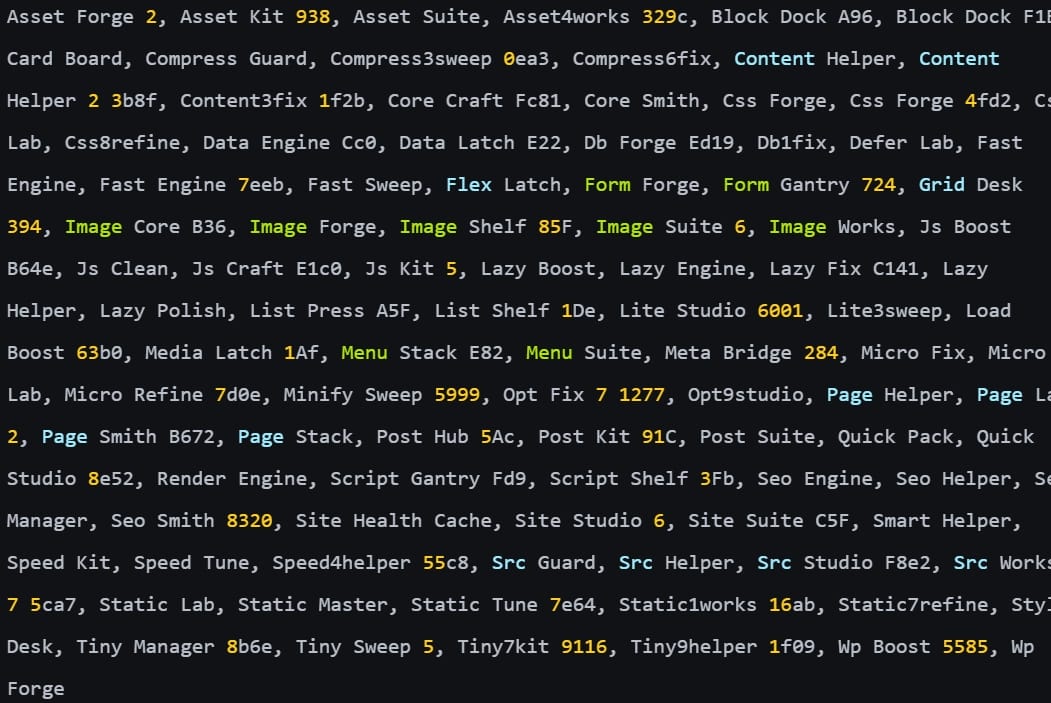
### Active Exploitation Confirmed
Web application security firm **Nethemba** corroborated the active exploitation, reporting that three of their own WordPress websites were targeted through **UpdraftCentral**, with malicious plugins successfully installed on two. **Nethemba** clarified that the attackers did not exploit server weaknesses or configuration flaws but rather used valid private dashboard keys via the **UpdraftCentral** remote management channel.
**Nethemba** also identified a critical bug in **TeamUpdraft's** initial remediation release (1.26.12/2.26.12), which was intended to remove **UpdraftCentral** Cloud keys but failed to do so effectively.
### Urgent Recommendations
**TeamUpdraft** has since released updated versions of **UpdraftPlus** to address the vulnerability. Users are strongly advised to take the following immediate actions:
1. **Update UpdraftPlus**: Update to version 1.26.13 (free) / 2.26.13 (Premium) or later.
2. **Delete UpdraftCentral Keys**: After updating, log into each WordPress site and manually delete the **UpdraftCentral** connection keys. Navigate to `Settings → UpdraftPlus Backups → Advanced Tools → UpdraftCentral → Manage existing keys`.
3. **Rotate Storage Credentials**: If you accessed your site via **UpdraftCentral**, rotate all remote storage credentials and reauthorize connections.
4. **Inspect for Compromise**: Review logs and files for indicators of compromise (IoCs) provided by **TeamUpdraft**, **Patchstack**, and **Nethemba**.
5. **Post-Compromise Actions**: If a compromise is confirmed, restore sites from clean backups, change your **TeamUpdraft** account password, revoke all sessions, and reset any two-factor authentication methods.
This incident underscores the critical importance of supply chain security and the far-reaching impact a single breach can have across a vast ecosystem of interconnected services.