US Officials Press China on Southeast Asian Cyber Scam Crackdown Amid Global Expansion Concerns
Senior U.S. officials have revealed that former President Donald Trump raised the issue of Southeast Asian cyber scam compounds with Chinese President Xi Jinping. While China has increased its efforts against these criminal operations, concerns remain that Chinese law enforcement primarily targets scams affecting its own citizens, potentially allowing those preying on Americans to continue operating.
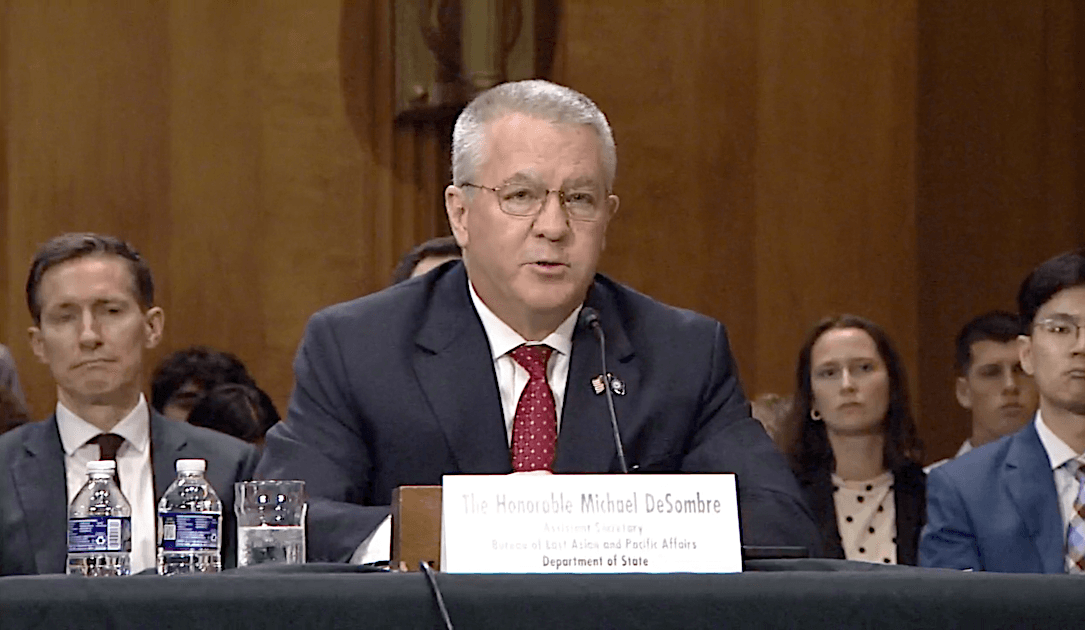
A senior official from the **State Department** told senators last Thursday that former U.S. President **Donald Trump** raised the issue of Southeast Asian cyber scam compounds directly with Chinese President **Xi Jinping**.
**Michael DeSombre**, the assistant secretary for East Asian and Pacific Affairs, confirmed at a **Foreign Relations Committee** hearing that **Trump** "has raised transnational criminal organizations with President Xi." The hearing focused on international scam compounds that annually siphon billions from Americans through romance and finance ruses.
### Tacit Support and Selective Enforcement
In recent years, these large-scale thefts have largely emanated from operations run by Chinese organized crime groups in **Cambodia**, **Laos**, and **Myanmar**. State Department officials have previously indicated evidence that parts of China’s government may tacitly support or selectively prosecute gangs involved in these schemes, particularly those laundering money stolen from U.S. citizens.
While **DeSombre** did not specify when the conversation between **Trump** and **Xi** occurred or **Xi**'s response, he noted that Chinese crackdowns over the past six months have been "very successful in decreasing the amount of scam compounds in Cambodia" as well as **Myanmar**.
"I think our understanding is much of that has been driven by Chinese desire, as those scam compounds had been targeting Chinese nationals," **DeSombre** explained. He added that the expanding nature of these scams, now targeting more countries, has made nations like China more willing to collaborate with the U.S. to combat them.
### U.S. Concerns Over Chinese Repatriation
Despite increased Chinese action, U.S. officials have previously warned that Chinese law enforcement predominantly targets gangs that scam Chinese citizens. This raises concerns that other operations, particularly those targeting Americans, may be allowed to continue.
Experts also suggest that some Chinese extraditions from Southeast Asia might be aimed at preventing U.S. and other international efforts to gain access to cyber scam leaders who could possess crucial intelligence.
**DeSombre** underscored this point in his testimony, stating that the U.S. and its allies are "putting diplomatic pressure on these countries not to deport [cyber scam bosses] back to China, but to give us access to those individuals to make sure intelligence is gathered." This is crucial to ensure all scam leaders are pursued and not allowed to continue operating against American citizens.
"When they are sent back to China, we don't have great transparency as to what happens to them. Some of them may be incarcerated, and others may not. We don't have that transparency," he said, emphasizing the need for continued discussions with China on this matter, including efforts by the **FBI** with the Chinese **Ministry of Public Security**.
### Industry Expansion and Global Proliferation
**DeSombre** and another State Department official, **David Bedard**, revealed that over $12 billion was stolen from Americans last year in cyber scams, likely an underestimate.
**Bedard** highlighted the **Bureau of International Narcotics and Law Enforcement Affairs'** funding of **FBI** deployments to **Thailand**, where U.S. personnel embedded with the **Royal Thai Police** during disruptions of scam compounds in **Myanmar**. These operations allowed U.S. officials to interview individuals fleeing the compounds, gathering intelligence on gang leadership and operations. The **FBI** also examined over 8,000 phones and 1,500 hard drives, leading to "multiple federal indictments and arrests targeting scam leaders and facilitators."
Two weeks prior, the State Department announced new visa restrictions for individuals linked to foreign cybercrime networks. Secretary of State **Marco Rubio** also discussed scam centers with **Cambodia**’s foreign minister in July.
Senators also raised concerns about the expansion of these cyber scam schemes beyond Southeast Asia. Senator **Tim Kaine** (D-VA) questioned whether law enforcement actions in Southeast Asia were pushing gangs into the Western Hemisphere, citing instances of scams uncovered in **Peru**, the **Dominican Republic**, and other countries since 2023.
**Bedard** confirmed this global proliferation, noting that romance scams have long operated out of **Nigeria** and **Cote d'Ivoire**, while call center scams from **India**, lottery scams from **Jamaica**, and timeshare scams from across South America have expanded significantly over the last decade.
"It's certainly proliferating, and the concern is that the tradecraft that these Chinese transnational criminal organizations are using in Southeast Asia is being exported around the globe," **Bedard** concluded. "We have a global footprint and we certainly want to address this concern where it's predominantly affecting Americans in Southeast Asia, but also getting ahead of the concerns as it expands globally."