US Supreme Court Ruling Threatens EU-US Data Privacy Framework, Sparks Outcry From Privacy Advocates
A recent US Supreme Court decision allowing presidents to remove independent agency members at will has cast a shadow over the **EU-U.S. Data Privacy Framework (DPF)**. Privacy advocacy group **noyb**, led by **Max Schrems**, is preparing to challenge the framework, arguing that the ruling undermines the DPF's core requirement for independent oversight of data transfers. This legal challenge could disrupt the colossal €1.7 trillion in annual transatlantic trade, impacting major tech players like **Meta** and **Google**.
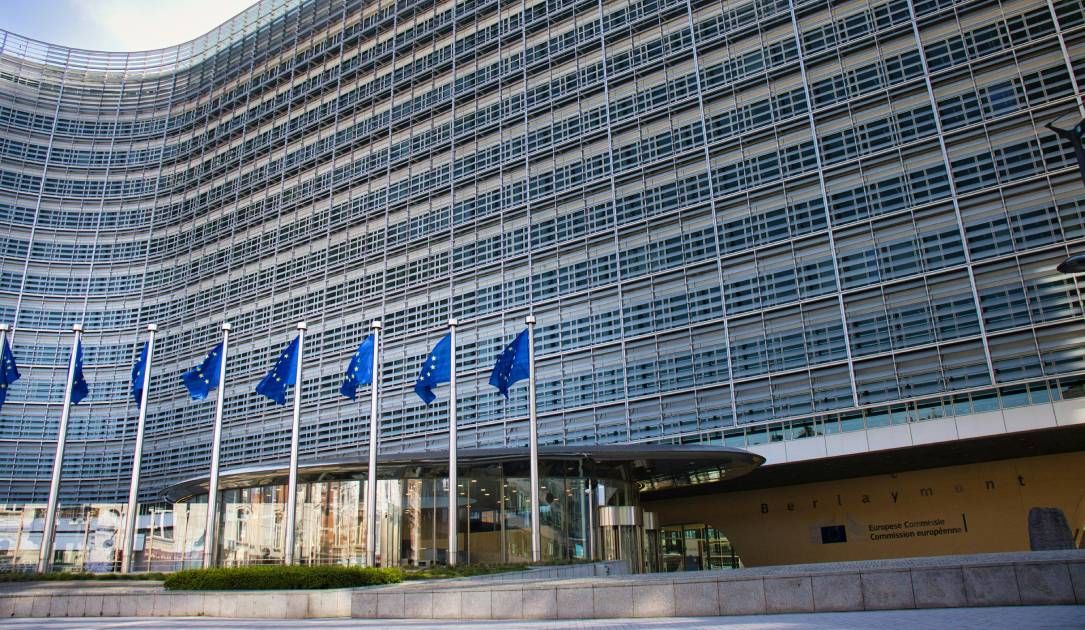
# US Supreme Court Ruling Imperils Transatlantic Data Flows
The viability of the **EU-U.S. Data Privacy Framework (DPF)**, a cornerstone agreement facilitating personal data transfers between the European Union and the United States, is now under severe scrutiny following a pivotal US Supreme Court ruling.
On Monday, the Supreme Court upheld former President **Donald Trump's** decision to fire **Federal Trade Commission (FTC)** Commissioner **Rebecca Slaughter** without cause. This ruling, which asserts the President's power to remove members of so-called independent agencies at will, directly challenges a fundamental tenet of the DPF: the requirement for an independent US body to oversee and regulate EU data transfers.
## Schrems Prepares Legal Challenge
**Max Schrems**, founder of the Vienna-based privacy advocacy organization **noyb**, wasted no time in responding. In a letter to European officials, Schrems announced his intention to sue to invalidate the DPF, which was formally adopted by the European Commission in 2023.
"The basis for any EU-US data transfer deal is dead," Schrems declared in a Tuesday statement. "We call upon the Commission to start an orderly exit from the U.S. cloud, which is not easy, but unfortunately unavoidable."
Schrems further criticized the European Commission, stating, "The Commission built a legal house of cards under industry pressure. Now that it clearly collapses, it has to take responsibility."
This isn't Schrems' first rodeo; he has a formidable track record of success in European privacy lawsuits, having previously won two court battles concerning EU-US data transfer mechanisms. He contends that Europe has relied on the **FTC's** independence 259 times in its data flow decisions under the current framework.
## Economic Implications and Industry Response
The DPF is crucial for transatlantic commerce, underpinning an estimated €1.7 trillion ($1.9 trillion) in trade annually. Should a court side with Schrems, the repercussions for businesses relying on these data flows would be immense. Companies like **Meta** and **Google** have previously indicated they would withdraw from Europe if data transfers to the US were no longer permitted.
Joe Jones, director of research and insights at **IAPP**, highlighted the difficult position the European Commission faces. "The commission cannot come to a different interpretation of U.S. law than the U.S. Supreme Court," Jones stated. "It's going to get squeezed, no doubt, from different stakeholders that it should do something."
For companies like **Meta**, which derives approximately a quarter of its ad revenue from the EU, an invalidation of the DPF would necessitate significant changes, potentially requiring the construction of European data storage infrastructure or navigating a complex compliance landscape without the incentive of targeted advertising revenue.
## Officials Respond and Political Pressure Mounts
While multiple spokespersons for the European Commission have yet to provide detailed comments, spokesperson **Markus Lammert** told Politico Europe that the Commission has "taken note" of the Supreme Court's decision and will "carefully analyze any implications it may have for the EU-U.S. agenda."
The **European Data Protection Board (EDPB)**, comprising privacy regulators from across Europe, has also confirmed it is reviewing the Supreme Court decision and its "potential implications for the oversight mechanisms underpinning the EU-U.S. Data Privacy Framework." The **EDPB** underscored the "central importance" of the oversight body's independence to the DPF's legitimacy.
French Parliamentarian **Phillipe Latombe** has already called for the immediate cancellation of the DPF, deeming it no longer legal, and has a pending case before the **Court of Justice of the EU** seeking its invalidation. Schrems is pushing for the EU to suspend data transfers until a court decision is issued, a process that could span several years.