WhatsApp Fortifies Account Security with Multi-Platform Passkeys and Enhanced 2FA
**WhatsApp** is rolling out a suite of new account security features designed to bolster user protection against evolving threats. These updates include support for multiple passkeys across devices, stronger alphanumeric two-step verification, and enhanced caller information to combat scams.

The popular messaging platform, **WhatsApp**, is significantly enhancing its account security protocols, introducing features aimed at both IT security professionals and privacy-conscious users.
### Multi-Platform Passkey Support
Users can now create and manage separate passkeys for each platform they use. While **WhatsApp** previously supported passkeys for secure logins via biometric authentication (**Face ID**, fingerprint) or screen lock, this update allows for distinct passkeys across **Android** and **iOS** devices. This improves flexibility and security for users operating in a multi-device environment.
To enable this feature, users can navigate to `Settings > Account > Passkeys` within the application.
### Alphanumeric Two-Step Verification
In a crucial upgrade, **WhatsApp** has moved beyond the traditional six-digit PIN for two-step verification. The system now supports full alphanumeric passwords, including special characters. This significantly increases the complexity and resilience of the second authentication factor, making accounts much harder to compromise through brute-force or guessing attacks.
> "Until now it was a six-digit PIN, we've now upgraded it to a full password: longer, alphanumeric, and even with special ch@racters to make it harder to guess. If you've been using '123456,' this is your sign to upgrade," **WhatsApp** stated.
### Enhanced Call Screen Context for Scam Prevention
To combat the growing threat of scam calls, **WhatsApp** is providing users with more contextual information on call screens, particularly for numbers not in their address book. On **Android** devices, this includes details like the caller's country of origin and any shared groups.
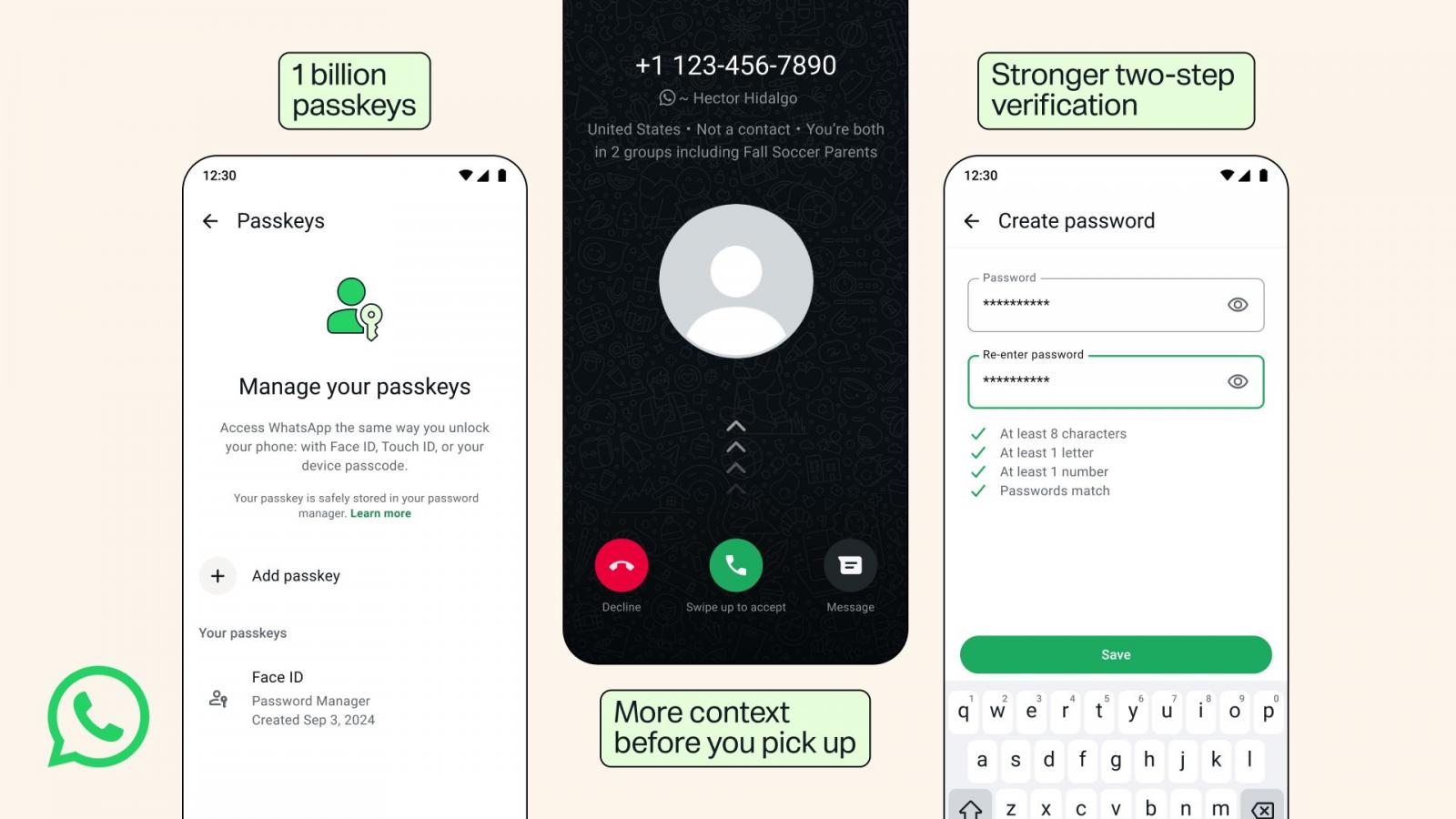
This additional information empowers users to make more informed decisions before answering, disrupting the urgency often exploited by scammers.
### Broader Anti-Scam Initiatives
These new security measures are part of a larger ongoing effort by **WhatsApp** to protect its more than 3 billion global users from fraud and cyberattacks. Earlier this year, the platform introduced several key features:
* **Strict Account Settings**: Rolled out in January, this **Apple Lockdown**-style feature offers enhanced protection for high-risk individuals, such as journalists and public figures, against sophisticated threats like spyware.
* **Device-Linking Fraud Warnings**: In March, **Meta** (WhatsApp's parent company) announced warnings for users when a device-linking request might be fraudulent, a common tactic for account hijacking.
* **Scam Alert Feature**: Currently in a limited beta, this optional feature utilizes a local machine learning model to proactively warn users about potential scam messages.