WhatsApp Bolsters User Experience and Security with AI, Enhanced Account Management, and Anti-Scam Protections
**WhatsApp** is rolling out a suite of new features aimed at improving user experience and enhancing security. These updates include AI-powered message assistance, improved media management, multi-account support on iOS, and robust anti-scam measures.

### AI-Powered Writing Assistance and Photo Retouching
**Meta** is introducing AI-driven features to streamline communication and enhance media sharing within **WhatsApp**. The 'Writing Help' feature leverages **Meta AI** to suggest message replies based on the ongoing conversation. According to Meta, this feature utilizes Private Processing to ensure user privacy, preventing **WhatsApp** or Meta from accessing message content.
Users can now also retouch images directly within the app before sharing them, providing a more polished visual experience.
### Enhanced Storage Management
**WhatsApp** is simplifying storage management by allowing users to easily identify and remove large media files within specific chats. This feature helps users free up valuable storage space without the need to delete entire conversations.
### Multi-Account Support on iOS and Cross-Platform Chat Transfer
Following its availability on Android, **WhatsApp** now supports simultaneous login for two accounts on iOS devices. This feature allows users to manage personal and professional accounts seamlessly.
The chat transfer feature now supports migrating message history from iOS to Android devices, including individual and group chats, call history, and channel/community data. "Now, with just a few taps, your conversations, photos, and videos easily come with you no matter what device you're using," Meta said.
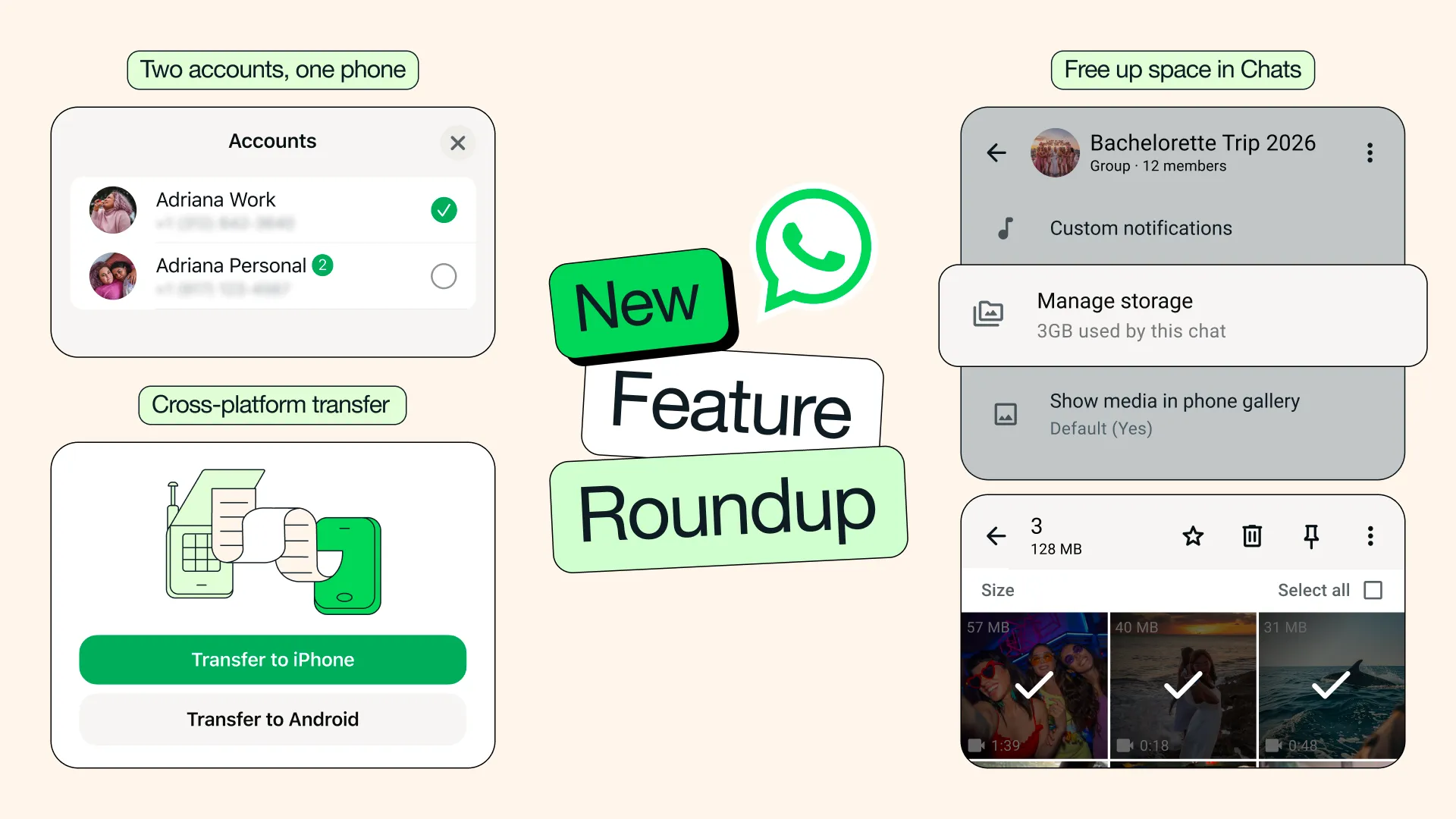
*New WhatsApp features (Meta)*
### Enhanced Security Measures and Parental Controls
Earlier this month, **WhatsApp** introduced parent-managed accounts for pre-teens, enabling parents to control contact permissions and group access.
Meta has also implemented new anti-scam protections, alerting users to potentially fraudulent device-linking requests based on behavioral signals. This addition comes after Dutch intelligence agencies warned of phishing attacks targeting **Signal** and **WhatsApp** accounts of Dutch government employees by Russian state-backed hackers.
In January, **WhatsApp** rolled out a lockdown security feature aimed at protecting high-risk individuals, such as journalists and public figures, from sophisticated cyberattacks, including spyware.
### Sponsored Content
<!-- Raw HTML - Preserving iframe or other embedded content -->