Automated Pentesting's Honeymoon is Over: The Rise of the Validation Gap
Automated penetration testing tools often promise comprehensive security validation, but many organizations find their effectiveness diminishes rapidly after the initial runs. This article explores the limitations of relying solely on automated pentesting and introduces the concept of the 'Validation Gap,' highlighting the need for a more comprehensive approach like Breach and Attack Simulation (BAS).

*By [Sila Ozeren Hacioglu](https://www.linkedin.com/in/silaozeren/), Security Research Engineer at **Picus Security**.*
The initial excitement surrounding automated penetration testing tools is often followed by a period of diminishing returns. The dashboard initially lights up with critical findings, lateral movement paths, and legacy service account vulnerabilities. The Red Team feels empowered, and the CISO believes the "human element" has been automated.
But the honeymoon ends.
By the fourth or fifth execution, new findings become scarce. The tool starts reporting the same stale issues, and the once-shiny dashboard becomes just another source of noise. This phenomenon is known as the **Validation Gap**: the growing disparity between what organizations actually validate and what they report as validated.
If your automated pentesting tool feels like it's overpromising and underdelivering, you're experiencing a shift in the market. The industry is realizing that while automated pentesting is a powerful *feature*, it's a *dangerous strategy when used in isolation*.
## The POC Cliff: Where Discovery Goes to Die
The pattern of an exciting first run followed by significantly diminishing returns isn't anecdotal.
Security practitioners call it the **Proof-of-Concept (PoC) Cliff**: the steep drop in new findings once the tool has exhausted its fixed scope. This isn't a tuning problem.
By design, automated pentesting solutions deliver their best results in the first run. Within a few cycles, exploitable paths within their scope are exhausted. However, this doesn't mean your environment is secure; it simply means the tool has reached its limits, while deeper issues remain untested.
This is the structural ceiling of a tool operating against a deterministic surface. It’s an architectural limitation, not an operational one.
Automated pentesting chains its steps. Step B depends on Step A, and Step C depends on Step B. Once you patch the specific path the tool favors, it's blocked at Step A, and Steps B through Z never execute. The tool might be able to test 20 lateral movement techniques, but if it gets caught early in the chain, those techniques stay dark. You get the false sense of "mission accomplished" while the rest of your attack surface remains unprobed.
This is where **Breach and Attack Simulation (BAS)** draws a hard line.
BAS doesn't chain; it runs thousands of independent, atomic simulations. Each technique gets its own clean execution. A blocked exfiltration test over DNS doesn't prevent testing exfiltration over HTTPS next. A failed lateral movement technique doesn't stop the tool from testing 19 others.
One tests the path. The other tests the shield.
## Clearing the Air: BAS vs. Automated Pentesting
To better understand the “why” of the PoC Cliff, we need to address a growing point of confusion in the industry. While Breach and Attack Simulation (BAS) and automated penetration testing share the broad goal of validation, they use different methods to answer different questions.
Think of BAS as a series of independent measurements. It continuously and safely emulates adversarial techniques, malware payloads, lateral movement, and exfiltration, to verify if your specific security controls (firewalls, WAF, EDR, SIEM) are actually doing their jobs.
Its primary mission is to test if your defenses are blocking or alerting on known threat behaviors. Each test stands alone as a check of your defensive strength.
Automated Penetration Testing, by contrast, is directional. It takes a more surgical, adversarial approach by chaining vulnerabilities and misconfigurations together the way a real attacker would. It excels at exposing complex attack paths, such as Kerberoasting in **Active Directory** or escalating privileges to reach a Domain Admin account.
Though both are often thought of as “validation methods,” the two are fundamentally different in mission and outcomes. One tells you how strong your individual defenses are; the other tells you how far an attacker can travel in spite of them.
## The "Simplicity" Trap: Why Pentesting Isn't BAS
Recently, some vendors have proposed the idea that automated pentesting can, and should, replace BAS. On paper, it sounds great.
In reality, this isn't an upgrade; it’s a coverage regression disguised as a simplification.
As we’ve just seen, automated pentesting and BAS tools answer fundamentally different questions. To secure a modern enterprise, you need the answers to both:
* **BAS asks:** *"Are my firewalls, EDRs, WAFs, and SIEMs actually doing their jobs across the entire **MITRE ATT&CK** framework?"* It focuses on the *effectiveness* of your defensive controls.
* **Automated Pentesting asks:** *"Can an attacker get from Point A to Point B using known exploits?"* It focuses on the *success* of specific attack paths.
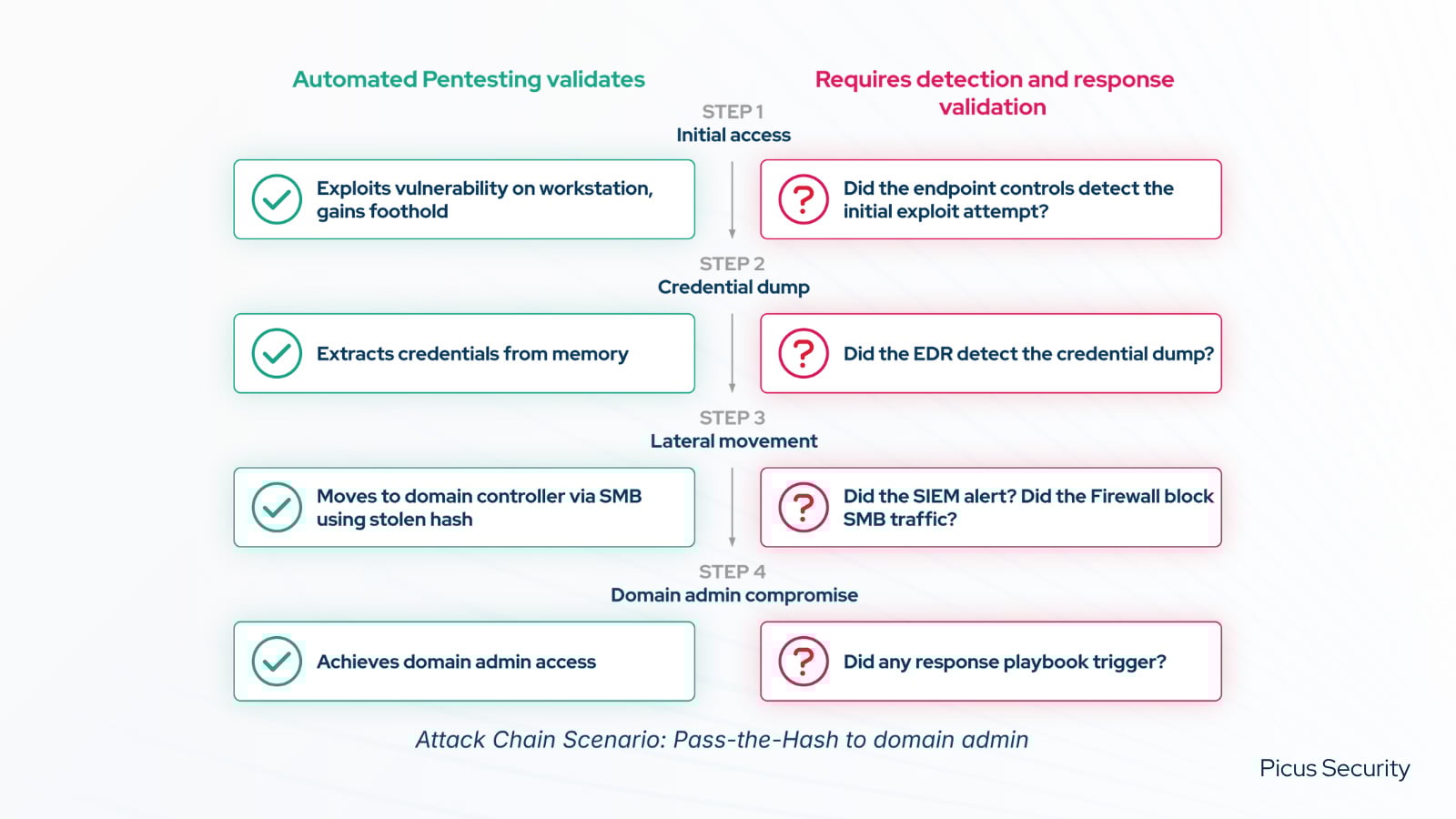
**Figure 1. Example Attack Chain Scenario: What Automated Pentesting & BAS Validates**
If you swap BAS assessments for automated pentesting, you stop validating your prevention and detection stack.
You might know that an attacker can’t reach your database via one specific exploit, but you have zero visibility into whether your EDR would even blink if they tried a different, non-exploitative technique.
## The Six Blind Spots of the Modern Attack Surface
While marketing materials promise "comprehensive" coverage, the reality is that automated pentesting typically only scratches the surface of infrastructure and application paths.
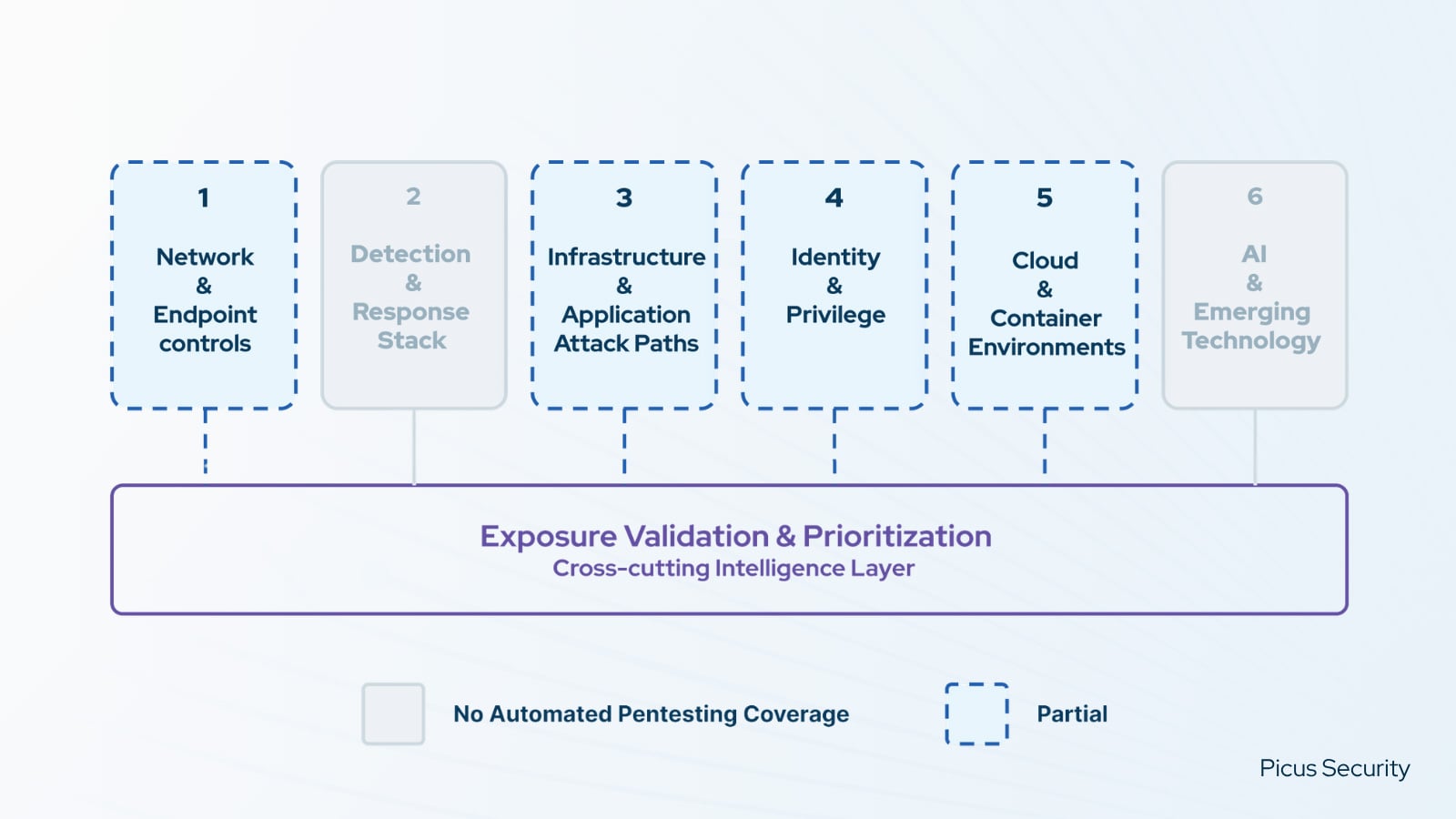
**Figure 2. Six Layers of an Organization’s Attack Surface**
As shown above, two surfaces get no coverage from automated pentesting. Four get partial coverage at best. Not a single surface is fully covered. That's 0 for 6 completely validated. This creates a massive validation gap where today’s breaches are actually happening:
1. **Network & Endpoint Controls:** Exploit paths are identified, but there is no confirmation if firewalls, WAF, IPS, DLP, or EDR are actually blocking the threats they’re configured to stop. Controls fail silently, and "configured" is mistakenly equated with "effective."
2. **Detection & Response Stack:** Automated pentesting has no visibility into whether SIEM rules and EDR detection logic actually fire. The tool runs as the attacker, it cannot observe the defender. Detection coverage is assumed, not measured.
3. **Infrastructure & Application Attack Paths:** These tests often hit a "POC cliff." While infrastructure paths are mapped, complex application-layer attack chains vary in coverage and often stay open and available to adversaries.
4. **Identity & Privilege:** Existing paths are traversed, but there is no systematic validation of Active Directory configurations, IAM policies, and privilege boundaries.
5. **Cloud & Container Environments:** Dynamic Kubernetes policies and cloud security controls frequently remain dark and un-revalidated as configurations change. Visibility into misconfigurations and policy drifts are assumed, not actively tested.
6. **AI & Machine Learning:** Automated pentesting does not validate the effectiveness of AI-driven security tools or identify vulnerabilities in AI models. This leaves a significant blind spot in the face of increasingly sophisticated AI-powered attacks.